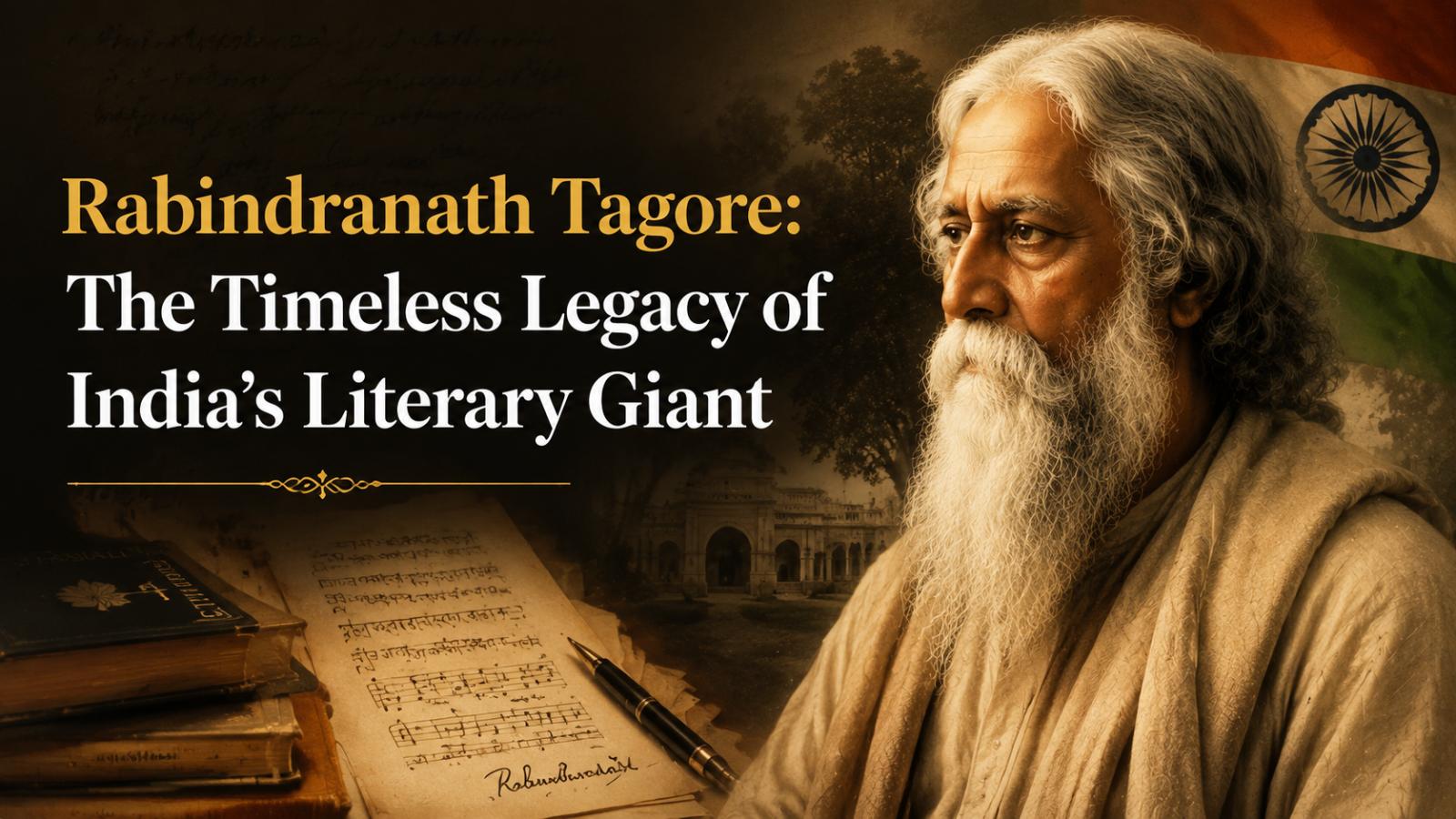
Rabindranath Tagore, born on May 7, 1861, in Kolkata, India, was a polymath who earned recognition as a poet, philosopher, musician, and artist. His literary genius, especially through Gitanjali, garnered global fame, while his music and art formed an integral part of Bengal’s cultural heritage. His contributions extended far beyond writing; Tagore’s impact on education, spirituality, and national identity continues to influence generations.
Tagore's Literary Career and Global Recognition
Rabindranath Tagore began his literary journey at an early age, publishing his first major stories by the time he was 16. Although he disliked formal schooling, he was deeply immersed in literature, which became his lifelong pursuit. Tagore published nearly 60 volumes of verse, plays, and stories. His most famous work, Gitanjali (Song Offerings), which won him the Nobel Prize in Literature in 1913, expresses spiritual reflections on humanity’s connection to the divine and nature. Tagore’s ability to write in both Bengali and English bridged cultural divides, making his work globally recognized.
Music and Art: Tagore's Cultural Legacy
In addition to his literary prowess, Tagore was a gifted musician and composer, known for creating over 2,000 songs, collectively called Rabindra Sangeet. These songs remain an essential part of Bengali culture today. Tagore was also a talented visual artist, whose abstract and expressive paintings added to his reputation as a visionary. His creative output redefined the role of art in Indian society, blending philosophy with cultural expression.
Shantiniketan: A Vision Realized
In 1901, Tagore founded Shantiniketan, a unique educational institution that blended Eastern and Western philosophies. Originally conceived as a school, Shantiniketan later evolved into Visva-Bharati University. The institution emphasized creativity, free expression, and spirituality. Shantiniketan continues to be a leading center for education, fostering an environment where creativity and academic learning merge to shape the minds of future generations.
National Contributions: Jana Gana Mana and Beyond
One of Tagore’s most profound contributions to India’s national identity is the writing of the national anthem, Jana Gana Mana. This anthem, which still evokes patriotism and unity at every national event, was penned by Tagore, further cementing his legacy as a cultural icon. Tagore also wrote Amar Sonar Bangla, the national anthem of Bangladesh, demonstrating his influence beyond Indian borders. His music and poetry have played a crucial role in shaping the cultural and national ethos of both nations.
Tagore’s Enduring Influence
Tagore’s legacy extends far beyond literature and music. His teachings on education, creativity, and spirituality continue to resonate worldwide. Rabindra Sangeet remains a vital part of Bengali culture, and his literary works are studied across the globe. Through his poetry and music, Tagore unified people, transcending geographical and cultural boundaries.
His impact on South Asia’s national identities is undeniable. Tagore's words and music remain ingrained in the cultural fabric of India, Bangladesh, and beyond, symbolizing unity, peace, and cultural pride. Even today, Jana Gana Mana continues to be sung at national events, serving as a testament to his vision and influence.
Conclusion: A Timeless Legacy
Rabindranath Tagore was not just an artist or writer; he was a visionary whose works continue to shape global thought. His integration of literature, music, education, and philosophy has made him an enduring figure whose legacy is deeply woven into the cultural, educational, and spiritual fabric of not just India, but the world. His name remains synonymous with creativity, wisdom, and unity—qualities that continue to inspire generations.