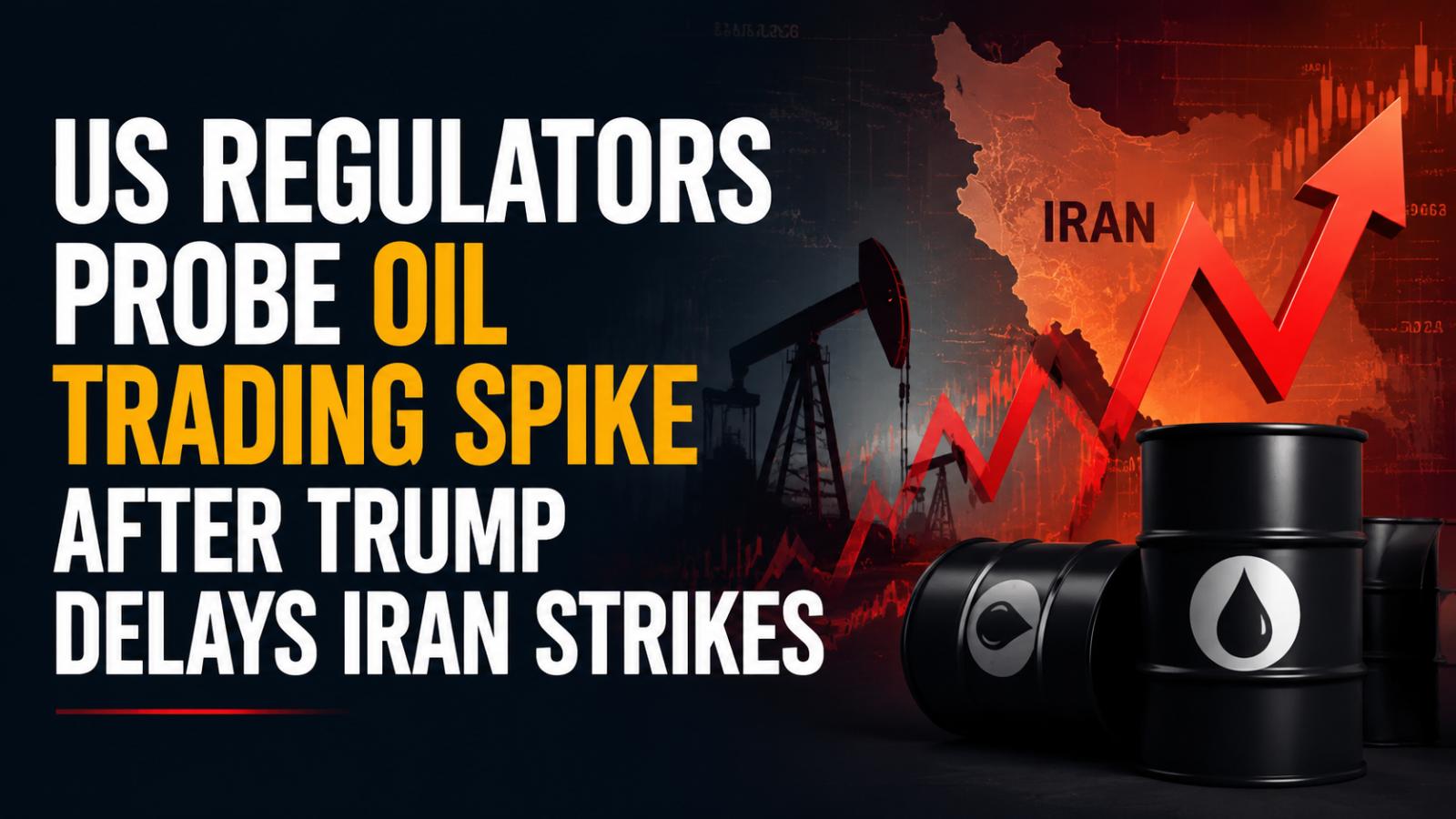
U.S. regulators are examining an unexpected spike in oil futures trading that occurred just before President Donald Trump announced a postponement of planned strikes on Iran’s energy sector. The Commodity Futures Trading Commission (CFTC) is reviewing unusual off-hours trading activity that reportedly generated millions in profits for several trading firms.
Trading Activity Details
On March 23, crude futures contracts totaling over $800 million changed hands in a brief window prior to the announcement. Prices dropped nearly 13% immediately afterward, allowing select firms to capitalize on significant gains. Typically, off-hours trading handles hundreds of contracts per minute, but activity surged into the thousands, signaling highly atypical market behavior.
Winners and Losers
Records show multiple firms profited substantially:
- Jane Street gained approximately $19 million.
- Forza Fund Ltd. secured nearly $10 million.
- Qube Research & Technologies earned $5 million.
- TotalEnergies’ trading unit Totsa made about $200,000.
Conversely, Jump Trading experienced losses close to $15 million. Other firms profiting included Virtu Financial, Shell, IMC Chicago, Paragon Trading Partners, TTG Capital, and Tower Research Capital.
CFTC Investigation
The CFTC is investigating whether trades were made based on advance knowledge of the strike delay or shared insider information. At least three firms are under review. While no wrongdoing has been confirmed, some trading patterns appear linked to early news reports released about 15 minutes before Trump’s social media announcement. Several firms, including Qube, emphasized their models operate algorithmically and are not directly influenced by political developments.
Additional Market Scrutiny
The regulator is also reviewing other trading spikes related to Iran in April and May. On May 6, approximately $700 million in crude futures were traded before news of diplomatic negotiations in Tehran. Firms like TotalEnergies and Forza Fund maintain high compliance standards and are cooperating fully with the CFTC. This scrutiny highlights the importance of market transparency, fairness, and the regulation of automated trading during volatile geopolitical events.
Conclusion
The spike in oil futures trading demonstrates how geopolitical developments can quickly reshape market activity and generate substantial profits. The CFTC’s ongoing oversight aims to protect market integrity, ensuring trades remain fair, transparent, and compliant with regulations—especially during off-hours or unusual price movements.