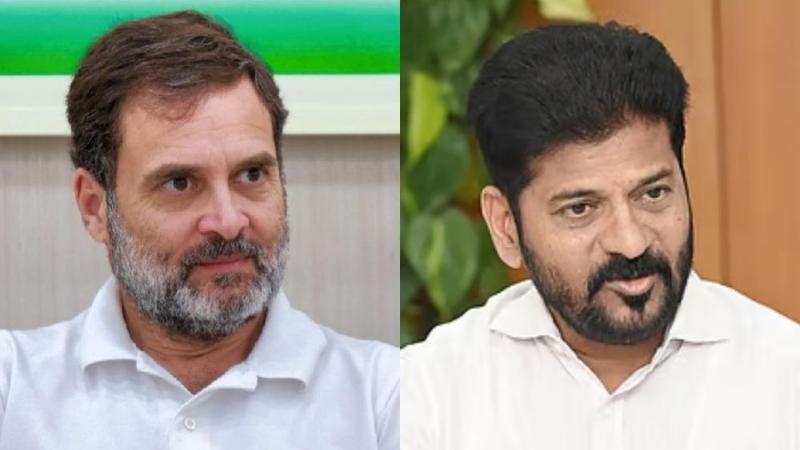
Leader of Opposition in the Lok Sabha, Rahul Gandhi, has written to Telangana Chief Minister A. Revanth Reddy urging the immediate enactment of the Rohith Vemula Act, a legislative framework aimed at combating caste-based discrimination in educational institutions. In his letter dated April 17, Rahul Gandhi called for decisive legislative action to ensure that no student from marginalized communities faces indignity or exclusion in the education system due to their caste identity. The letter comes amid persistent concerns over caste bias and discrimination within institutions of higher learning, particularly affecting Dalit, Adivasi, and OBC students. Rahul Gandhi's appeal is in continuation of his promise made during a visit to the University of Hyderabad, the very campus where Rohith Vemula, a Dalit research scholar, died by suicide in 2016. His death, reportedly following systemic discrimination and administrative indifference, sparked national protests and reignited the conversation around caste inequalities in India's education system.
In the letter addressed to CM Revanth Reddy, Rahul Gandhi emphasized the urgent need for legislative measures to safeguard the rights and dignity of students from historically oppressed communities. The Rohith Vemula Act, as proposed by the Congress party, is expected to include legal frameworks to identify, prevent, and penalize acts of caste-based discrimination in schools, colleges, and universities. Gandhi’s call to Telangana follows a similar appeal to Karnataka Chief Minister Siddaramaiah, who responded positively, instructing his legal team to begin drafting the act. Highlighting this development, Rahul Gandhi encouraged Telangana to lead by example and set a national precedent by being one of the first states to implement such a landmark law.
To stress the moral and social imperative of the proposed law, Rahul Gandhi drew from the life experiences of Dr. B.R. Ambedkar, the chief architect of the Indian Constitution and a fierce advocate for social justice. Quoting Ambedkar, Gandhi shared a poignant reflection on the indignities faced by Dalits, especially during childhood and in educational settings. One of the quotes recalled Ambedkar’s early school days: “I knew I was an untouchable… I was to sit in a corner by myself.” Rahul Gandhi argued that the humiliations endured by Ambedkar should not be faced by any child in modern India. “It is a shame that even today, millions of students from Dalit, Adivasi, and OBC communities have to face such brutal discrimination in our educational system,” he wrote.
Referencing the tragic deaths of not just Rohith Vemula, but also Payal Tadvi and Darshan Solanki, both victims of caste-based harassment in educational institutions, Gandhi called these incidents “unacceptable” and called for comprehensive legislative protection to prevent such injustices. The original case of Rohith Vemula continues to evoke emotion and outrage. A Ph.D. scholar at the University of Hyderabad, Vemula was one of five Dalit students suspended after an alleged altercation with an activist from the Akhil Bharatiya Vidyarthi Parishad (ABVP). On January 17, 2016, Vemula died by suicide in his hostel room, leaving behind a heartfelt note that spoke about systemic neglect and caste prejudice. His death led to widespread demonstrations across Indian campuses and ignited a nationwide discourse on caste-based injustice in academia.
The Congress party, during its campaign for the Telangana Assembly elections, had pledged to enact the Rohith Vemula Act as part of its commitment to social justice. Gandhi’s recent letter serves as a reminder of that promise and a push to fulfill it at the earliest. Rahul Gandhi’s advocacy also highlights a broader call for accountability and equity in the Indian education system. With caste-based exclusions continuing to impact students in various forms—from social ostracization to administrative apathy—the demand for a legal mechanism such as the Rohith Vemula Act gains both urgency and legitimacy.
The Telangana government is yet to issue an official response to Rahul Gandhi’s letter. However, political analysts suggest that with Congress in power in the state and having made this promise in its election manifesto, the groundwork for such a bill may already be underway. As the nation continues to reflect on its constitutional commitment to equality, justice, and fraternity, the proposal for the Rohith Vemula Act could mark a significant step toward inclusive education and an acknowledgment of the lived realities of students from marginalized communities.