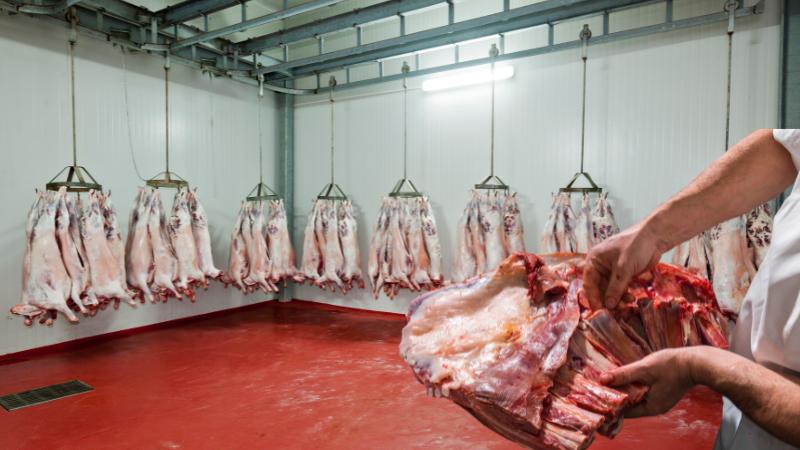
A controversial proposal to build a slaughterhouse in Wonder Lake, Illinois has triggered a wave of strong opposition from local residents, who voiced their concerns during a recent McHenry County zoning board meeting. The project, proposed by Sergiy Bazlyuk, aims to process chickens and pigs on a parcel of land located within one mile of at least two residential subdivisions and less than a mile from Greenwood Elementary School. Many attendees at the meeting expressed alarm over the potential implications for air quality, water contamination, public health, and property values.
The meeting saw a large turnout of community members, many of whom had only learned about the proposal through social media platforms rather than official channels. Among them was James Ferretti, a resident with a professional background in environmental health and safety, who criticized the lack of formal notification. He pointed out the proximity of the proposed facility to his home and his son’s school and warned of potential underground storage tank leaks and general environmental hazards.
Ferretti also questioned the budget for the slaughterhouse, which Bazlyuk estimated at $250,000, including construction, equipment, and permitting. Ferretti argued that the amount seemed unreasonably low for a facility of this nature, especially given the serious health and safety implications. He noted that many nearby homes are worth more than the total cost projected for the slaughterhouse.
In his defense, Bazlyuk told the zoning board that the facility would meet all health department regulations and would only operate on a small scale. He clarified that operations would be limited to one day a week, processing just three pigs and fifty chickens. He also stated that the building would be completely enclosed with a modern ventilation system to minimize any odors and environmental impact. Bazlyuk emphasized that the community would benefit from access to locally processed fresh meat.
However, many residents remained skeptical of these assurances. Local veterinarian Mary Bishop was among those who rejected the claim that odor would not be an issue. She stressed the obvious reality that dead animals inevitably produce unpleasant smells, regardless of ventilation measures. Her statement echoed the sentiment of others who were concerned that the slaughterhouse, even on a limited scale, could pose significant risks to nearby homes and the elementary school.
Water contamination was another major concern voiced during the meeting, particularly the risks posed by the facility's planned underground storage tank. Residents questioned what would happen if a leak occurred when no one was present on site. Bazlyuk responded that the tank would be outfitted with an alarm system and monitored during operation, but acknowledged he lacked all technical specifications on hand to provide full reassurance.
Beyond the immediate environmental and health concerns, the proposal also touched off a broader debate about the clash between agricultural development and suburban growth in McHenry County. Bazlyuk’s attorney argued that the proposed use of the land was consistent with its agricultural zoning and claimed it would not harm property values. However, many community members contended that the facility constitutes a commercial project, not a traditional farming activity, and therefore does not belong so close to residential neighborhoods and schools.
Ferretti emphasized that residents are not opposed to farming but believe this type of commercial slaughter operation should be located farther from densely populated areas. He noted that the plan does not reflect a family farm but rather a profit-driven enterprise situated inappropriately within a suburban environment.
Due to the high volume of public comment and opposition, the zoning board refrained from making a final decision at the meeting. A follow-up meeting is scheduled for July 2, during which the board will revisit the issue and consider the ongoing objections from residents. Until then, tensions are expected to remain high as the community continues to rally against the proposed slaughterhouse.