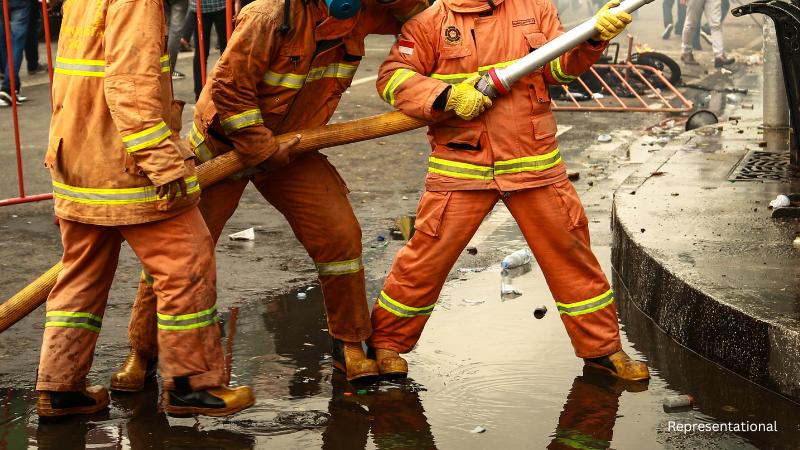
This summer, Jersey City firefighters are undergoing an intensive high-rise operations training program designed to elevate their emergency response capabilities. According to city officials, the specialized training has already drawn attention from out-of-state observers impressed by its advanced approach. The initiative, led by the Jersey City Fire Department, is part of an ongoing effort to strengthen preparedness for emergencies that may occur in the city’s growing number of high-rise buildings.
The training is being conducted at the newly developed 55 Hudson residential project, providing firefighters with a realistic environment to practice critical high-rise response strategies. This session focuses on advanced pumping techniques and the charging and flowing of hose lines, essential skills for managing emergencies in tall structures where water pressure and accessibility can be challenging. By simulating real-life conditions, the program allows firefighters to refine their techniques and improve their efficiency under pressure.
High-rise firefighting poses unique risks due to the vertical nature of these buildings, limited access points, and potential for rapid fire spread. Firefighters must also deal with challenges such as transporting heavy equipment to upper floors, managing stairwell operations, and ensuring water supply at elevated levels. Through this specialized training, Jersey City’s fire crews are enhancing their understanding of building systems, elevator operations, and incident command coordination to respond effectively during actual emergencies.
The advanced pumping techniques being taught during these sessions are particularly crucial for high-rise scenarios. They involve mastering the use of standpipe systems, calculating correct pressures for various floors, and maintaining consistent water flow under complex conditions. Additionally, the hose line charging and flowing exercises ensure that firefighters can deliver water efficiently to the source of a fire, regardless of the building’s height or layout. This expertise is vital in preventing fire escalation and protecting both occupants and responding personnel.
Officials note that the training also emphasizes teamwork, communication, and decision-making in high-stress environments. Fire crews practice coordinating with multiple units, managing logistics, and executing evacuation procedures while maintaining safety standards. These drills help build confidence among firefighters and ensure seamless operations during real emergencies. The program further integrates the latest firefighting technologies and best practices, ensuring that Jersey City’s department remains ahead in safety innovation.
The department’s proactive approach has positioned Jersey City as a leader in urban fire safety preparedness. The fact that other states have shown interest in observing and learning from these training exercises highlights their effectiveness and relevance. By sharing knowledge and experiences, the department hopes to contribute to broader improvements in firefighting strategies across the region.
City officials and fire department leaders expressed pride in the dedication of the participating firefighters. They stressed that continuous training is essential in keeping up with the challenges posed by modern urban landscapes, where high-rise developments are increasingly common. The commitment to ongoing education and hands-on experience ensures that emergency responders remain ready to protect lives and property under any circumstances.
As Jersey City continues to expand with new residential and commercial high-rises, this training represents a crucial investment in community safety. Residents can have greater confidence knowing their fire department is actively working to improve its response capabilities. The advanced techniques and knowledge gained from this program will directly benefit future emergency responses, helping to save lives and minimize damage.
With the program set to continue throughout the season, Jersey City firefighters are expected to emerge with enhanced skills and preparedness. This initiative not only strengthens the department internally but also sets a benchmark for fire safety training standards in urban environments nationwide.