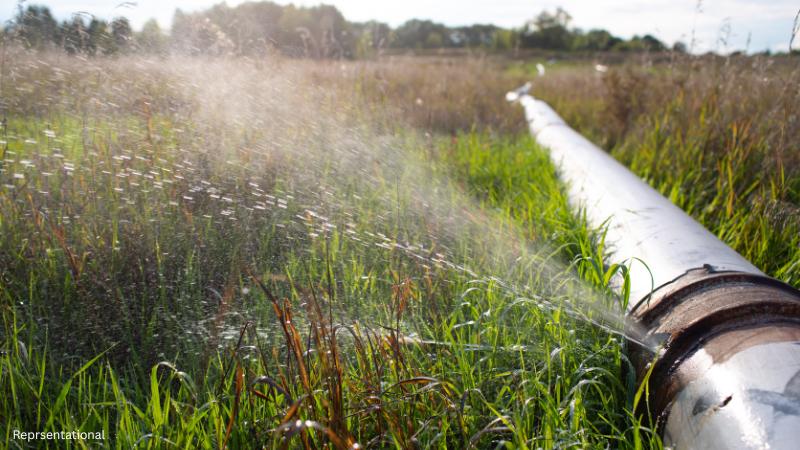
Haledon continues to struggle with the aftermath of a massive water main break in Paterson that occurred more than a week ago, leaving residents and businesses facing daily challenges. Sunday marked the tenth day since the break, and while water service has technically been restored to the community, the supply remains at low pressure and cannot be consumed without boiling. This has left thousands of residents dependent on bottled water distribution sites as the town works to cope with a crisis that shows no signs of ending soon.
The town has set up clean water distribution stations at the Haledon Recreation Center and Manchester Regional High School, where cars lined up throughout the day as residents collected bottled water for their households. The distribution is strictly limited to Haledon residents, who must show proof of residency in order to receive the free bottled water. This has become a daily routine for many families, who continue to manage the difficulties of living without reliable drinking water while also trying to maintain some sense of normalcy in their routines.
Mayor Michael Johnson has remained candid with the community, warning residents that the water emergency may not be resolved this week. He has urged residents to be patient and mindful, reminding them that while water service has technically returned, the system is not functioning at the level needed to restore normal activities. “Everybody might want to wash their cars or water their lawns, but we can’t because we’re not there just yet,” Johnson explained, emphasizing that public health remains the top priority. The advisory to boil all tap water before use continues to remain in place, as officials work to ensure that the supply is safe for consumption.
Local businesses have only recently begun returning to operations after receiving clearance to resume limited services, though they too remain affected by the boil water advisory. Restaurants, stores, and service providers must continue to navigate restrictions, creating both logistical challenges and financial strain. The town has already seen an estimated $300,000 in costs from the ongoing response to the crisis, and these expenses are expected to rise as emergency distribution, staffing, and infrastructure assessments continue.
State legislators have formally reached out to Governor Phil Murphy, requesting relief and support for the borough as it faces mounting costs and increasing frustration from residents. The call for state assistance highlights both the severity of the current situation and the larger issue of aging water infrastructure across New Jersey. Municipal leaders and lawmakers have stressed the urgent need for state-level resources to ensure that towns like Haledon are not left to carry the burden of massive, unexpected infrastructure failures on their own.
For residents, the prolonged water emergency has disrupted nearly every aspect of daily life. From cooking and bathing to running businesses, each task requires extra steps and precautions to ensure safety. The simple act of turning on the tap no longer guarantees water that is clean or safe to drink, and the constant need to either boil water or wait in long lines for bottled supplies has placed significant stress on families. Schools and public facilities have also had to adjust, and the uncertainty surrounding when conditions will return to normal has added to the frustration.
Despite these challenges, the community has shown resilience. Volunteers and local officials have worked tirelessly to keep distribution sites running smoothly, ensuring that families have access to bottled water every day. The presence of neighbors supporting one another has brought some relief during what has otherwise been a difficult period for the borough. Still, the ongoing strain serves as a reminder of the fragility of infrastructure systems and the importance of long-term investments to prevent future breakdowns.
The water main break in Paterson that triggered this crisis has underscored how dependent surrounding towns are on regional infrastructure and how disruptions can ripple through communities far beyond the site of the original incident. For Haledon, the coming days will be critical as officials continue to monitor the system, manage distribution efforts, and push for state-level support. Until then, residents will continue boiling water, lining up for bottled supplies, and adjusting to the reality that normal water service remains out of reach.
As the crisis stretches beyond the ten-day mark, Haledon’s experience has become an urgent example of the need for proactive infrastructure planning and swift emergency response capabilities. The hope for residents is that relief will arrive soon, not only through the restoration of safe water but also through meaningful investment that ensures the community is never forced to endure such an extended emergency again.