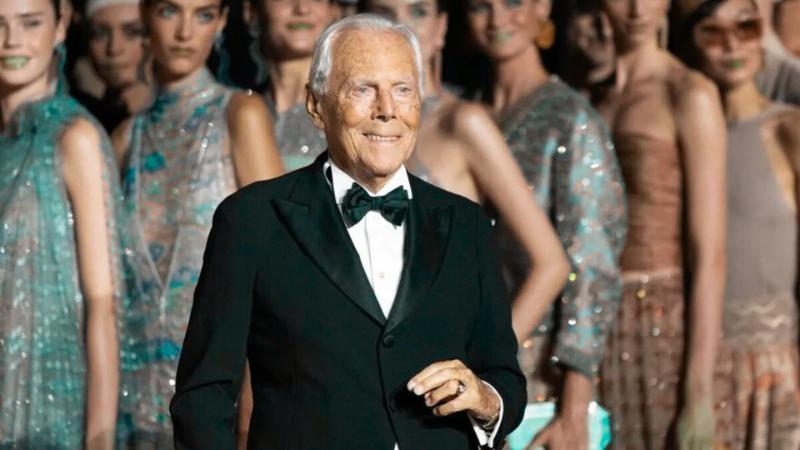
Giorgio Armani, who passed away at the age of 91, leaves behind not only a towering legacy in global fashion but also critical questions about the future of the Armani Group. Known for his sharp eye, precision tailoring, and iconic unstructured suits, Armani built an empire that redefined elegance while maintaining its independence from the financial giants that dominate the luxury sector. Despite his passing, the company he established with Sergio Galeotti in the 1970s is positioned to continue forward thanks to the meticulous steps Armani took to safeguard its future.
Armani’s empire, which generated €2.3 billion in revenue in 2024, has weathered industry slowdowns but remains attractive to global investors. Still, Armani was famously protective of his independence, rejecting overtures from corporate titans, including interest from the Agnelli family and even Gucci in earlier decades. Instead, he relied on family and trusted associates to run the brand alongside him, a decision that now comes into sharp focus as leadership transitions. His sister Rosanna, nieces Silvana and Roberta, nephew Andrea Camerana, and right-hand collaborator Pantaleo Dell’Orco are among the closest heirs who could shape the company’s next chapter.
Securing Armani’s Legacy
To avoid the pitfalls of corporate takeover and ensure continuity, Armani established a foundation in 2016. Its role was to safeguard governance and preserve his values, emphasizing cautious acquisitions, sustainable growth, and independence. Armani also introduced new bylaws activated upon his death, including provisions against immediate stock market listings, insisting on a five-year buffer. The foundation currently holds a symbolic stake but is expected to gain more influence, distributing shareholding among heirs with carefully defined voting rights.
Armani invested heavily in both physical stores and digital strategy, overseeing the renovation of flagship stores in New York and Milan, launching the Palazzo Armani in Paris, and bringing e-commerce operations in-house. This dual focus on tradition and innovation reflects his long-term vision of keeping the brand globally competitive while rooted in Italian craftsmanship. With Europe contributing nearly half of the company’s revenue and the Americas and Asia Pacific splitting the remainder, Armani’s legacy remains globally anchored but distinctively Italian.
The path ahead for Armani will depend on how leadership roles are divided among family and trusted collaborators. Potential successors like Giuseppe Marsocci and Daniele Ballestrazzi could step into senior managerial roles, while creative direction may be shared between Silvana, who worked on women’s collections, and Dell’Orco, who collaborated on men’s designs. Whether the company opts for a single creative director or multiple line-specific leads will be a defining moment in shaping Armani’s identity in the post-Giorgio era.
Though relatively smaller in scale compared to rivals like LVMH or Kering, Armani consistently emphasized quality and symbolism over aggressive expansion. His careful planning, strong financial reserves, and structured succession process aim to shield the brand from being swallowed by conglomerates. As the world waits for more clarity with the reading of his will, one thing is clear: Giorgio Armani’s vision was never just about fashion, but about independence, identity, and legacy.