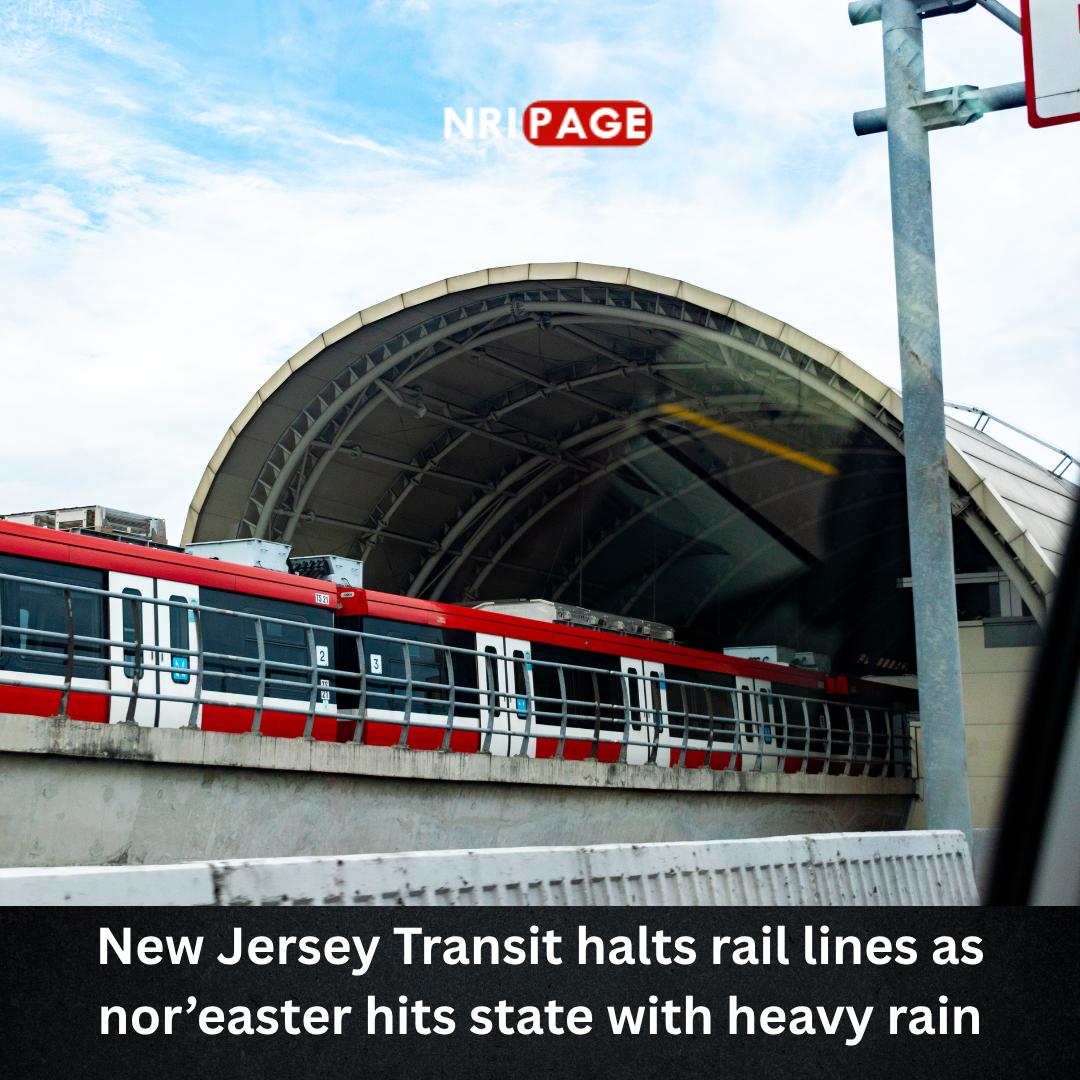
A powerful nor’easter sweeping through New Jersey has forced significant disruptions to the state’s public transportation network, with New Jersey Transit announcing multiple service suspensions on Monday, October 13. The storm, bringing strong winds and heavy rainfall to much of the region, has raised safety concerns and led the agency to take precautionary measures to protect passengers, employees, and equipment.
In a statement issued on its website, New Jersey Transit confirmed that “out of an abundance of caution and concern for the safety of our customers and employees,” several rail services would be temporarily halted for the remainder of the day. The agency also announced systemwide cross-honoring for all rail, bus, private carrier, and light rail services, allowing customers to use any available NJ Transit mode with their existing tickets.
Rail service on the North Jersey Coast Line between Long Branch and Bay Head has been suspended for the rest of the day due to the storm’s impact on coastal infrastructure and track conditions. Additionally, operations on the Atlantic City Rail Line between Atlantic City and Philadelphia have been halted until further notice. Both routes are key commuter and leisure corridors, connecting South and Central Jersey communities to major urban centers.
New Jersey Transit advised customers to travel only if necessary and to allow extra time for any essential journeys. Officials said that the decision to suspend services was made after monitoring weather conditions that were expected to worsen throughout the evening, with reports of localized flooding, downed trees, and strong coastal gusts exceeding 50 miles per hour in some areas.
The storm’s arrival marks one of the most severe nor’easters of the season, prompting statewide advisories and emergency preparations. Meteorologists warned that the combination of wind, rain, and potential coastal flooding posed significant risks for low-lying areas and transportation corridors, particularly along the shorelines and river-adjacent routes.
Maintenance teams have been deployed across the state to assess and secure infrastructure, including tracks, overhead wires, and signal systems. New Jersey Transit said the priority remains ensuring public safety and minimizing damage to its rail network. The agency added that service restoration will depend on post-storm evaluations once weather conditions improve and hazards are cleared.
Commuters are encouraged to check NJ Transit’s website and official social media channels for the latest updates on service changes and travel advisories. Officials reiterated that restoring safe operations could take time, depending on the extent of flooding and debris removal required after the storm passes.
The suspension of services on two major lines comes as part of a broader effort by state agencies to mitigate storm-related risks. Local authorities have urged residents to avoid unnecessary travel, secure outdoor belongings, and stay alert for changing weather conditions.
As the nor’easter continues to impact New Jersey and neighboring states, transportation officials emphasize that safety remains the top priority. For now, the message from NJ Transit is clear: stay home if possible, and only travel when absolutely necessary until the storm subsides and normal operations can safely resume.