A major security alert was triggered after police recovered a large quantity of explosives and arms from Faridabad, Haryana, in a coordinated operation involving law enforcement agencies from Jammu and Kashmir and Haryana. The recovery comes amid an ongoing investigation into two Kashmiri doctors who were arrested earlier for alleged links with the terror group Jaish-e-Mohammed.
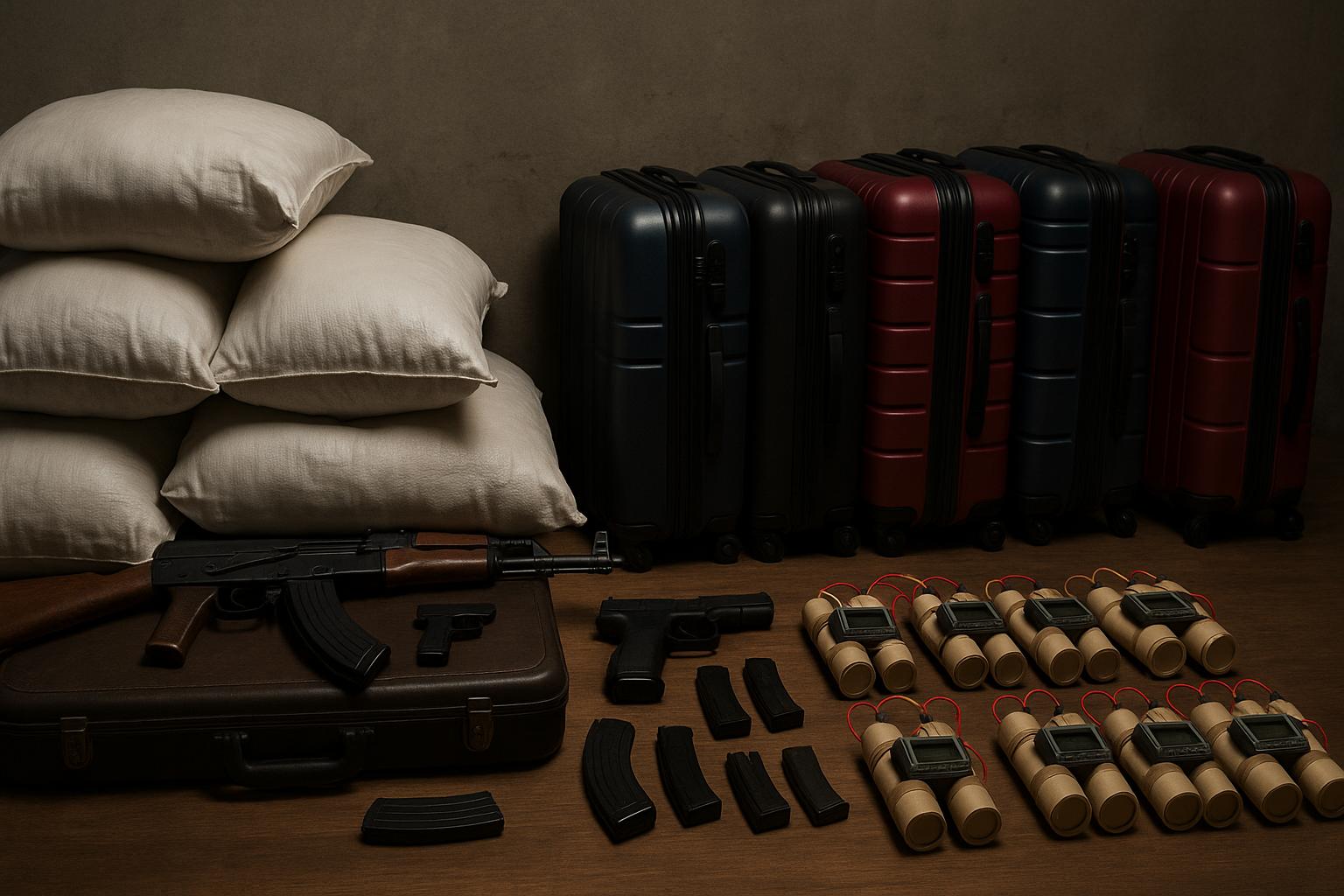
Officials confirmed that nearly 350 kilograms of explosive material, suspected to be ammonium nitrate, were found during the joint operation. The seizure also included one assault rifle, one pistol, three magazines, several cartridges, eight large suitcases, three smaller ones, walkie-talkie sets, batteries, heavy metal components, and 20 electronic timers. Police believe these materials were meant for assembling improvised explosive devices (IEDs) or other large-scale attacks.
Investigations have linked the recovered explosives to two medical professionals from Jammu and Kashmir — Dr. Adil Ahmad Rather from Qazigund, South Kashmir, and Dr. Muzamil Shakeel from Pulwama. Adil previously served as a senior resident at the Government Medical College (GMC) in Anantnag until October 2024, while Muzamil was employed at Al-Falah Hospital in Faridabad at the time of the discovery.
Sources said the arrests followed an intelligence-led operation that began after posters of Jaish-e-Mohammed appeared in several areas of Srinagar on October 27. CCTV footage later revealed Adil Ahmad Rather allegedly pasting the posters, prompting police to launch a full-scale investigation. On November 6, he was apprehended from a hospital on Ambala Road in Saharanpur, Uttar Pradesh. During subsequent searches, officers discovered an AK-47 rifle and ammunition inside his locker at GMC Anantnag.
Police officials stated that Adil was booked under provisions of the Arms Act and the Unlawful Activities (Prevention) Act (UAPA). His interrogation provided crucial leads that helped authorities trace the explosives stored in Faridabad. Acting on the information, the joint police teams carried out multiple raids across locations linked to the suspects before seizing the cache.
“Our operation has been underway for the past fifteen days. The materials recovered could have been used for a major terror plot,” the Faridabad Commissioner of Police said, adding that forensic teams have been called in to analyze the seized substances and devices.
Muzamil Shakeel, the second suspect, is believed to have facilitated logistics and storage arrangements for the explosives while working at the private hospital in Faridabad. Preliminary findings suggest that both suspects were in regular communication with individuals believed to have connections with banned terror organizations. Officials are also examining digital evidence, including mobile phones, encrypted messages, and laptops seized from the suspects’ premises.
Security analysts have expressed concern over the increasing trend of educated professionals being targeted for recruitment by terror networks. Investigators said the case underscores how extremist groups are attempting to penetrate professional sectors to evade suspicion and expand their operational capabilities.
Authorities continue to coordinate with national intelligence agencies to determine the broader network involved. Police sources indicated that cross-border funding and online radicalization may have played a role in motivating the accused. The recovered weapons and explosives have been sent for forensic analysis, and further arrests are likely as the investigation progresses.
The large-scale recovery in Faridabad marks one of the most significant counter-terror breakthroughs in recent months. With both suspects currently under interrogation, law enforcement agencies are working to piece together the chain of events that led to the stockpiling of such a massive quantity of explosives in a densely populated region. Investigations remain ongoing to uncover any additional operatives or hideouts linked to the case.