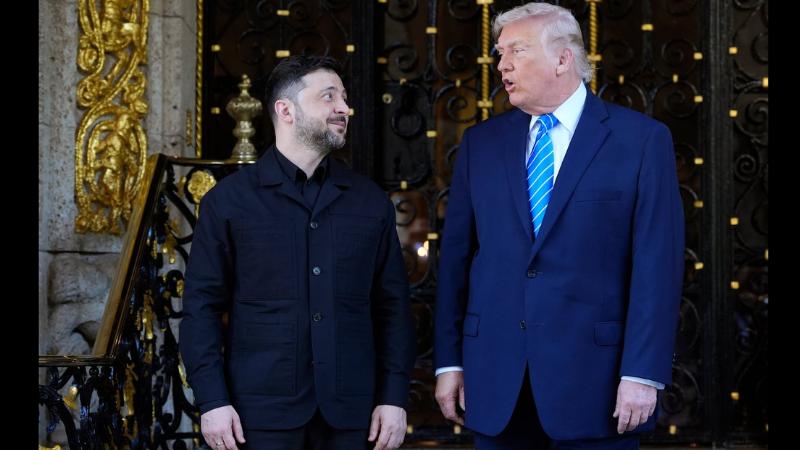
A meeting between US President Donald Trump and Ukrainian President Volodymyr Zelenskyy at Trump’s Mar-a-Lago residence was meant to focus on diplomatic efforts to end the Russia-Ukraine war. Instead, public attention quickly shifted to an unexpected detail captured in photographs taken ahead of the talks: Trump’s right hand, which appeared discoloured and heavily covered with makeup.
The two leaders met to discuss a reported 20-point plan aimed at bringing an end to the ongoing conflict. Speaking briefly to reporters outside his Florida residence, Trump described the upcoming discussions as beneficial not only for Ukraine but for broader global stability. However, as images from the interaction circulated online, social media users zeroed in on what appeared to be mismatched concealer and visible marks on the US President’s hand, sparking widespread speculation.
This is not the first time Trump’s hand has drawn scrutiny. On several previous occasions, the 79-year-old President has been seen with bandages or makeup on his hand, leading to recurring questions about his health. The latest images reignited those conversations, with users on social media platforms offering everything from serious medical theories to humorous pop culture references.
The unusual appearance of Trump’s hand quickly became a trending topic, particularly on X, where users shared close-up images and debated possible explanations. Some expressed concern, suggesting the marks resembled bruises caused by intravenous treatments, while others questioned whether the President was concealing a medical condition. A few users took a lighter approach, jokingly comparing Trump to fictional creatures from popular television series, fueling memes and viral posts.
Amid the growing speculation, the White House stepped in to clarify the situation. Press Secretary Karoline Leavitt dismissed health-related rumours, stating that the visible bruising was the result of frequent handshaking. She explained that Trump’s daily interactions with supporters, officials, and visitors often involve prolonged handshakes, which can lead to bruising, especially given that the President is on a daily aspirin regimen. According to Leavitt, aspirin use can make bruises more pronounced, a detail she said had been noted in Trump’s previous medical examinations.
Leavitt’s explanation echoed similar statements made earlier in 2025, when Trump appeared with a noticeable black-and-blue mark on the same hand. At the time, she emphasised that Trump meets and greets more Americans than any other sitting President, portraying the bruising as a side effect of his public engagement rather than a sign of illness.
Despite the White House clarification, speculation has persisted, driven in part by Trump’s age and the intense scrutiny surrounding his physical fitness. Trump himself has repeatedly rejected concerns about his health, often contrasting his condition with that of his predecessor, Joe Biden. He has maintained that he remains physically fit and capable of fulfilling the demands of the presidency.
Earlier this month, Trump took to his social media platform Truth Social to strongly criticise journalists who questioned his medical fitness. In a lengthy post, he accused members of the media of spreading misinformation and went as far as calling such reporting “sedition” or “maybe even treason,” underscoring his frustration with ongoing scrutiny.
While the focus of the Mar-a-Lago meeting was intended to be international diplomacy and potential steps toward ending the war in Ukraine, the episode highlights how visual details can quickly overshadow political substance in the digital age. As images continue to circulate, the discussion around Trump’s hand serves as a reminder of how public figures are constantly examined, not just for their policies, but for every visible detail captured by the camera.