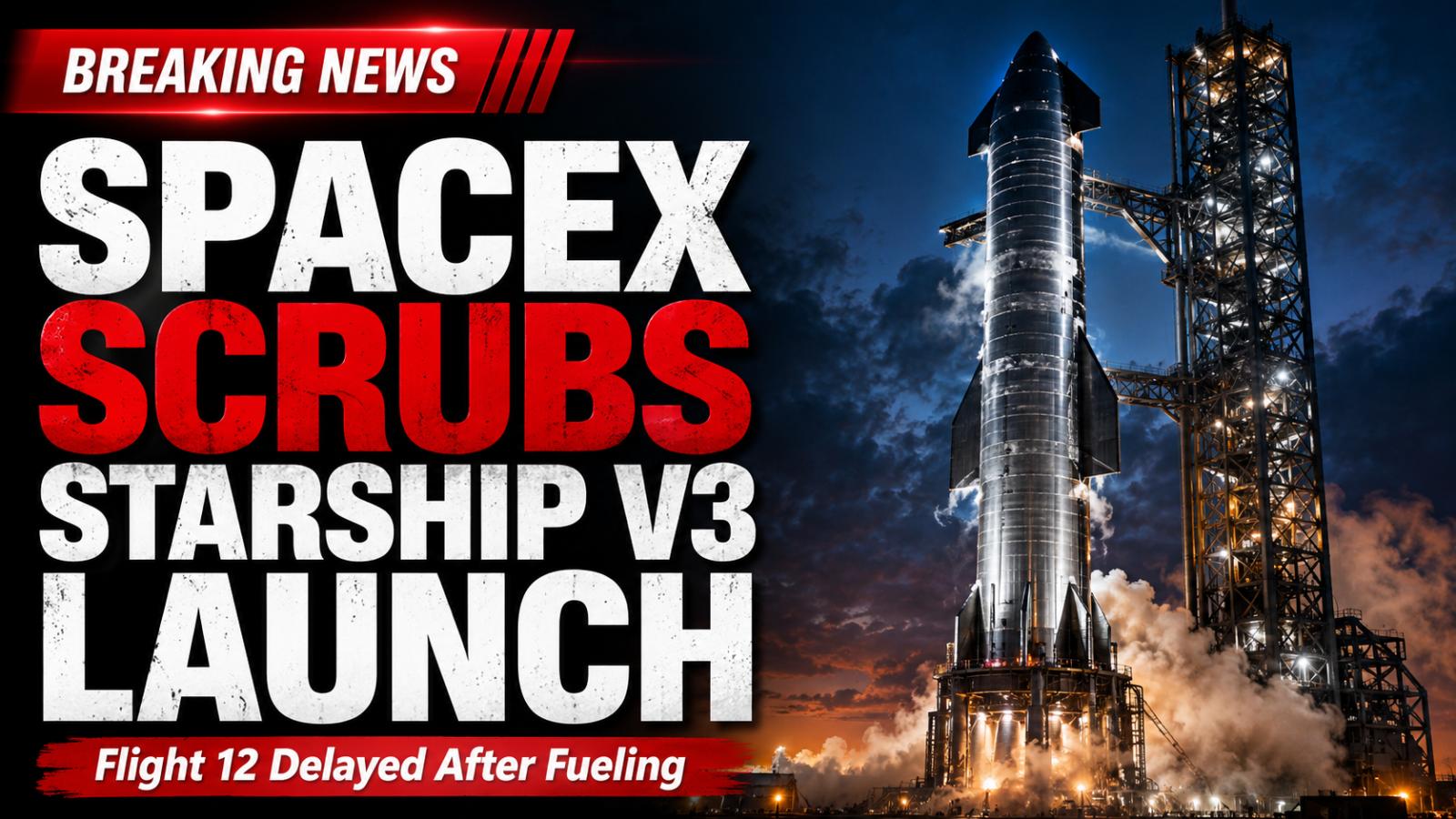
SpaceX Scrubs Starship V3 Launch After Fueling
SpaceX postponed the launch of its massive Starship V3 rocket on Thursday after the spacecraft had already been fully fueled at the company’s Starbase facility in southern Texas. A 90-minute launch window opened at 6:30 p.m. ET, but the rocket did not lift off. During the company’s live broadcast, SpaceX hosts said the vehicle had been fully loaded before the launch was officially scrubbed. The company has not confirmed an exact new launch time, though another attempt is expected on Friday,May 22,2026.
Starship V3 Marks A Major Upgrade
The delayed mission involved Starship Version 3, the latest and most advanced form of SpaceX’s flagship rocket system. When fully stacked, the two-stage rocket stands 408 feet tall and generates 18 million pounds of thrust, making it the most powerful rocket developed by the company. SpaceX says the vehicle is designed to carry 100 metric tons to Earth orbit in a fully reusable configuration while supporting rapid turnaround times similar to commercial aviation.
Flight 12 Planned Key Engineering Tests
Flight 12 was scheduled to be the first test mission using the Starship V3 upgrade. SpaceX completed five Starship Version 2 flights in 2025, but the shift to the new model faced setbacks after two separate ground-test explosions destroyed a Super Heavy booster and a Starship upper-stage vehicle. No astronauts or operational payloads were aboard this mission. Instead, the rocket carried mock Starlink satellites for technical demonstrations.
Heat Shield And Engine Relight Tests Planned
The suborbital mission was expected to deploy 20 Starlink simulator satellites over about 10 minutes beginning roughly 17 minutes after liftoff. Two modified Starlink satellites were also planned to inspect Starship’s heat shield and send images back to mission control. Engineers painted some heat shield tiles white to imitate damaged or missing sections, helping test future safety inspection methods for orbital flights.
Booster And Ship Splashdowns Expected
The mission plan also included a mid-flight relight of a Raptor engine around 39 minutes into flight during a coast phase, a key test for future deorbit operations. Super Heavy Booster 19 was not expected to attempt a tower catch and was instead scheduled for controlled splashdown in the Gulf of Mexico about seven minutes after launch. Ship 39 was planned to splash down in the Indian Ocean more than an hour later.