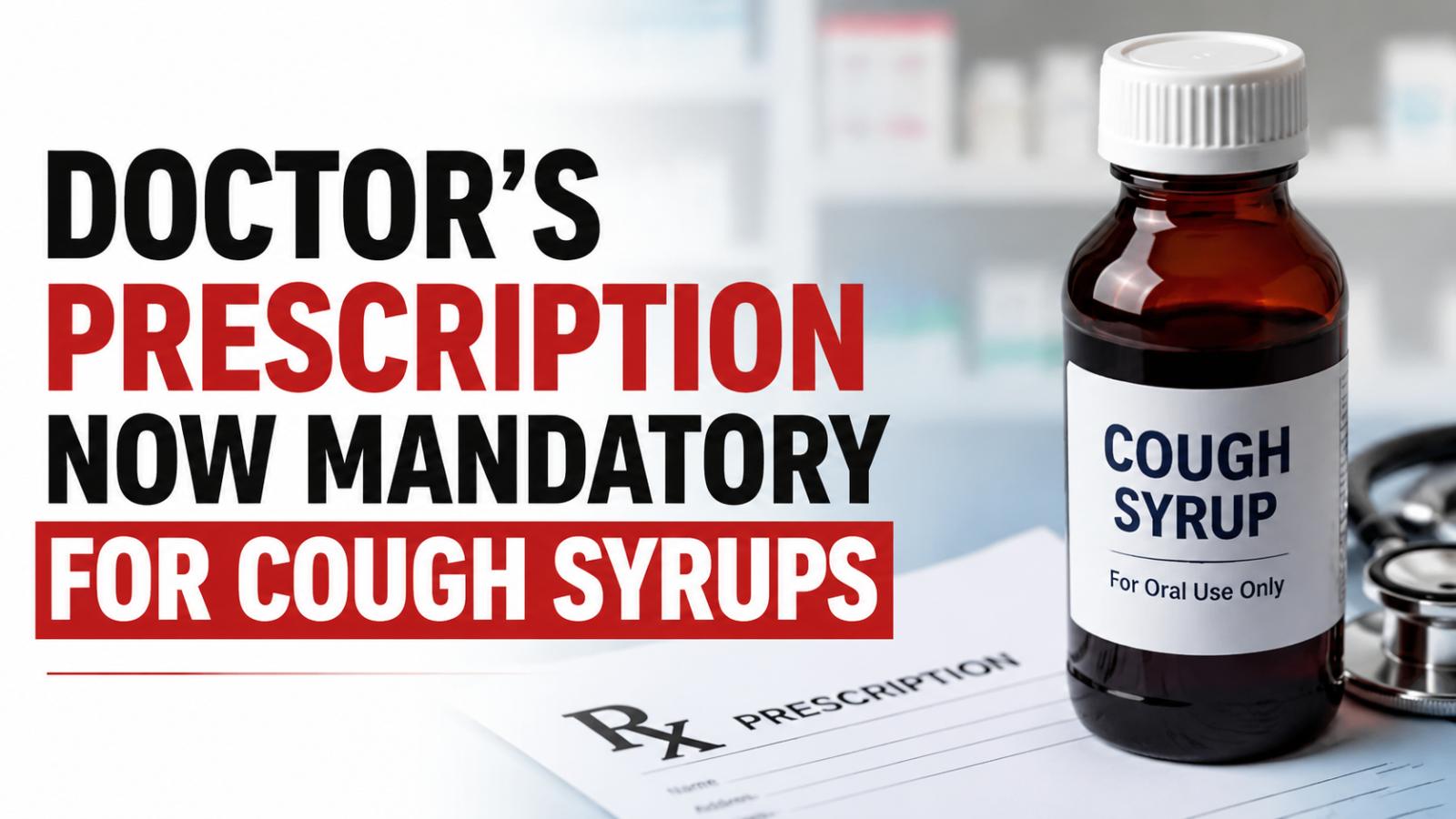
Government restricts cough syrup sales under new prescription rule
The Government of India has introduced a strict regulatory change that makes cough syrups and other medicinal syrup-based formulations available only against a valid prescription from a registered medical practitioner. The decision comes through an amendment to the Drugs Rules, 1945, and represents a major shift in how over-the-counter medicines are regulated across the country.
The move follows serious public health concerns after multiple incidents of contaminated cough syrups were linked to child deaths in states such as Madhya Pradesh and Rajasthan. These cases raised questions about drug safety monitoring, manufacturing standards, and the ease of access to liquid medicines without medical supervision. In response, the government strengthened its regulatory framework to prevent similar incidents in the future.
The amendment was officially notified on June 9, 2026, after a structured consultation process that began with draft rules released in December 2025. Public comments and stakeholder feedback were reviewed before finalizing the rule under the Drugs and Cosmetics Act, 1940. The updated regulation removes “syrups” from Schedule K exemptions, effectively ending their over-the-counter availability.
What changes for patients, pharmacies, and healthcare access
Under the new rule, pharmacies across India are now legally required to verify a valid doctor’s prescription before dispensing any cough syrup or related liquid medication. This eliminates routine self-medication practices for cough and cold symptoms, where syrups were commonly purchased directly from medical stores.
For patients, this means an additional step of consulting a doctor even for basic respiratory symptoms. While the government aims to reduce misuse and improve safety, this change may create access challenges, especially in rural and semi-urban areas where healthcare facilities are limited or delayed. The effectiveness of the policy will depend heavily on how quickly primary healthcare systems adapt.
For pharmacies, compliance requirements have become stricter. Retailers must now ensure proper prescription verification and maintain adherence to drug sale regulations under the revised law. Any violation can result in penalties or action under existing pharmaceutical control frameworks, making enforcement a key focus area for regulators.
Impact on public health and medicine regulation in India
The government’s objective behind this amendment is to improve patient safety, reduce risks linked to substandard or contaminated medicines, and bring stronger control over pharmaceutical distribution. By moving cough syrups into a prescription-only category, authorities aim to ensure that usage is medically supervised and not based on self-treatment habits.
The change also reflects a broader tightening of India’s drug regulation system, where compliance, manufacturing quality, and retail distribution are being monitored more strictly. However, the real-world impact will depend on enforcement consistency, awareness among consumers, and accessibility of healthcare services.
Overall, the amendment marks a significant shift in India’s pharmaceutical policy, prioritizing regulated access and safety over convenience-driven over-the-counter availability of cough syrups and similar liquid medicines.