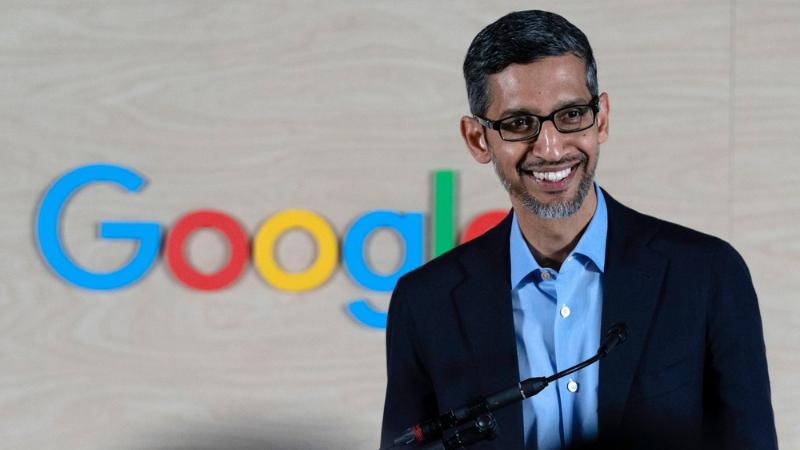
As the landmark antitrust case against Google moves into its remedies phase, the company’s CEO Sundar Pichai has taken the stand to argue against proposed penalties that could drastically reshape the tech giant. Among the most significant proposals from the US Department of Justice (DoJ) is the possibility of breaking up Google including forcing the company to sell its Chrome browser and share user data and search results with competitors. The case, initially filed by the DoJ in 2020, culminated in a major ruling in 2024 when a U.S. court declared Google a monopolist in the search engine market. Just last month, the company was also found to have violated antitrust laws in the online advertising sector. Now, with the court determining what remedies should be imposed, Google faces potentially sweeping consequences.
Appearing before the court on Wednesday, Pichai warned that forcing Google to divest Chrome or share proprietary data would severely hinder innovation and future investment. He said the proposed remedies would compromise the company's ability to invest in research and development, which has been core to its progress over the last three decades. “The combination of all the remedies, I think, makes it unviable to invest in the R&D the way we have for the past three decades, to continue to innovate and build Google search,” Pichai was quoted as saying by The New York Times.
One of the remedies being considered is the divestiture of the Chrome browser. Pichai argued that Google has made substantial investments in the browser’s security and innovation over the years, and he believes no one else is better suited to manage its development and cybersecurity. When asked how he could be confident that a future buyer of Chrome would not be equally capable, Pichai responded, “Given my deep knowledge of the space and a general understanding of what other companies’ capabilities and commitments are around web security, I do think I’m able to speak on it.”
Perhaps more contentious is the remedy suggesting that Google should be required to share user search data including what people search for, the sites they visit, and other behaviors with rival companies. Pichai responded that such a move would effectively hand over Google's intellectual property. “It would be a de facto divestiture,” he said. “It would allow anyone to completely reverse engineer, end to end, every aspect of our technology stack.”
In 2024, Judge Amit Mehta ruled that Google had violated U.S. antitrust law by using its dominance in ways that hindered fair competition. The court found that Google's leading position in search was not simply due to the superiority of its product, but because the company struck massive financial deals with partners like Apple and Samsung. These deals ensured that Google would be set as the default search engine across most devices, browsers, and platforms limiting consumer choice and choking off competition. The court noted that these agreements allowed Google to entrench its dominance by outspending any rival attempting to gain default placement on popular browsers and operating systems. Billions of dollars were exchanged annually to maintain this market stranglehold.
To determine the appropriate remedies, the court has subpoenaed testimony from executives at several Google rivals, including OpenAI, Perplexity, and Yahoo. Their insights are expected to help the court understand how the market could be reshaped to allow fairer competition without overly harming innovation or user experience. The case represents one of the most consequential antitrust battles in modern tech history and could set new precedents for how governments regulate dominant internet platforms. At the center of the storm, Google is now fighting to protect its core products, data assets, and the ability to invest freely while regulators argue for structural change to curb its market power. The final outcome of the remedies phase could force the company to spin off products, license technology, or fundamentally change how it does business, signaling a new era of tech regulation and competition enforcement in the United States.