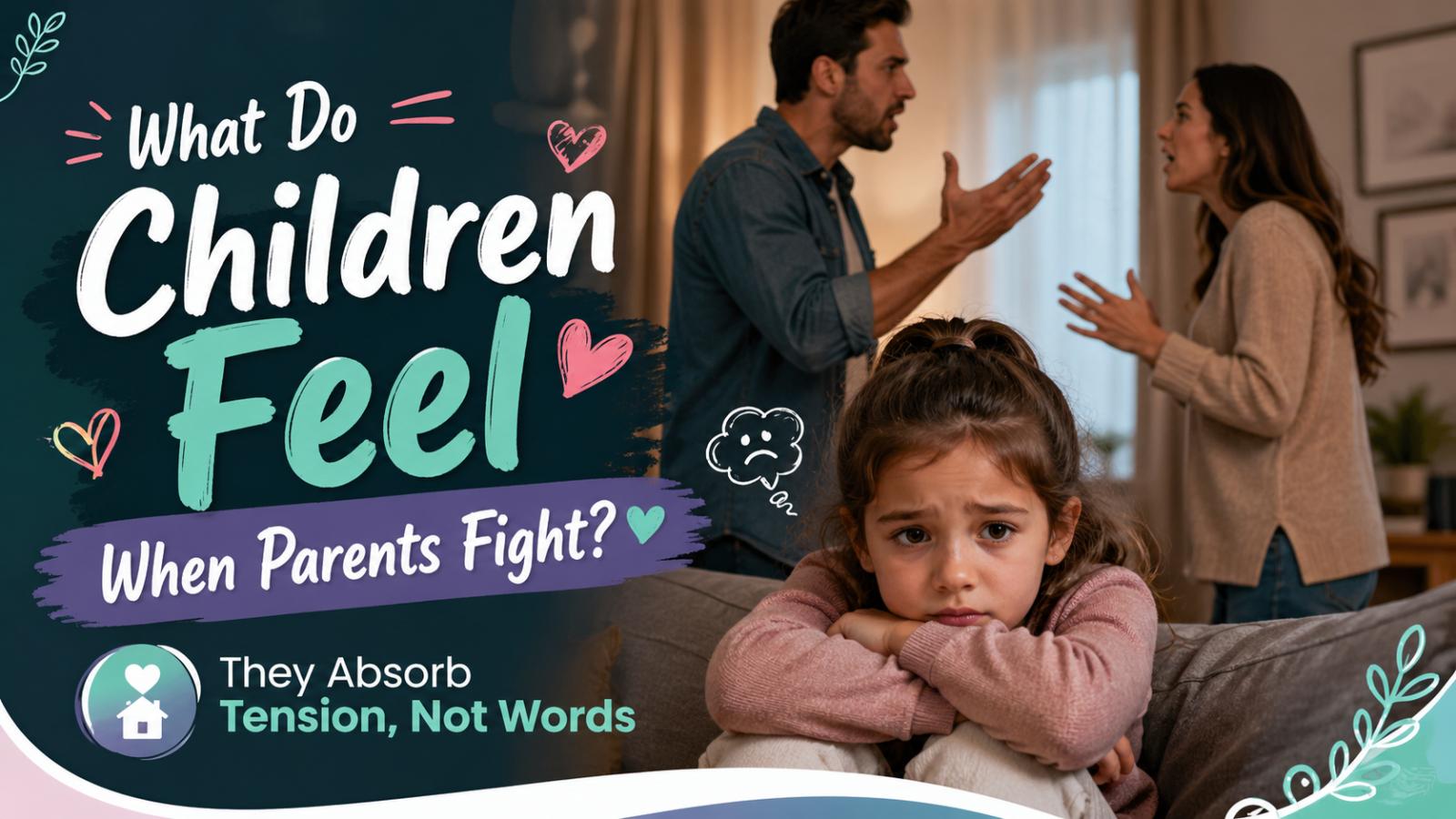
What do children feel when parents fight? They absorb tension, not words is a question many parents underestimate, especially during the early years when children are highly sensitive to their surroundings. While adults may assume that young children cannot understand arguments, the emotional impact of such situations often leaves a deeper mark than expected.
Emotional tension becomes a child’s silent experience
Children between the ages of zero and ten may not fully understand the reasons behind conflicts, but they are extremely responsive to emotional cues. Raised voices, sharp tones, or visible frustration can create a sense of unease. For a child, the home environment is their primary source of safety. When that space feels unpredictable, it can lead to confusion or insecurity.
Lack of understanding does not reduce impact
One common misconception is that children are unaffected because they cannot grasp the content of an argument. In reality, children interpret situations based on emotion rather than logic. They may not know why their parents are arguing, but they feel the shift in energy. This can lead to internal responses such as withdrawal, fear, or even imitating aggressive communication patterns.
Repeated exposure shapes emotional responses
When conflicts occur frequently in front of children, it can influence how they perceive relationships. Over time, they may begin to associate disagreement with anger or instability. Some children may become quieter and more reserved, while others may replicate the same tone and behavior in their own interactions.
Creating a stable emotional environment
Disagreements between parents are natural, but the way they are expressed matters significantly. Managing tone, resolving issues calmly, and maintaining a sense of stability in front of children can help preserve their emotional security. If conflicts do occur, restoring calm and normalcy afterward plays an important role in helping children feel safe again.
Early childhood is a stage where emotional foundations are formed quietly but powerfully. Even without understanding the details, children carry the emotional experience of their environment, shaping how they respond to relationships in the future.
Emotional tension becomes a child’s silent experience
Children between the ages of zero and ten may not fully understand the reasons behind conflicts, but they are extremely responsive to emotional cues. Raised voices, sharp tones, or visible frustration can create a sense of unease. For a child, the home environment is their primary source of safety. When that space feels unpredictable, it can lead to confusion or insecurity.
Lack of understanding does not reduce impact
One common misconception is that children are unaffected because they cannot grasp the content of an argument. In reality, children interpret situations based on emotion rather than logic. They may not know why their parents are arguing, but they feel the shift in energy. This can lead to internal responses such as withdrawal, fear, or even imitating aggressive communication patterns.
Repeated exposure shapes emotional responses
When conflicts occur frequently in front of children, it can influence how they perceive relationships. Over time, they may begin to associate disagreement with anger or instability. Some children may become quieter and more reserved, while others may replicate the same tone and behavior in their own interactions.
Creating a stable emotional environment
Disagreements between parents are natural, but the way they are expressed matters significantly. Managing tone, resolving issues calmly, and maintaining a sense of stability in front of children can help preserve their emotional security. If conflicts do occur, restoring calm and normalcy afterward plays an important role in helping children feel safe again.
Early childhood is a stage where emotional foundations are formed quietly but powerfully. Even without understanding the details, children carry the emotional experience of their environment, shaping how they respond to relationships in the future.