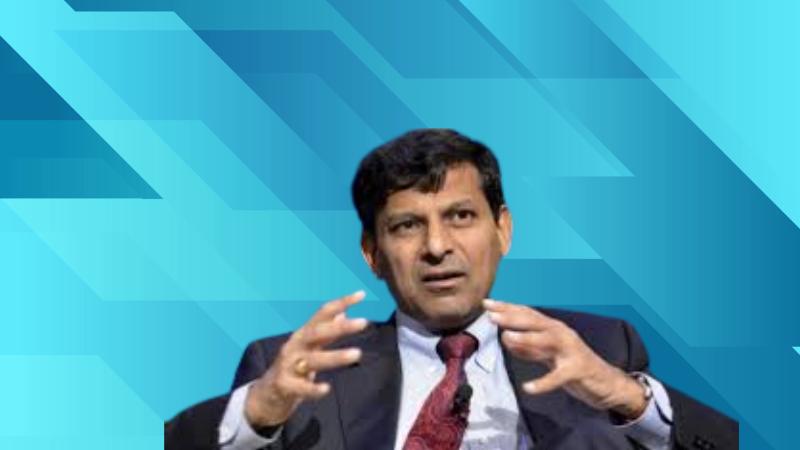
Former Reserve Bank of India Governor Raghuram Rajan has issued a strong cautionary message about the future of the United States economy, highlighting the dangers posed by continued political interference in the flow of international students to American universities. Speaking in an interview, Rajan warned that recent visa policy changes and administrative tightening could have long-term negative consequences on the country's global innovation leadership, economic vitality, and competitive edge.
Currently a finance professor at the University of Chicago Booth School of Business, Rajan emphasized that international students have historically played a pivotal role in fueling American technological progress and entrepreneurship. He pointed to the case of Google co-founder Sergey Brin, who arrived in the US as an international student, as a prime example of how foreign talent contributes significantly to economic development and innovation. According to Rajan, it is crucial for the United States to recognize the value of these students, not just as academic contributors but as future innovators and entrepreneurs who often become integral to the success of major American corporations.
Rajan also expressed concern that universities in the US have not effectively communicated their central role in economic growth and its equitable distribution. He noted that academic institutions serve as essential hubs where intellectual capital is nurtured and developed, and restricting access to them undermines this broader economic contribution. His warning comes at a time when US institutions are grappling with an increasingly hostile environment toward international education, shaped by recent policy actions under the Trump administration.
Among these actions is a freeze on new student visa interview appointments at US embassies, coinciding with the introduction of more stringent social media background checks. These measures, while presented as part of a national security strategy, are viewed by many in the academic world as damaging to the spirit of open, global education. Rajan observed that these policy shifts have created unease among university faculty and administrators, who are witnessing a chilling effect on foreign student enrollment and academic collaboration.
The former RBI governor linked these developments to a broader ideological conflict between the US government and elite academic institutions, which originally intensified over campus responses to controversial social issues but have now expanded into a general campaign questioning the value and influence of higher education in society. Rajan noted that this ideological stance risks weakening a cornerstone of America's global standing: its universities.
According to recent data from the 2023-24 academic year, more than 1.1 million international students are enrolled in US universities, making up nearly 6 percent of all higher education enrollments. Indian students represent the largest share, followed closely by students from China. The presence of these students is not just cultural or academic but also deeply economic, as they contribute to research initiatives, campus funding, local economies, and eventually the labor market.
Rajan stressed that limiting international access to US education could disrupt the talent pipelines that feed directly into American corporations, especially in high-tech industries like software, artificial intelligence, and advanced engineering. He warned that major companies, including Google’s parent company Alphabet, rely heavily on foreign-born professionals who originally came to the US as students. The economic link between academia and industry is not incidental but foundational, he argued, and dismantling that link through restrictive policies could erode American economic leadership over time.
With universities already feeling the impact of these changes, Rajan called for a reassessment of immigration and visa policies concerning foreign students. He urged policymakers to consider the long-term costs of shrinking the nation’s academic and innovation capacity. In an era of global competition, Rajan concluded, maintaining an open and inviting educational system is not just beneficial but essential for sustained national prosperity.