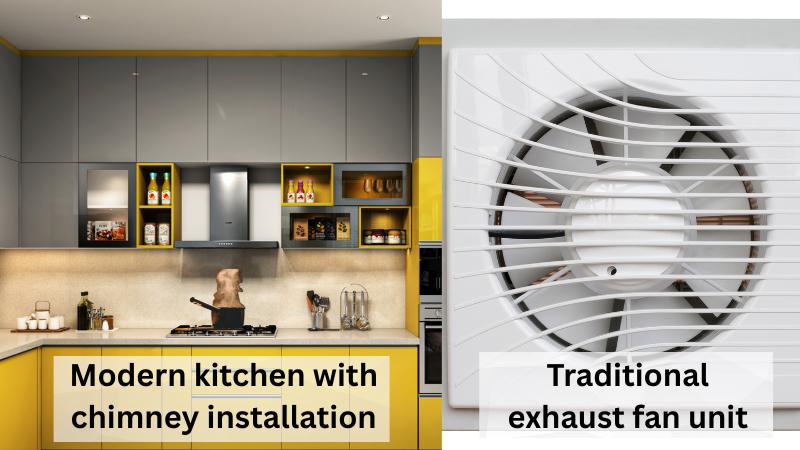
For many homeowners planning a new kitchen, one recurring question arises: should I install a chimney, an exhaust fan, or both? While modern kitchens lean towards sleek chimney installations, traditional exhaust fans still hold their place. The answer, however, isn’t one-size-fits-all—it depends on your home type, cooking habits, and kitchen design. In vegetarian kitchens, which typically produce less grease and meat-based smoke, some might assume basic ventilation is enough. But in reality, even plant-based cooking involving frying, tempering, or spice roasting can fill the kitchen with lingering odors and oil vapors. So how do you decide?
In a vegetarian kitchen, the primary concern isn’t heavy grease from meat or fish, but the frequent use of spices, oil-based tempering, and high-heat cooking can still lead to soot, smoke, and smell accumulation. This is where a kitchen chimney makes a significant difference. It effectively captures rising steam, oil particles, and heat directly from the stove, sending them outside the kitchen before they settle on your walls and ceiling. An exhaust fan, on the other hand, only helps circulate air, pushing smoke and heat outward after they’ve already spread in the room. So while the exhaust fan can assist, the chimney prevents the mess from building up in the first place.
Now, when it comes to installing these systems, the difference between an apartment and an independent house matters. Apartments generally have compact, enclosed kitchens with limited natural ventilation. Since these spaces are closer to living areas and sometimes directly open into dining or drawing rooms, smoke and odors can drift quickly throughout the home. For apartment dwellers, installing a chimney becomes almost essential, as it ensures that the kitchen remains fresh and clean without disturbing the rest of the house. In such tight spaces, even neighbors may get affected if the smoke escapes through windows or shared ducts—particularly if you rely only on an exhaust fan. A strong-smelling spice tadka or repeated oil splattering can become a nuisance beyond your own kitchen.
Independent houses, however, often have more freedom in terms of design. Larger kitchens, more window space, and better airflow give homeowners options. If the kitchen opens to a backyard or has large side windows, an exhaust fan might be enough for very light cooking. But if your cooking involves regular use of oil, roasting spices, or preparing large family meals, a chimney is still recommended. It maintains hygiene and preserves the kitchen interiors. Additionally, ducting is easier in independent homes, allowing for better routing and quieter venting than in an apartment setup.
Another aspect to consider is noise. Exhaust fans, especially older models, tend to be noisier than chimneys. In apartments, where walls are shared and space is compact, fan noise can travel to bedrooms or neighboring units. Add to that the odor, which if not properly vented, can seep through shared ventilation systems or open corridors, affecting other residents. Chimneys, particularly the newer auto-clean and filterless models, operate with significantly less noise and offer a clean, modern look to your kitchen.
One might wonder if both a chimney and exhaust fan are needed. In some cases, combining them makes sense. For example, in a hot and humid climate or a completely closed kitchen, a chimney removes the smoke and grease, while an exhaust fan helps release excess heat and maintain airflow. This dual setup can be especially helpful during summer or when cooking large meals. However, for most vegetarian homes with moderate cooking, a good-quality chimney alone suffices.
The choice ultimately depends on your lifestyle. Chimneys provide a cleaner, quieter, and more effective solution for controlling smoke and oil. Exhaust fans are economical and assist in air circulation but don't address the grease or smell as directly. Both have their place, and using them wisely based on your space can make your kitchen a more comfortable and pleasant area to cook in.
Here are some side points to help decide further:
- Apartment kitchens need more control over odor and grease due to enclosed spaces and limited airflow.
- Independent homes offer more flexibility for ventilation systems, but chimneys still add hygiene and value.
- Vegetarian kitchens also generate smoke and oil vapors, especially during frying, tadka, or spice roasting.
- Chimneys are quieter and more effective in odor control than exhaust fans, especially in shared living environments.
- Exhaust fans can disturb neighbors in apartments through shared walls or duct systems with their noise and smell.
- Combining both chimney and fan is optional but useful in highly active kitchens or tropical climates.
While a chimney might seem like a modern or “extra” choice, it has real functional benefits, even for a vegetarian kitchen. Especially in apartments, it's more than a luxury—it's often a necessity. By planning your kitchen ventilation wisely, you ensure a cleaner space, better indoor air, and a more peaceful cooking experience for both your household and your neighbors.