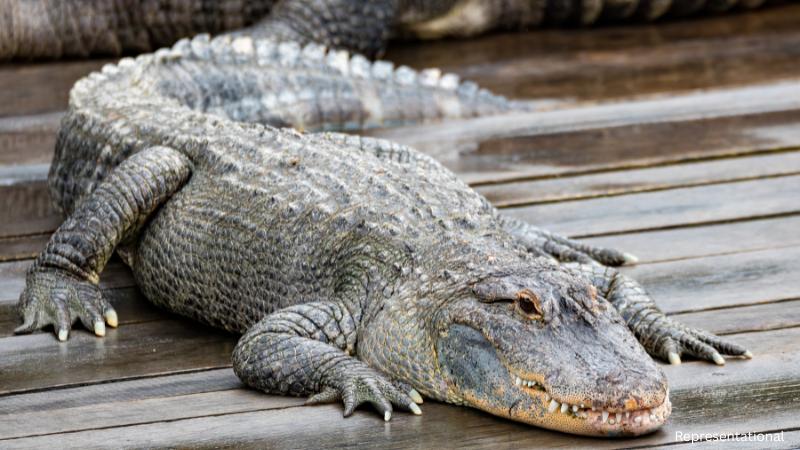
A massive 10-foot, 291-pound alligator was safely relocated from Eagle Mountain Lake in Texas as part of an ongoing wildlife research project. The effort was carried out by the Fort Worth Nature Center and Refuge’s Natural Resources Team in coordination with the Texas Parks and Wildlife Department. The relocation was prompted by concerns from local residents after the reptile was spotted near residential docks, raising safety concerns for those living and boating in the area.
The male alligator, nicknamed Big Dude by the team, measured an impressive 10 feet 7 inches in length and tipped the scales at nearly 292 pounds. As part of the relocation process, the animal was carefully measured, tagged, and prepared for transport to a protected and more remote location where it can live undisturbed. The move not only ensures the safety of the community but also provides researchers with an opportunity to study the animal’s patterns and behaviors in a natural setting away from human activity.
According to those involved in the capture, the operation required patience and coordination. The team had already set a trap in the area after receiving reports that the alligator had been spotted multiple times over the course of a few days. One of the participants in the relocation described how Big Dude initially resisted capture, breaking free from a line on the first attempt. Later that night, however, the reptile entered the baited trap, allowing the team to secure him safely. Even then, removing the massive alligator proved to be a challenge, as the animal fought against being taken out of the cage. It took the combined effort of four people to maneuver him out and cover his head for safe handling.
Wildlife experts stress that the relocation was not only about community safety but also about preserving the alligator’s well-being. Eagle Mountain Lake is a popular recreational area, and close encounters between large wildlife and people can be dangerous for both. By moving Big Dude to a more isolated habitat, researchers can monitor him without the risk of human-wildlife conflict. Tagging him also allows scientists to track his movements over time, providing valuable insight into his territorial range, feeding patterns, and seasonal habits.
Alligators are a native species to Texas, often found in wetlands, swamps, rivers, and lakes. While they generally avoid human contact, they can become more visible during certain times of the year, especially in warmer months when they are more active. In cases where an alligator becomes too accustomed to human presence, relocation is a preferred solution over euthanasia, ensuring the animal continues to play its role in the ecosystem.
The capture and relocation of Big Dude highlight the importance of responsible wildlife management and public awareness. Experts advise that residents and visitors to areas like Eagle Mountain Lake should avoid feeding or approaching wild alligators and instead report sightings to local authorities. These actions help maintain a safe balance between people and wildlife while ensuring that Texas’s natural heritage is protected for future generations.
The Texas Parks and Wildlife Department’s ongoing research into alligator behavior will benefit from Big Dude’s tagging and relocation, offering a better understanding of how these animals adapt to changing environments. With careful monitoring, the hope is to learn more about his life in the wild while ensuring he remains a safe distance from human activity. This relocation serves as a reminder that living near wildlife requires respect, caution, and an understanding of the vital role these creatures play in the natural world.