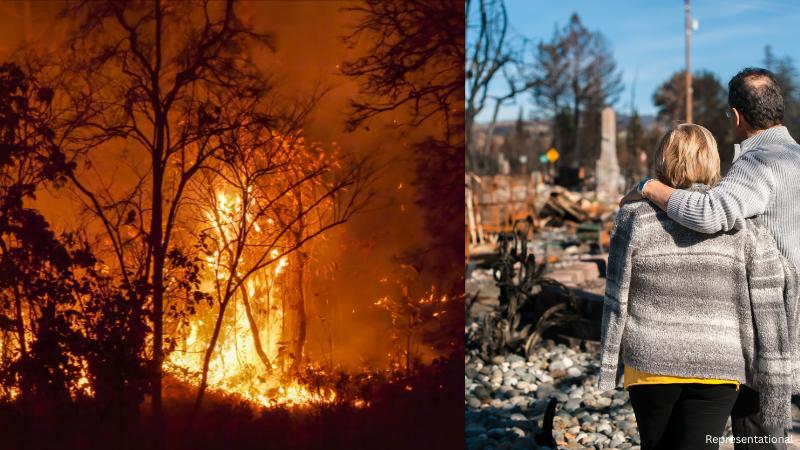
Thousands of residents in Northern California’s wine country and central Oregon are under evacuation orders and warnings as massive wildfires continue to spread in dangerously hot and dry conditions. Firefighters are battling around the clock to contain flames that have consumed homes, scorched land, and forced families to flee. The combination of steep terrain, dried-out vegetation, and triple-digit temperatures has created a dangerous setting for both residents and first responders, with officials warning that the situation could worsen as winds increase.
In Napa County, California, the Pickett Fire has already charred nearly 10 square miles of land and by Sunday was only 11 percent contained. Authorities ordered about 190 residents to evacuate immediately while another 360 were placed under evacuation warnings. The blaze has threatened approximately 500 structures in areas near Aetna Springs and Pope Valley, located about 80 miles north of San Francisco. Fire officials reported that more than 1,200 firefighters, assisted by helicopters, are actively working to contain the fire, which ignited Thursday after a stretch of extremely hot weather. The cause remains under investigation, but the fire’s rapid spread has been fueled by steep slopes, dry grass, and downed trees that had been left behind by the devastating Glass Fire of 2020.
The Pickett Fire has revived painful memories for Napa and Sonoma County residents who endured the Glass Fire four years ago. That blaze grew into one of the most destructive fires in the region’s history, consuming more than 100 square miles and over 1,500 structures. While that fire was driven by fierce winds, the current one is primarily fueled by dry vegetation and challenging terrain. Fire crews are hoping that a slight moderation in temperatures will help, though humidity levels are expected to drop while winds intensify, conditions that can quickly cause flames to surge out of control.
Meanwhile in Oregon, the Flat Fire has expanded rapidly in Deschutes and Jefferson counties, scorching nearly 34 square miles of land. By Sunday, approximately 4,000 homes were under some level of evacuation notice, with about 1,000 residents ordered to leave immediately. Officials confirmed that some homes had already been destroyed, though they were still assessing the extent of property loss. Firefighters worked through the weekend to cut containment lines, but efforts have been hampered by low humidity, gusty winds, and rugged canyon landscapes that make access difficult.
The Flat Fire erupted Thursday night and spread rapidly across dried grasses and juniper trees in the state’s high desert climate. Fire officials warned that isolated thunderstorms in southern Oregon could drift northward, creating additional hazards. Strong downdrafts from thunderstorms can push flames in multiple directions, making the fire even harder to control. Local officials stressed that they are closely monitoring weather patterns in hopes of preventing the blaze from jumping containment lines.
In California’s central region, crews are finally gaining ground on the state’s largest fire of the year. The Gifford Fire, which has burned through nearly 206 square miles in San Luis Obispo and Santa Barbara counties since early August, was reported at 95 percent containment by Sunday. Fire officials say the cause remains under investigation, but the scale of the destruction reflects the increasingly dangerous wildfire seasons that have become all too common in the western United States.
The relentless wildfires come as much of the West has been baking under a punishing heat wave that sent temperatures soaring to dangerous levels over the weekend. Areas across Washington, Oregon, Nevada, Arizona, and California experienced conditions that sent some residents to hospitals for heat-related illnesses. Experts say while individual weather events or fires cannot be directly tied to climate change, human-driven warming is creating conditions that make extreme heat waves and destructive wildfires more likely. Long droughts, dry vegetation, and recurring high temperatures set the stage for blazes to ignite more easily and spread more quickly, often overwhelming firefighting resources.
Officials in both California and Oregon stress that community support and statewide assistance have been critical in the response efforts. Firefighters from across California have joined the fight in Napa County, while Oregon’s crews are receiving reinforcements from multiple agencies. Despite these efforts, officials caution that the coming days could still bring heightened danger as winds shift and weather conditions remain volatile.
For families forced to leave their homes, the fires have brought not just physical displacement but also emotional strain as they wait to learn the fate of their properties. Many residents in fire-prone regions of the West live with the constant worry that the next spark could force another evacuation. As climate conditions worsen, these challenges are becoming an annual reality that underscores the urgent need for long-term solutions in wildfire management, land use planning, and climate adaptation.
As of now, thousands of families remain displaced, hundreds of homes stand threatened, and firefighters continue their exhausting battle on multiple fronts. The Pickett Fire and Flat Fire serve as stark reminders of the destructive power of wildfires in the American West, where rising temperatures and dry landscapes create the perfect fuel for flames that move with devastating speed.