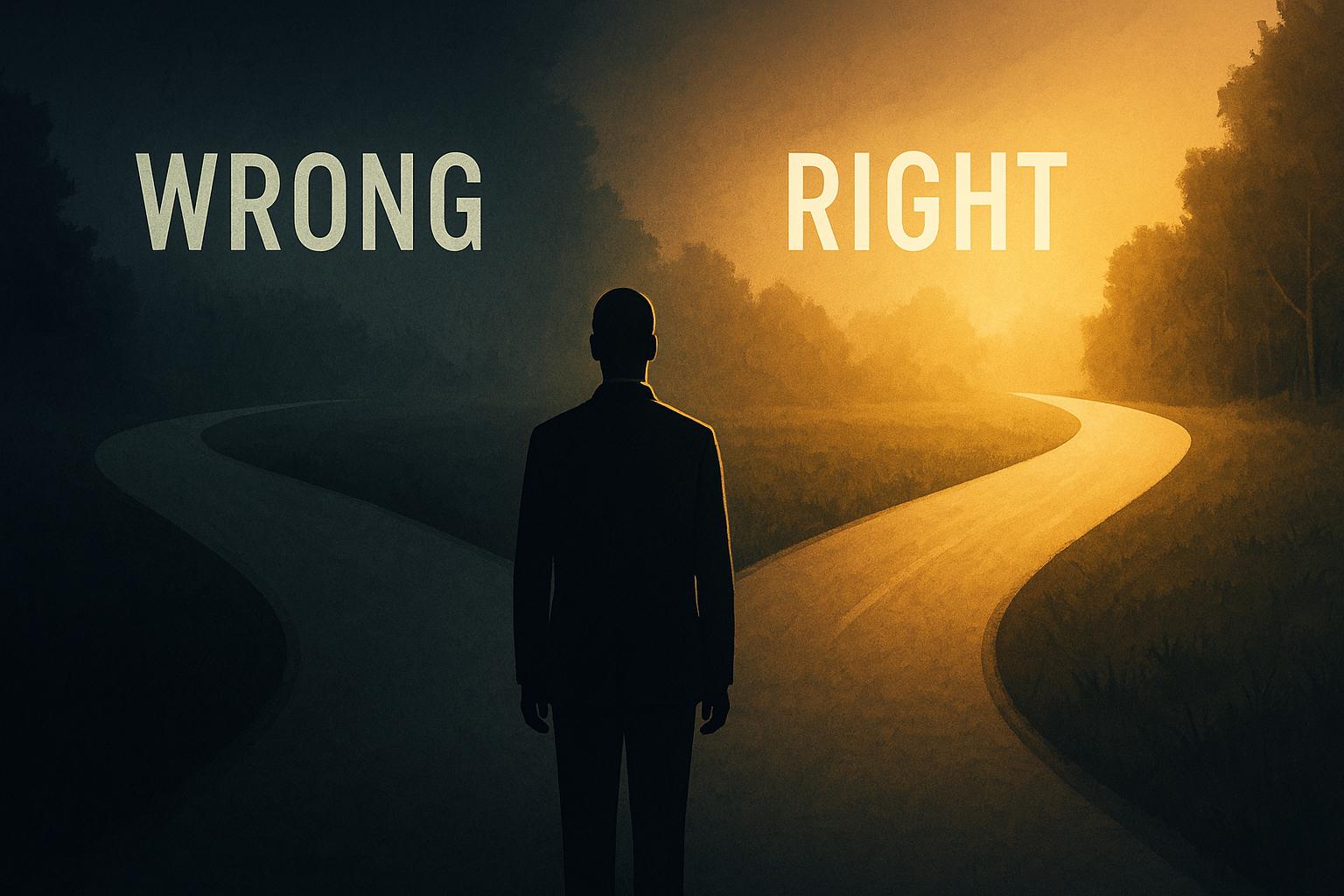
In a world where opinions often blur the line between right and wrong, the pursuit of goodness has become more complicated than ever. Society frequently rewards what appears good, not necessarily what is right. Yet, the essence of true morality lies not in public approval but in the quiet certainty of one’s conscience. The difference between being good and being right may seem subtle, but it defines the very core of human ethics.
Good and bad are emotional reflections—responses shaped by how an action feels or is perceived. Right and wrong, however, are rooted in moral clarity and timeless truth. One might feel good doing something that wins praise but is morally misplaced, while another may feel pain or guilt choosing what is right but unpopular. The foundation of righteousness rests not on comfort but on conviction. It is this deeper understanding that separates passing goodness from lasting virtue.
Philosophically, right and wrong can be viewed as the two faces of a coin, while good and bad represent its intrinsic value. The value remains constant, but its worth depends on how it is used and for what purpose. The intention behind every action determines its moral strength. Good intentions can redeem difficult actions, while selfish motives can corrupt even seemingly noble deeds. The human conscience acts as the inner scale that measures this balance.
The stories of Krishna and Karna from the Mahabharata illustrate this distinction vividly. Krishna’s actions, though often unconventional, were rooted in dharma—an unshakable alignment with cosmic order and moral truth. Karna, admired for his generosity and loyalty, acted out of emotional debt and personal pride, even when he knew the side he defended was unjust. Their choices highlight that moral truth is not about appearing good, but about standing firm in what is right, regardless of outcome.
Such clarity does not come easily. It is born from a constant churning within—the process of self-examination, reflection, and moral struggle. Just as the ocean had to be churned in ancient mythology to bring forth nectar, our minds must undergo a similar turmoil for truth to surface. Through this inner churning, one learns to separate impulse from intention, appearance from authenticity, and convenience from conscience.
Choosing what is right may not always appear good in the eyes of others. It can isolate a person, attract criticism, or even make them seem harsh or unkind. Yet, moral strength is not proven by comfort—it is tested by the willingness to hold firm when compromise seems easier. Being good is often temporary, shaped by emotion and perception, but being right is timeless.
The true victory lies in refusing to do wrong, even when that choice costs acceptance or peace. Those who remain steadfast to their conscience may appear wrong for a time, but in the quiet of their hearts, they stand undefeated. In a world that celebrates appearances, choosing the right over the convenient remains the highest form of moral clarity—the point where goodness finds its truest meaning.