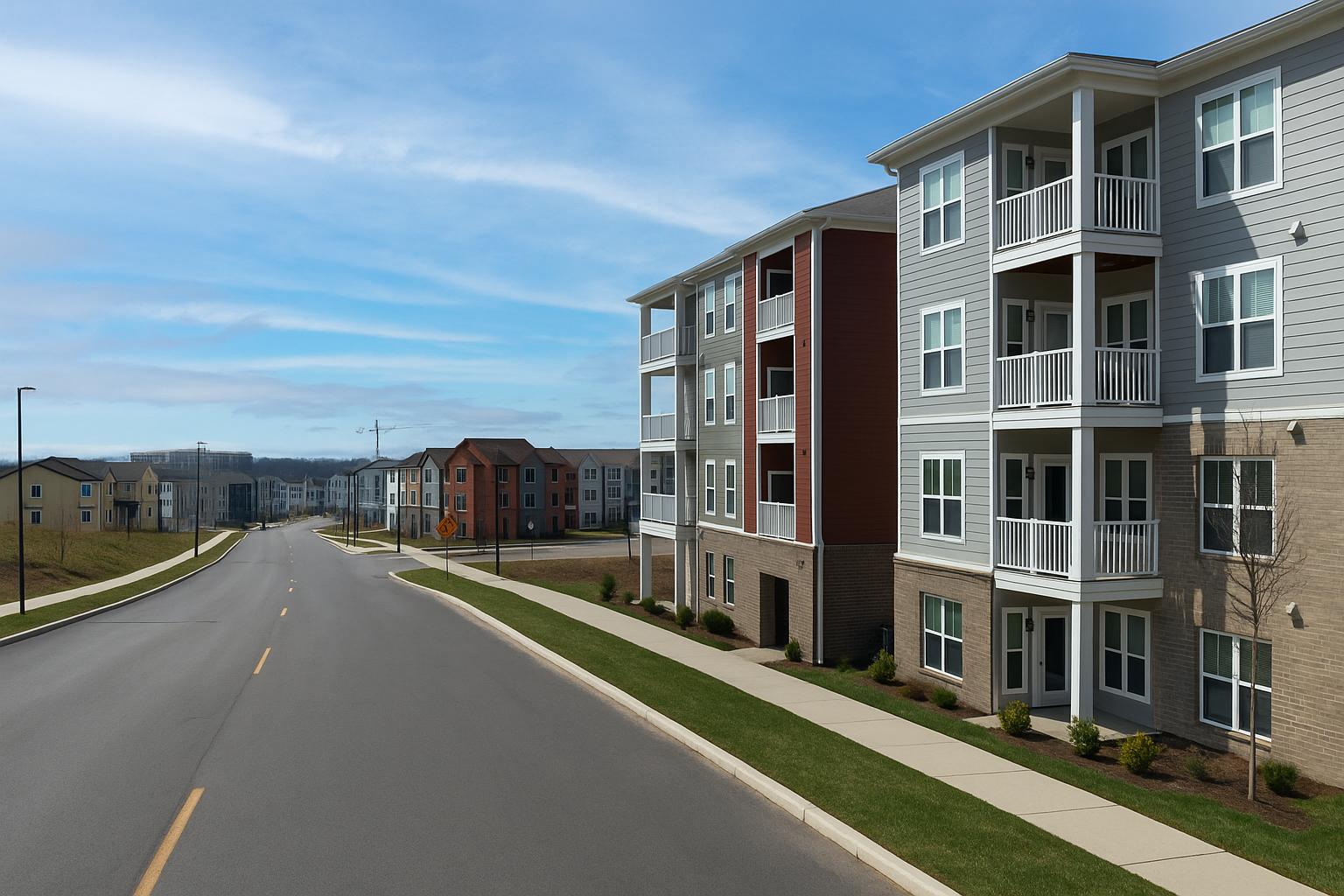
Residents on Columbus’ west side are voicing growing concerns that emergency response times are lagging behind the city’s rapid pace of development. In neighborhoods such as Scioto Woods, once a quiet residential area off Trabue Road, new apartment complexes are springing up at a record rate — and so are fears that police, fire, and ambulance services are struggling to keep up when every second counts.
The transformation of the west side has been particularly visible near The Quarry Trails, a sprawling mixed-use development that was once a stretch of dirt and debris. Opened in 2022, the complex is expected to include around 1,300 residential units when construction is complete. It is one of several new projects reshaping the area along Trabue Road, but the nearest fire station sits nearly four miles away — a distance that some residents say could make the difference between life and death in an emergency.
Longtime resident Dan Sileargy, who has lived in Scioto Woods for more than twenty years, said the west side has changed dramatically in just the past decade. “Going up and down Trabue Road, the amount of traffic, the amount of police and fire calls — you hear a lot more sirens than you used to,” Sileargy said. “As the growth continues, it makes you wonder if help will arrive when it’s really needed.”
According to data from the Columbus Division of Fire, the citywide average emergency response time is roughly eight minutes. But on the west side, that average rises to 9.6 minutes — a figure residents say is unacceptable as population density increases. “Public safety is the number one job of government at every level,” Sileargy added. “When people start to question that, it’s a failure in leadership.”
Columbus Mayor Andrew Ginther acknowledged the challenge and said the city is actively reviewing how to strengthen its emergency response network. “We need to do a better job of making sure we are responding to those calls for service,” Ginther said. “Part of that is resources, part of that is technology, and part of that is preparing for growth in a way that meets the needs of our residents.”
The recent closure of a nearby Franklin Township fire station has added to the strain, eliminating a facility that previously served parts of the west side. Ginther said that mutual aid agreements with neighboring jurisdictions have helped offset the loss, but critics argue that such stopgap measures are insufficient for a city growing as quickly as Columbus. “Our regional approach to providing basic city and emergency services has worked well, but we’ll continue to evaluate it,” Ginther said.
Not everyone shares the mayor’s optimism. Columbus Fire Fighters Union President Steve Stein said firefighters are stretched thin and need more resources to maintain the level of service residents expect. “We need to grow and continue those investments so we can get to people when seconds count,” Stein said. “They can’t wait ten or eleven minutes for help.”
Residents say they are not opposed to development — in fact, many welcome the investment and revitalization it brings. But they insist that the city must match new construction with expanded infrastructure, especially in public safety. “We support growth,” Sileargy said, “but growth without adequate planning for fire, police, and medical services only puts more lives at risk.”
As new apartment buildings, retail spaces, and parks rise across the west side, residents and officials alike are calling for a renewed focus on the fundamentals. With thousands of new residents expected to move into developments such as The Quarry Trails in the coming years, demand for emergency services will only grow.
City leaders are now under increasing pressure to act before response times lengthen further. The balance between economic growth and public safety, residents warn, will determine whether Columbus’ west side remains a thriving urban community or becomes a cautionary tale of development outpacing infrastructure. For many who have called the area home for decades, the message is clear: progress is welcome, but not at the expense of safety.