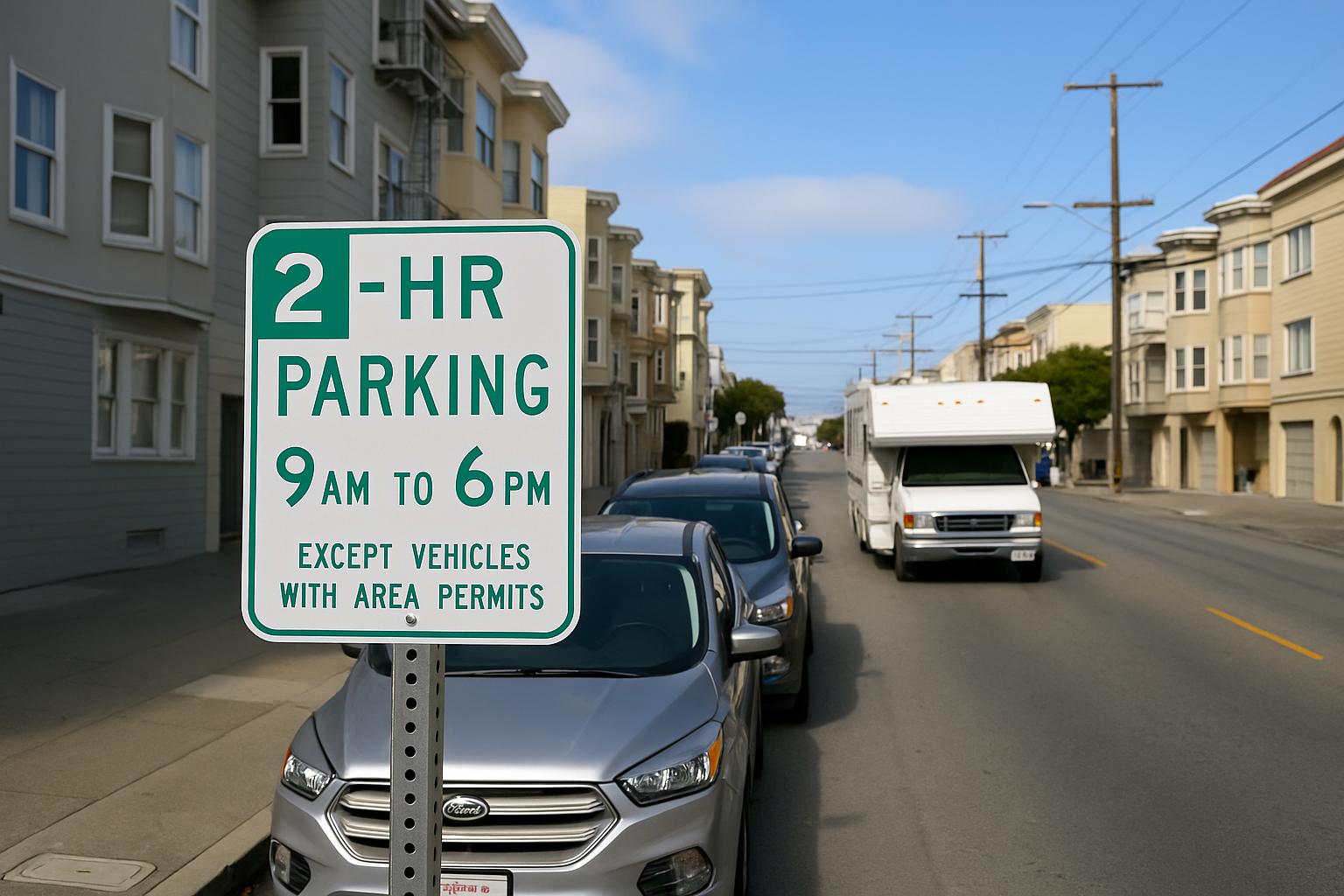
San Francisco will begin enforcing a new two-hour parking limit on city streets starting Saturday as part of an effort to manage long-term vehicle parking and address growing concerns about recreational vehicles remaining parked for extended periods. The new policy follows months of preparation that included public outreach, installation of signs, and the introduction of a vehicle buyback program aimed at helping residents comply with the new rule.
Under the new ordinance, any vehicle, including recreational vehicles, may not remain parked in the same location on designated streets for more than two hours. Those who exceed the limit will face fines exceeding $100, with no exceptions for visiting RVs or temporary travelers. The city’s transportation and enforcement teams have spent several months preparing for this change, ensuring that drivers are aware of the rule through public communication efforts and posted signage.
The decision to implement the two-hour limit comes after a growing number of residents and community groups expressed concerns about the impact of long-term vehicle parking on neighborhoods. Many streets, particularly in certain industrial and residential areas, have seen an increase in RVs and large vehicles being used as homes due to rising housing costs. This has led to issues related to sanitation, safety, accessibility, and limited parking availability for residents and businesses. The new measure aims to restore access to public streets while maintaining compassion for those affected by the city’s housing challenges.
Officials have described the enforcement process as both careful and empathetic. City staff conducted months of outreach to residents and vehicle owners, providing information about available resources, alternative parking options, and a vehicle buyback initiative. The buyback program was designed to give individuals an opportunity to voluntarily give up vehicles that were no longer operational or suitable for city living in exchange for financial assistance. In addition, the city connected participants with social services, housing navigation programs, and temporary shelter options to help them transition away from vehicle living.
The policy is being framed not as a punitive measure but as part of a broader strategy to balance the needs of all residents. Officials emphasize that the city must ensure public spaces remain safe, clean, and accessible while also supporting those who are most vulnerable. The two-hour parking rule is one step in a larger effort to manage urban space more effectively, improve the condition of neighborhoods, and prevent the long-term accumulation of vehicles on public streets.
Enforcement officers will begin issuing citations to vehicles that violate the parking limit. The city has stressed that it provided ample time for vehicle owners to prepare, relocate, or seek assistance before fines were issued. Signs marking two-hour parking zones have been installed throughout affected areas to ensure drivers have clear notice. Authorities have also communicated that vehicles left in violation of the rule may be subject to additional penalties or towing in cases of repeated non-compliance.
The move has drawn a range of reactions from the public. Some residents have welcomed the change, viewing it as necessary to restore order to crowded streets and reduce safety hazards. Others, however, have raised concerns about how the enforcement might affect individuals living in vehicles who have limited alternatives. City leaders maintain that the combination of outreach, assistance, and structured enforcement represents a fair and balanced approach to an increasingly complex issue.
San Francisco’s new parking limit reflects ongoing efforts to navigate the intersection of urban management, housing affordability, and community well-being. While the city continues to face challenges related to homelessness and housing shortages, officials have reiterated their commitment to providing compassionate responses alongside necessary regulation.
Starting this weekend, the two-hour parking limit will be in full effect, and drivers are encouraged to move their vehicles promptly to avoid penalties. The city advises all residents and visitors to pay attention to posted signage and plan accordingly. Officials will continue to monitor the policy’s effectiveness, gather public feedback, and make adjustments if needed.
The enforcement of this two-hour parking rule represents a significant step toward reclaiming public spaces for broader community use while ensuring that those affected by the changes have access to support and resources. The city hopes that this balanced approach will promote cleaner streets, improve accessibility, and contribute to a safer, more organized urban environment for everyone.
Under the new ordinance, any vehicle, including recreational vehicles, may not remain parked in the same location on designated streets for more than two hours. Those who exceed the limit will face fines exceeding $100, with no exceptions for visiting RVs or temporary travelers. The city’s transportation and enforcement teams have spent several months preparing for this change, ensuring that drivers are aware of the rule through public communication efforts and posted signage.
The decision to implement the two-hour limit comes after a growing number of residents and community groups expressed concerns about the impact of long-term vehicle parking on neighborhoods. Many streets, particularly in certain industrial and residential areas, have seen an increase in RVs and large vehicles being used as homes due to rising housing costs. This has led to issues related to sanitation, safety, accessibility, and limited parking availability for residents and businesses. The new measure aims to restore access to public streets while maintaining compassion for those affected by the city’s housing challenges.
Officials have described the enforcement process as both careful and empathetic. City staff conducted months of outreach to residents and vehicle owners, providing information about available resources, alternative parking options, and a vehicle buyback initiative. The buyback program was designed to give individuals an opportunity to voluntarily give up vehicles that were no longer operational or suitable for city living in exchange for financial assistance. In addition, the city connected participants with social services, housing navigation programs, and temporary shelter options to help them transition away from vehicle living.
The policy is being framed not as a punitive measure but as part of a broader strategy to balance the needs of all residents. Officials emphasize that the city must ensure public spaces remain safe, clean, and accessible while also supporting those who are most vulnerable. The two-hour parking rule is one step in a larger effort to manage urban space more effectively, improve the condition of neighborhoods, and prevent the long-term accumulation of vehicles on public streets.
Enforcement officers will begin issuing citations to vehicles that violate the parking limit. The city has stressed that it provided ample time for vehicle owners to prepare, relocate, or seek assistance before fines were issued. Signs marking two-hour parking zones have been installed throughout affected areas to ensure drivers have clear notice. Authorities have also communicated that vehicles left in violation of the rule may be subject to additional penalties or towing in cases of repeated non-compliance.
The move has drawn a range of reactions from the public. Some residents have welcomed the change, viewing it as necessary to restore order to crowded streets and reduce safety hazards. Others, however, have raised concerns about how the enforcement might affect individuals living in vehicles who have limited alternatives. City leaders maintain that the combination of outreach, assistance, and structured enforcement represents a fair and balanced approach to an increasingly complex issue.
San Francisco’s new parking limit reflects ongoing efforts to navigate the intersection of urban management, housing affordability, and community well-being. While the city continues to face challenges related to homelessness and housing shortages, officials have reiterated their commitment to providing compassionate responses alongside necessary regulation.
Starting this weekend, the two-hour parking limit will be in full effect, and drivers are encouraged to move their vehicles promptly to avoid penalties. The city advises all residents and visitors to pay attention to posted signage and plan accordingly. Officials will continue to monitor the policy’s effectiveness, gather public feedback, and make adjustments if needed.
The enforcement of this two-hour parking rule represents a significant step toward reclaiming public spaces for broader community use while ensuring that those affected by the changes have access to support and resources. The city hopes that this balanced approach will promote cleaner streets, improve accessibility, and contribute to a safer, more organized urban environment for everyone.