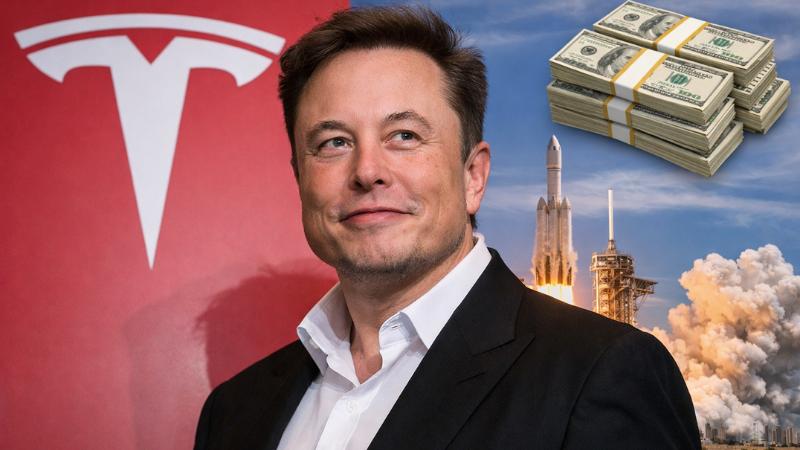
The world’s richest individual added significantly to his fortune after a major legal reversal in the United States. The Delaware Supreme Court on Friday cleared Elon Musk’s long-disputed $56 billion compensation package from Tesla, overturning a lower court ruling that had invalidated the 2018 pay plan. The decision marked a pivotal moment in a case that has drawn global attention to executive compensation, corporate governance, and shareholder rights at one of the world’s most valuable technology companies.
In its judgment, the state’s highest court ruled that the earlier decision by the Court of Chancery to cancel the pay package entirely was an excessive remedy. The justices said the lower court failed to give Tesla sufficient opportunity to determine what a fair level of compensation for its chief executive should be. The five-judge panel concluded that rescission of the entire package was not justified under the circumstances, even as it acknowledged concerns raised during the earlier proceedings.
Following the ruling, Musk’s net worth rose sharply, reaching an estimated $749 billion, according to the latest figures from the Forbes billionaires index. The increase widened the gap between Musk and the world’s second-richest individual, Google co-founder Larry Page, whose wealth is estimated at $252.6 billion. The surge has renewed speculation that Musk could eventually become the world’s first trillionaire if valuations of his companies continue to climb.
The compensation plan at the center of the dispute was approved by a majority of Tesla shareholders in 2018 but was later challenged in court by investor Richard Tornetta, who argued that the award was excessive and unfair. In January 2024, following a five-day trial, Chancellor Kathaleen McCormick of the Court of Chancery struck down the package, describing the approval process as deeply flawed. She cited concerns that Tesla’s board was susceptible to Musk’s influence and upheld her decision again in December 2024.
Despite those findings, Tesla’s board has consistently backed Musk, approving an interim compensation award of about $29 billion in August and later outlining a longer-term package that could eventually be valued far higher. The Supreme Court’s ruling now clears the way for Tesla to revisit Musk’s compensation without the constraints imposed by the earlier judgment.
Musk’s vast wealth is tied to his role in building and leading multiple high-profile companies. He is a co-founder of Tesla, SpaceX, and artificial intelligence startup xAI, among others. He owns about 12 percent of Tesla, which he first invested in during 2004 and has led as chief executive since 2008. SpaceX, founded in 2002, was valued at roughly $800 billion in a private tender offer in December 2025, with Musk holding an estimated 42 percent stake.
In 2022, Musk acquired Twitter in a $44 billion transaction and later merged it with xAI in March 2025, creating a combined entity valued at about $125 billion, including debt. He is also behind The Boring Company and Neuralink, ventures focused on tunneling technology and brain-computer interfaces, which together have raised around $2 billion from private investors.