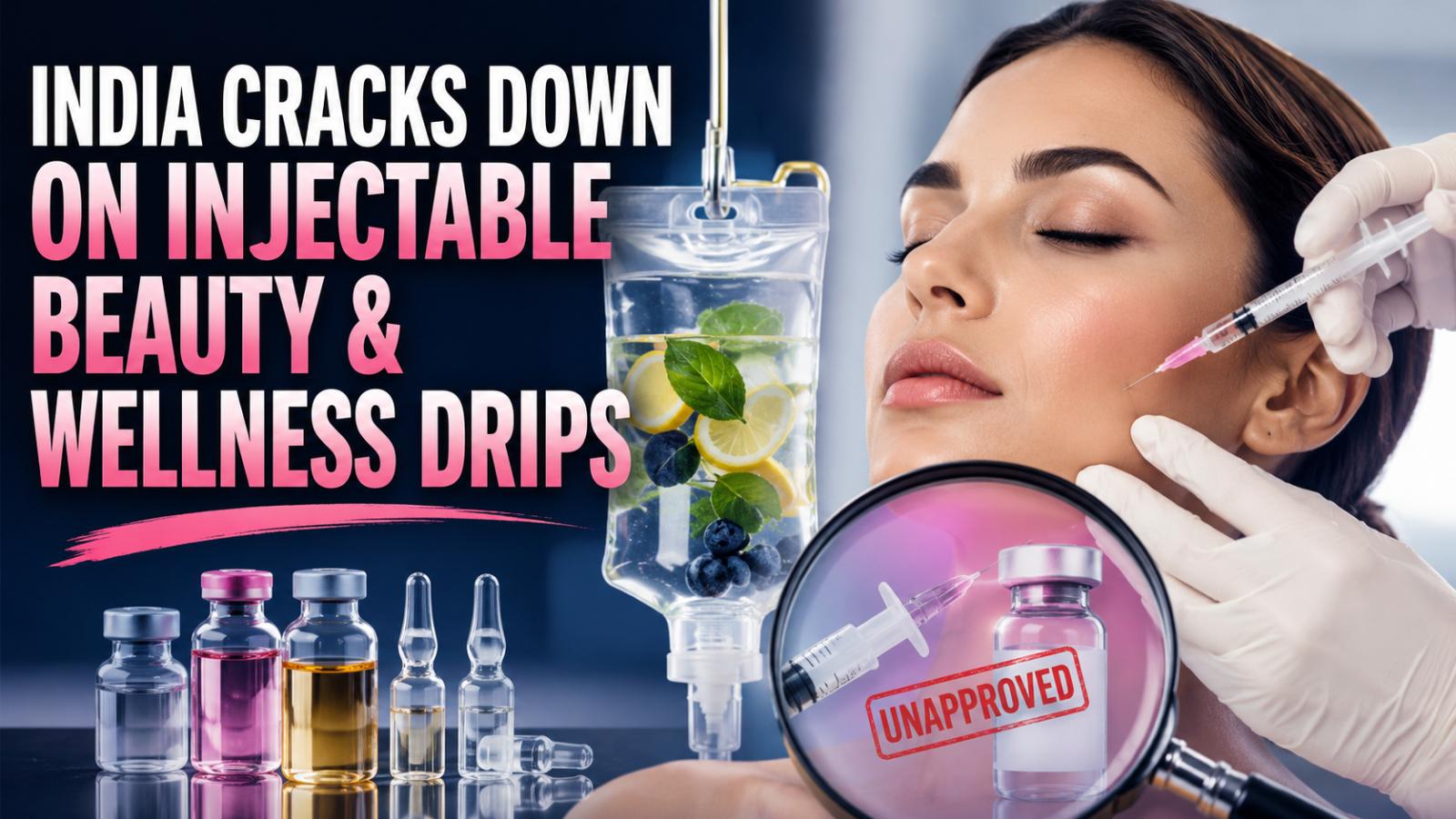
India’s action against injectable cosmetic products has opened up a bigger debate around the fast-growing beauty and wellness industry, where clinics, salons and gyms are offering intravenous drips and injections with promises of glowing skin, weight loss, anti-ageing, hair growth and instant energy. What looked like a crackdown on one category of cosmetic injections has now exposed a much wider market of unapproved and loosely monitored wellness treatments.
The Central Drugs Standard Control Organisation recently made it clear that cosmetics cannot be legally injected into the human body. This clarification has become important because many beauty centres have been marketing injectable products as quick-fix solutions for skin brightening, detox, fitness recovery and youthful appearance. Dermatologists say the problem is not limited to glutathione drips, which are commonly promoted for skin lightening. The same trend now includes vitamin C drips, collagen boosters, NAD+ infusions, biotin injections, amino acid cocktails, exosome therapy, hair-loss injections and even weight-loss drugs such as semaglutide and tirzepatide.
Unsafe beauty trend grows beyond clinics
Doctors warn that many of these treatments are being used off-label, purchased through informal channels or promoted without enough scientific evidence. In major cities, injectable beauty and wellness packages are now advertised not only by dermatology clinics but also by salons, wellness chains, influencers and even fitness centres. This is where the real danger begins. Once medical procedures move into non-medical spaces, the risk to consumers rises sharply.
Delhi-based dermatologist Dr Dipali Bharadwaj has warned that injectable products are being used widely across beauty and wellness centres. According to her, several such products may be counterfeit, cheaply bought online or administered by people without proper medical training. She also pointed out that some gym instructors are reportedly injecting clients by promising quick results. This is a serious red flag because intravenous or injectable procedures require medical knowledge, sterile handling, emergency preparedness and proper patient screening.
Glutathione remains one of the most aggressively marketed products in this space. It is often promoted as a skin-brightening and detox treatment, but its cosmetic use remains controversial. While it has limited approved medical uses, dermatologists say its routine use for fairness, glow or anti-ageing lacks strong scientific support. Some doctors argue that it may help in selected medically justified cases, but others strongly oppose its commercial cosmetic use because of safety concerns and weak evidence.
Senior dermatologist Dr Kabir Sardana has criticised the widespread cosmetic use of such injectable treatments, saying many are unapproved, unscientific and may expose patients to serious adverse effects, including infections. Dermatologists also warn that injectable procedures can lead to allergic reactions, contamination-related complications, atypical infections, liver and kidney stress, and vascular emergencies if performed incorrectly.
Wellness drips and weight-loss shots raise concern
The wellness drip trend has added another layer to the problem. Many centres now offer vitamin C, NAD+, collagen, biotin, amino acids and multivitamin infusions as immunity boosters, anti-fatigue therapy or anti-ageing solutions. These are often packaged attractively for young professionals, brides, gym-goers and social media-conscious consumers. The marketing makes them look harmless, but doctors say unnecessary intravenous treatments are not risk-free.
Vitamin C drips are commonly sold for glow and pigmentation control, while NAD+ infusions are promoted for energy and anti-ageing. Collagen and biotin injections are being included in skin and hair packages. However, in healthy individuals, the dramatic benefits claimed by many clinics are not backed by strong evidence. More importantly, these procedures are often performed outside hospitals, where emergency support may not be available if something goes wrong.
Hair clinics are also increasingly offering injectable finasteride and dutasteride directly into the scalp. These drugs are usually known for treating male-pattern hair loss and prostate-related conditions in oral form. Clinics claim scalp injections may improve hair growth with fewer side effects, but experts say long-term safety data and standardisation of injectable preparations remain weak.
Exosome therapy is another fast-growing treatment being marketed for skin rejuvenation, scars and hair restoration. It is promoted as a regenerative treatment, but many doctors say it is still experimental and not clearly regulated. Patients may not fully understand that such treatments are not the same as standard, proven medical care.
The use of GLP-1 drugs such as semaglutide and tirzepatide by aesthetic clinics is also worrying. These medicines are meant for diabetes and weight management under proper medical supervision. They should be prescribed after evaluating a patient’s health, medical history and risk factors. Offering them casually as obesity shots or slimming injections in beauty clinics can put patients at risk.
The larger issue is weak enforcement. India’s aesthetic medicine industry has expanded quickly, but regulation has not kept pace with the speed of marketing. Social media has made the problem worse by normalising injections as beauty shortcuts. Young consumers are being sold the idea that instant glow, detox, fat loss and anti-ageing can be achieved through drips and shots without consequences.
The CDSCO clarification may become a turning point, but only if it is followed by strict inspections and penalties. Authorities need to check where these products are coming from, who is administering them, whether clinics have qualified doctors and whether consumers are being misled by exaggerated claims.
For consumers, the warning is simple: any treatment that enters the bloodstream or is injected into the body is a medical procedure, not a casual beauty service. Glossy advertising, influencer promotions and clinic packages should not replace medical advice. Before taking any injectable skin, hair, wellness or weight-loss treatment, patients should ask whether it is approved, who is prescribing it, what the risks are, and whether emergency care is available.
The beauty industry may continue to sell quick transformations, but doctors say the cost of unregulated injectable treatments can be much higher than the package price. India’s crackdown has exposed only the surface of a market that needs stronger oversight, better public awareness and tougher action against unsafe practices.