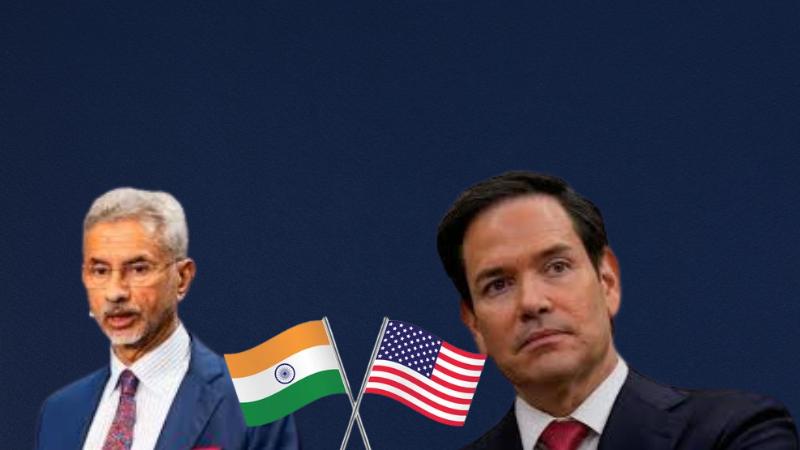
External Affairs Minister S Jaishankar confirmed that he spoke with US Secretary of State Marco Rubio earlier today, amid heightened regional tensions between India and Pakistan. While the full details of their conversation were not disclosed publicly, Jaishankar emphasized India’s ongoing commitment to a "measured and responsible" approach in dealing with escalating hostilities. In his official post on social media, Jaishankar wrote, “Had a conversation with US @SecRubio this morning. India’s approach has always been measured and responsible and remains so.” The interaction between the two nations’ top diplomats occurred shortly after the United States made separate diplomatic contact with Pakistan’s military leadership.
According to officials, Marco Rubio also spoke with Pakistan’s Chief of Army Staff, General Asim Munir, after Pakistan launched ballistic missiles targeting New Delhi. This communication took place shortly after Pakistan received approval for a $1 billion bailout package from the International Monetary Fund. These back-to-back events have raised significant alarm within the international community, prompting calls for de-escalation and renewed diplomatic engagement. The United States, maintaining its role as a mediator, has urged both India and Pakistan to avoid further provocation and has offered assistance in initiating direct dialogue between the two nations. US State Department spokesperson Tammy Bruce confirmed that Secretary Rubio urged both sides to “find ways to de-escalate” and reiterated Washington’s offer to assist in launching constructive talks to prevent the situation from deteriorating further.
The diplomatic developments come in the wake of a series of aerial and drone exchanges between India and Pakistan over the past several days. These engagements have reportedly targeted sensitive strategic locations on both sides of the border, including military bases and civilian infrastructure. Tensions intensified significantly after India carried out a series of precision airstrikes targeting several key Pakistani military facilities. According to Indian defense sources, these included air force installations at Rafiqui, Murid, Chaklala, and Rahim Yar Khan. Additional strikes were reported at Sukkur, Chunia, a radar facility at Pasrur, and the Sialkot aviation base. The Indian Air Force described the strikes as “swift and calibrated” actions that focused exclusively on pre-identified military targets.
Wing Commander Vyomika Singh of the Indian Air Force stated that the response involved the deployment of air-launched precision weapons against technical and command infrastructure, radar facilities, and weapons storage areas. The commander reiterated that utmost care was taken to avoid civilian casualties and to minimize collateral damage during the execution of the strikes. Singh confirmed that Indian fighter aircraft carried out the mission using guided munitions designed to accurately hit only intended military installations, thereby maintaining operational precision and strategic restraint.
India’s actions appear to be part of a broader response strategy aimed at deterring further aggression while also sending a clear message regarding its defense posture. Despite the severity of the retaliatory measures, Indian officials have maintained that the country’s approach is defensive and proportionate, in line with international norms. The Indian government has continued to call for calm and has welcomed international efforts to mediate peace through diplomatic channels, provided that national sovereignty and territorial integrity are respected.
Meanwhile, the region remains on high alert, with both nations reinforcing their military readiness. International observers are closely monitoring the situation, as the potential for further escalation remains a concern. The current crisis underscores the fragile nature of peace in the subcontinent, where decades-old rivalries and unresolved disputes can quickly flare into open conflict. The involvement of global powers like the United States in facilitating dialogue will be critical in ensuring that a full-scale confrontation is avoided.
As both India and Pakistan navigate this period of heightened tension, diplomatic efforts are expected to intensify in the coming days. The broader international community continues to urge restraint and dialogue, with hopes that measured responses and responsible diplomacy will prevail over confrontation and conflict.