A recent ranking of the best places to live in the United States for 2026 has identified two Chicago-area suburbs among the top 20, highlighting communities where affordability, quality of life, and access to amenities remain strong despite rising national housing costs.
The annual assessment evaluated more than 100 factors across over 2,000 cities with populations between 75,000 and 500,000. Only cities with median home values below $500,000 were included, reflecting an emphasis on attainable housing and cost-of-living pressures. The analysis considered housing affordability, safety, education, healthcare access, transportation, and local amenities, with additional weight given to affordability as households continue to face elevated living expenses across the country.
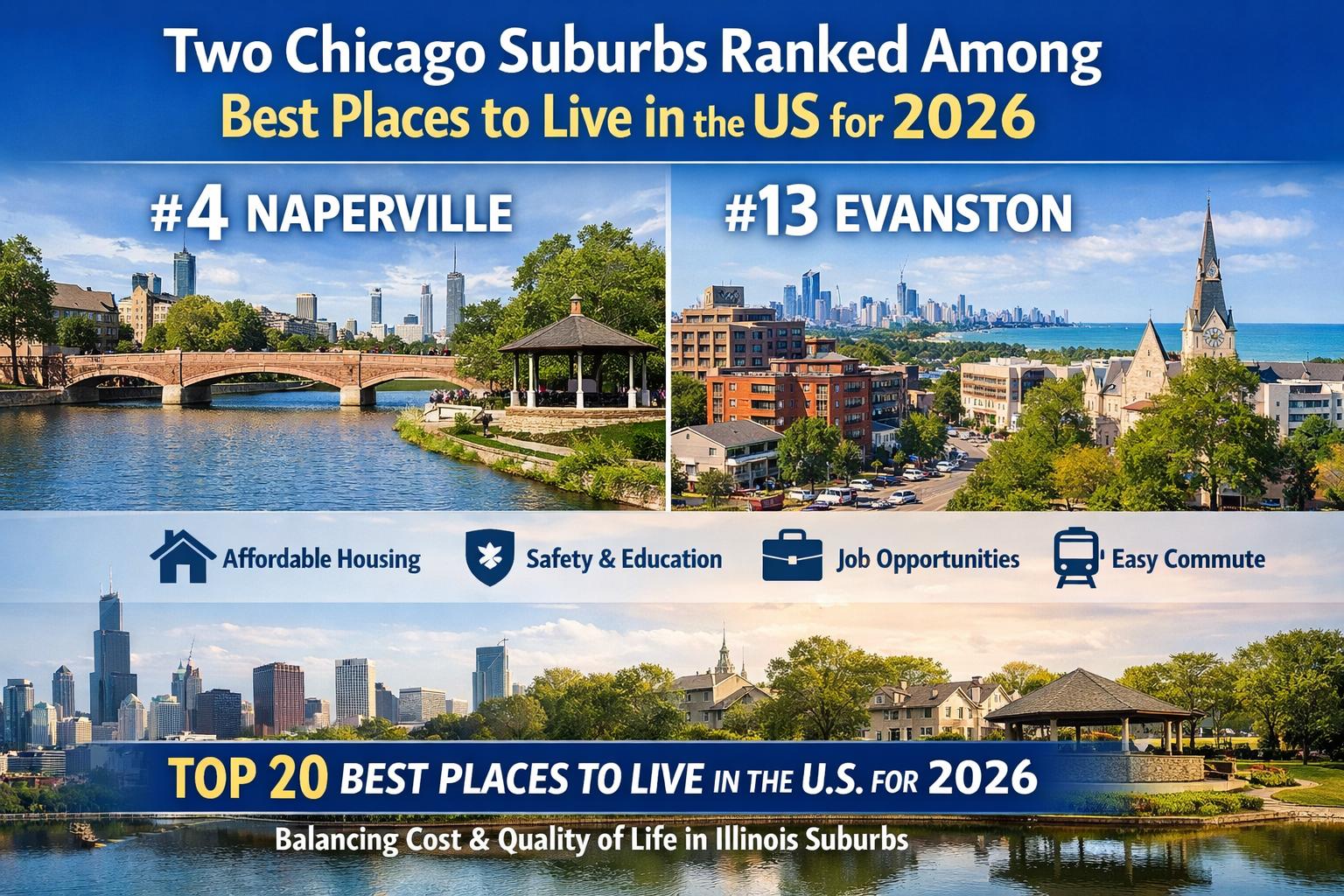
Among Illinois communities, Naperville ranked particularly high, securing the No. 4 position nationally. The western Chicago suburb was recognized for its strong public services, well-developed infrastructure, and relatively manageable commute times compared with larger metropolitan areas. Another Chicago-area city, Evanston, also performed strongly, placing at No. 13. Its proximity to Chicago, combined with access to education, employment hubs, and cultural amenities, contributed to its strong overall score.
The findings highlight a broader trend toward mid-sized cities that balance affordability with livability. Communities that ranked highly tended to offer stable housing markets, strong public services, and convenient access to urban job centers while maintaining suburban quality of life.
Although no Illinois city reached the top national spot, the strong performance of multiple Chicago-area suburbs underscores continued demand for locations that combine affordability with infrastructure and accessibility. This shift reflects growing preference among American households for affordable, mid-sized cities with strong infrastructure and stable living costs.
The annual assessment evaluated more than 100 factors across over 2,000 cities with populations between 75,000 and 500,000. Only cities with median home values below $500,000 were included, reflecting an emphasis on attainable housing and cost-of-living pressures. The analysis considered housing affordability, safety, education, healthcare access, transportation, and local amenities, with additional weight given to affordability as households continue to face elevated living expenses across the country.
Among Illinois communities, Naperville ranked particularly high, securing the No. 4 position nationally. The western Chicago suburb was recognized for its strong public services, well-developed infrastructure, and relatively manageable commute times compared with larger metropolitan areas. Another Chicago-area city, Evanston, also performed strongly, placing at No. 13. Its proximity to Chicago, combined with access to education, employment hubs, and cultural amenities, contributed to its strong overall score.
The findings highlight a broader trend toward mid-sized cities that balance affordability with livability. Communities that ranked highly tended to offer stable housing markets, strong public services, and convenient access to urban job centers while maintaining suburban quality of life.
Although no Illinois city reached the top national spot, the strong performance of multiple Chicago-area suburbs underscores continued demand for locations that combine affordability with infrastructure and accessibility. This shift reflects growing preference among American households for affordable, mid-sized cities with strong infrastructure and stable living costs.