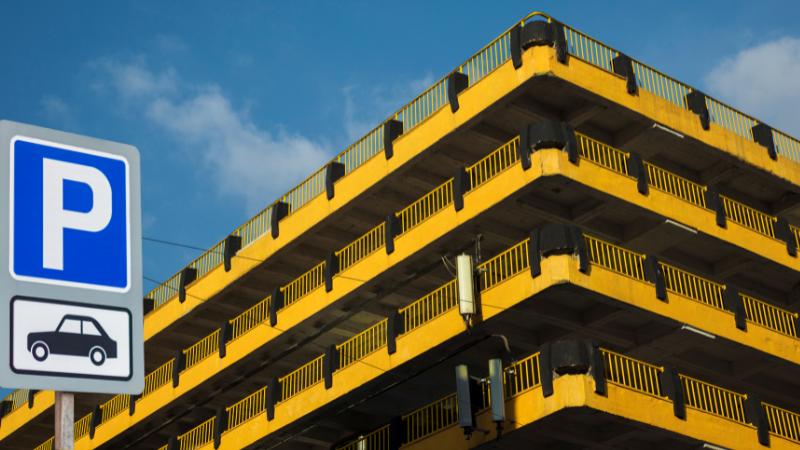
Although Santa Clara’s proposed 2025-26 fiscal plan currently projects a $9.3 million surplus, forecasts over the subsequent five years indicate significant shortfalls. To address the looming deficits, the city is considering various revenue-generating measures, including the implementation of paid parking. Officials plan to bring on a consultant to conduct a detailed feasibility study for the new parking policy, which would impact public lots managed by the city.
The city council, particularly District 5 Councilmember Suds Jain—whose district includes downtown Santa Clara and Franklin Square—has expressed support for initiating the study. Jain emphasized the need for a more self-sustaining city budget, especially in light of earlier financial challenges the city faced during the COVID-19 pandemic. During that period, the city’s financial reserves dropped from 25% to 15%, prompting more cautious fiscal management.
To plug previous gaps, Santa Clara raised several user fees and business-related taxes. Additionally, voters approved a $400 million infrastructure bond last year to help rebuild aging public assets, including the George F. Haines International Swim Center. However, the city’s rising costs remain a pressing concern. For example, the city spends approximately $140,000 each year maintaining Franklin Square—an area where property owners contribute only about $14,200 annually through a maintenance district agreement. This widening cost gap is now prompting the city to look for alternative revenue sources like paid parking.
Craig Mobeck, director of public works, confirmed that the city wants to launch a consultant-led parking study this summer. The results will help determine if charging for parking at city-managed lots is financially viable. Mobeck noted that parking fees could help the city recover some of its escalating maintenance expenses.
While the potential parking fees would apply to multiple city-owned lots, Jain said his primary focus is the Santa Clara Convention Center. The center’s maintenance alone is expected to cost the city about $940,000 in the upcoming fiscal year. Jain believes introducing parking fees at high-traffic areas like the convention center could generate much-needed revenue without placing undue burden on smaller community spots.
Still, not everyone agrees with the idea—especially local business owners in Franklin Square. Many fear that charging for parking could reduce customer traffic in an area heavily dependent on community support and walk-in business. John McGrew, a longtime manager and owner of Mio Vicino Italian restaurant, voiced concerns about the impact such fees could have on small businesses clustered around the square.
McGrew, who has spent over three decades working at Mio Vicino and grew up across the street from Franklin Square, pointed out that his area is fundamentally different from larger commercial hubs. Unlike larger centers, Franklin Square hosts a group of small, independently-owned businesses that rely on convenient and cost-free access to attract and retain patrons. He worries that even a nominal parking fee could drive customers away, especially when neighboring areas do not impose such charges.
McGrew emphasized that while his restaurant might survive the change, other businesses might not be as fortunate. Patrons may decide it’s not worth the added inconvenience and cost, choosing instead to dine or shop elsewhere. This could lead to a ripple effect in which decreased foot traffic affects overall business viability across the square.
Other regional shopping destinations have adopted paid parking in recent years, setting a precedent for such changes. In 2022, Westfield Valley Fair began charging $1 per hour after the first two hours, with a daily maximum of $10. Similarly, Santana Row implemented a $2 per hour charge beyond the initial two free hours. However, many argue these centers attract larger crowds and offer amenities that justify the added cost, unlike Franklin Square’s community-driven model.
Santa Clara city officials maintain that no final decision has been made and stress that the proposed parking study is just the first step in a longer deliberative process. The study will gather community input and economic data to inform councilmembers before any policy is enacted. Still, the idea alone has sparked debate over the balance between fiscal sustainability and small business survival.
As Santa Clara navigates its financial challenges, the outcome of this proposed measure could serve as a bellwether for how local governments attempt to generate revenue in the post-pandemic economy without undermining the economic ecosystems of their historic and cultural districts. Whether the solution lies in paid parking or elsewhere, city leaders will have to weigh both the economic and community impacts carefully in the months ahead.