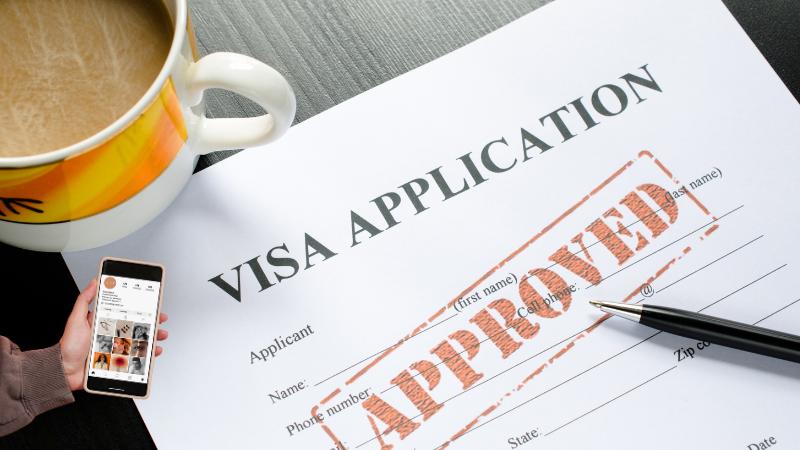
The United States has implemented a new directive requiring all nonimmigrant student visa applicants to make their social media accounts publicly accessible as part of enhanced background checks. The announcement, which stems from ongoing efforts by the Trump administration to reinforce visa vetting, mandates applicants for F, M, and J category visas to adjust privacy settings across their social media profiles. This change is designed to allow American consular officials to assess online activities in order to verify identity, detect any potential threats, and ultimately determine admissibility under US law.
In a statement shared by the US Embassy in India, the requirement was presented as an immediate and necessary step to improve national security. The embassy clarified that making social media accounts public is not merely a suggestion but an expectation for all visa applicants, allowing officials to more efficiently evaluate a person’s background before granting entry to the United States. Since 2019, visa applicants have already been required to provide social media identifiers on their forms, but the new directive intensifies that scrutiny by also demanding visibility into their content, posts, and online behavior.
Social media vetting now plays a crucial role in deciding whether an individual poses a risk to national security or aligns with values acceptable for entry into the United States. Platforms such as Facebook, LinkedIn, X (formerly Twitter), TikTok, and others will be reviewed to ensure applicants are not engaging in activity or expressing views considered hostile to US interests, culture, or institutions. According to officials, this increased transparency is intended to flag anti-American sentiments and help weed out applicants who could undermine public safety or disrupt social order.
The Trump administration recently halted all new visa interviews for international students and exchange visitors through US consulates worldwide, citing ongoing national security concerns. While the suspension was temporary, it coincided with the roll-out of more rigorous vetting procedures, particularly those focused on digital footprints and online interactions. The move was seen as part of a broader strategy to clamp down on what officials described as previously “loose” vetting practices under the Biden administration, especially amid rising concerns about fraud and abuse in visa applications.
The US State Department later resumed processing student visa applications but followed it with this directive urging applicants to maintain public profiles across social platforms. The new policy affects three major categories of visas. The F visa is intended for students pursuing academic degrees in universities, colleges, or accredited institutions. The M visa serves vocational or non-academic learners in trade and technical schools, while the J visa is designed for exchange visitors involved in cultural or educational programs.
Officials from the embassy emphasized that while the internal systems for vetting are robust, the real-time review of public social media accounts enables them to make more informed decisions about whether applicants present a potential threat. It is also a way to cross-check the consistency of applicants' personal narratives and declarations in visa forms against their public behavior online.
Critics argue that such measures raise concerns about privacy, freedom of expression, and potential discrimination. However, US officials maintain that national security concerns take precedence and that transparency is a fair expectation for those seeking the benefits of US education and cultural exchange. They also note that the directive is not arbitrary but part of a broader plan implemented since 2019 that has grown increasingly important amid global uncertainties and geopolitical shifts.
The latest developments underscore a tightening of US immigration and visa policies that especially affect international students. With over 900,000 international students pursuing education in the US, such changes are likely to impact not only individual applicants but also institutions that rely on global enrollment and cultural exchange. Educational advisors and immigration attorneys are urging students to be mindful of their digital presence and to review their online profiles for any content that may raise concerns during the vetting process.
With no clear timeline for revisiting or relaxing the social media directive, applicants seeking to study or engage in exchange programs in the US must now factor in digital transparency as part of the application process. As this policy becomes standard practice, its implications on international mobility and educational access will continue to unfold, with students around the world adjusting to this new dimension of global scrutiny.