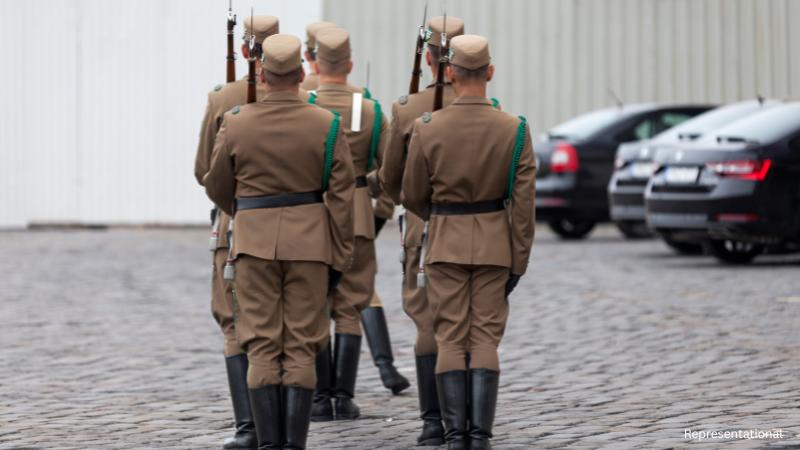
The ongoing political clash between federal power and state authority has intensified as President Donald Trump’s plan to deploy military troops in Chicago has sparked fierce opposition from Illinois leaders. Reports indicate that the Pentagon has been quietly preparing for weeks to mobilize thousands of National Guard troops, along with the possibility of active-duty military, to Chicago in September as part of the administration’s broader crackdown on crime, homelessness, and undocumented immigration. The plan mirrors earlier operations that took place in Washington, D.C., and Los Angeles, where federal forces were used to protect government facilities and enforce order following protests.
Illinois Governor JB Pritzker made it clear that the state has not requested nor approved such assistance. He emphasized that the safety of Illinois residents remains his responsibility and that there is no emergency that would justify federalizing the Illinois National Guard or deploying troops from outside the state. He accused the president of manufacturing a crisis to serve political ends, arguing that federal intervention without state approval undermines state sovereignty. Pritzker stressed that Illinois will stand firm in protecting its people under state law rather than yielding to political maneuvers.
Chicago Mayor Brandon Johnson has also strongly objected to the plan, calling it both illegal and counterproductive. Attending a block party on the city’s South Side, Johnson rejected the narrative presented by federal officials that depicts Chicago as a city overwhelmed by violence. Instead, he painted a different picture of community unity, mutual support, and progress. He pointed out that crime in Chicago has actually declined significantly in the past year, with homicides dropping more than 30 percent, robberies falling by 35 percent, and shootings down nearly 40 percent. According to Johnson, unlawful military deployment would threaten the fragile trust between residents and police that is vital for building safer neighborhoods.
Legal experts have echoed the concerns of state and city leaders, noting that the president does not have the authority to unilaterally send the National Guard to Illinois. Under U.S. law, the governor of each state holds the power to deploy the Guard unless there is a direct threat to federal property or institutions. Analysts caution that if the president bypasses this requirement, it could set off legal battles and escalate tensions between federal and state governments.
Despite the overwhelming opposition from elected officials, some groups within Chicago support Trump’s plan. A conservative group calling itself “Chicago Flips Red” has welcomed the idea of the National Guard patrolling city streets. The group, while small in membership, claims to have nationwide backing and argues that the presence of troops would deter crime and restore order. Their stance reflects a divide within the community, where frustration with crime persists despite the overall downward trend in violent incidents. Supporters insist that a visible military presence would discourage criminals, while opponents argue it would only inflame tensions and worsen distrust between residents and authorities.
Trump himself has framed the issue as one of urgency, insisting that Chicago residents are calling for federal intervention. He has described encounters with supporters, particularly African American women, who he claims have begged him to send troops to the city. His remarks, however, have been dismissed by both Governor Pritzker and Mayor Johnson as exaggerated and politically motivated. They argue that portraying Chicago as desperate for federal troops is an inaccurate depiction of reality and an attempt to justify actions that would otherwise be unlawful.
Civil rights organizations have also weighed in on the debate. The ACLU of Illinois has argued that deploying the National Guard is not an appropriate solution for community safety. The group emphasized that Guard members are trained for combat and military operations, not for policing neighborhoods or working with residents to build trust. According to civil rights advocates, true public safety requires long-term investment in communities, schools, mental health services, and local policing reforms rather than short-term military interventions.
The growing dispute underscores the tension between local leadership and federal authority as the Trump administration attempts to expand its use of military resources to address domestic issues. With Chicago identified as the next target for deployment, the debate is likely to intensify further in the coming months. Illinois officials have vowed to resist any unilateral action by the federal government, framing the conflict as not just about crime but about state sovereignty, democratic accountability, and the role of law in governing federal and local relations.
As the application of military power in American cities becomes a recurring theme of the administration’s domestic agenda, Chicago stands as a test case for how far federal authority can go without state consent. Whether the plan moves forward or is blocked by legal and political resistance, the battle over Chicago highlights the fragile balance between public safety, community trust, and constitutional boundaries in a moment of heightened political conflict.