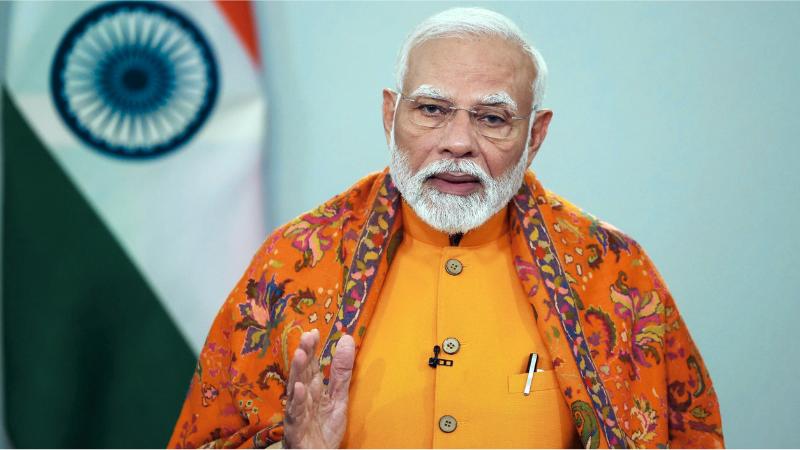
Prime Minister Narendra Modi’s recent schedule reflects a blend of outreach, infrastructure acceleration, and security-focused reviews across multiple states. In Manipur, during his first visit since ethnic violence began, he met displaced families in Churachandpur, called for reconciliation between hills and valley, and announced projects aimed at restoring normalcy and rebuilding public trust. The launch and foundation-laying of initiatives worth several thousand crores included urban road upgrades, digital infrastructure through the Manipur Infotech Development project, and facilities such as working women’s hostels, healthcare centers, and sports complexes. While the visit drew criticism from opposition parties as delayed or symbolic, it also underlined the Centre’s strategy of coupling dialogue with development to calm tensions.
In Assam, Modi unveiled and initiated a span of connectivity and industry projects: a medical college in Darrang, a Guwahati ring road to decongest urban traffic, a Brahmaputra bridge for inter-district access, and the bamboo-based ethanol plant at Numaligarh. The ethanol complex, designed as a zero-waste facility, is expected to stimulate the rural economy across the Northeast by sourcing bamboo and creating allied jobs, while reinforcing the push toward cleaner fuels. The Prime Minister also backed a polypropylene plant and bioethanol-linked initiatives, framing energy, semiconductors, and green growth as pillars of Atmanirbhar Bharat. Complementing these moves, the Centre cleared connectivity upgrades in Bihar, including four-laning sections of key corridors and doubling rail lines to reduce travel time, spur logistics, and create employment across Bihar, Jharkhand, and West Bengal.
Modi’s itinerary extended to flood-affected regions in Himachal Pradesh and Punjab for aerial assessments and relief reviews, with a dedicated package announced for Uttarakhand. In Kolkata, he inaugurated the 16th Combined Commanders’ Conference, themed Year of Reforms – Transforming for the Future, where the focus was on jointness, integration, technology modernization, and operational preparedness. The conference followed Operation Sindoor, with the Prime Minister and ISRO leadership highlighting the role of indigenous systems and round-the-clock satellite support underpinning recent security operations.
political, diplomatic and cultural highlights
The Prime Minister’s 75th birthday became a nationwide moment of cultural participation and party mobilization. From Ganga Aarti in Varanasi, rangoli by schoolchildren, and temple prayers to cleanliness drives and health camps under Sewa Pakhwada, the day blended symbolic celebration with welfare-oriented campaigns like Swasth Nari–Sashakt Pariwar. Union leaders and chief ministers offered tributes, praising administrative continuity and long-horizon planning. The Delhi government marked the day with a multilingual student chorus release, and party cadres staged civic initiatives in several states. At the same time, critics questioned the optics amid socio-economic challenges, ensuring the moment remained politically contested.
On Hindi Diwas, Modi framed Hindi as a living heritage and urged collective responsibility to enrich Indian languages for future generations, referencing the growing global interest in Indian linguistic culture. In Guwahati, he commemorated Bhupen Hazarika’s centenary, describing the singer’s work as a thread of national unity and regional pride, and encouraging support for local artisans and cultural symbols like the Assamese gamosa.
Diplomatically, Varanasi hosted Mauritius Prime Minister Navinchandra Ramgoolam for bilateral talks following his spiritual engagements in Kashi and a visit to the Ram temple in Ayodhya. Discussions emphasized development cooperation, capacity building, renewable energy, health, and education, building on the recent elevation of India–Mauritius ties to an enhanced strategic partnership. In parallel, India signaled renewed momentum in trade engagements with key partners. Conversations with European and American counterparts threaded through themes of technology collaboration, market access, and resilient supply chains, even as domestic debates arose over the contours of negotiations and their implications for farmers, small traders, and youth employment.
In state and national politics, Modi’s campaign stops and public rallies reiterated recurring priorities: securing borders and addressing demographic challenges attributed to illegal infiltration, promising pucca housing, and advancing welfare schemes. Opposition parties, including the Congress and regional rivals, countered with critiques on timelines, relief adequacy, and the government’s political framing of security and identity. Institutional milestones continued alongside the rhetoric: voting for the vice-presidential election featured the Prime Minister among the first to cast a ballot; the NDA’s candidate prevailed decisively, with Modi expressing confidence in the new Vice President’s constitutional stewardship.
On governance and knowledge preservation, Modi launched the Gyan Bharatam portal under the Gyan Bharatam Mission, a national effort to digitize, conserve, and disseminate India’s manuscript heritage at scale in accessible, AI-readable formats. The program envisions clusters, regional centers, and centers of excellence to safeguard traditional knowledge and integrate it into modern research and education. The government’s economic messaging tied these knowledge initiatives to a broader modernization arc encompassing manufacturing, energy transition, and infrastructure buildouts across the Northeast and the heartland.
Across these developments, the throughline remains a blend of symbolism and statecraft: religious and cultural observances placed alongside mega-projects; visits to fragile regions paired with promises of reconciliation and connectivity; defense jointness framed as a technological leap; and diplomacy presented as an extension of domestic capability-building. Whether in the Northeast’s bridges and biofuels, Manipur’s reconstruction plans, or Varanasi’s ceremonial riverfront, the narrative projects a government pushing both soft-power cohesion and hard-infrastructure delivery, inviting supporters and skeptics alike to judge performance by the scale, speed, and social breadth of outcomes.