WASHINGTON — Thousands of District residents could soon lose critical dental and vision benefits as Washington, D.C. prepares to overhaul its Medicaid program starting January 1, 2026. The city’s decision to reduce Medicaid eligibility and transition many enrollees into a new system known as the Healthy DC Plan has sparked deep concern among healthcare providers and community advocates.
The upcoming changes follow a decision to lower the income threshold for Medicaid eligibility from 215 percent of the federal poverty level to 138 percent. Under the new rule, individuals earning more than $21,597 annually will no longer qualify for Medicaid coverage. For comparison, the current federal poverty line in 2025 for an individual stands at $15,650. Until now, those earning up to $33,648 were eligible for benefits.
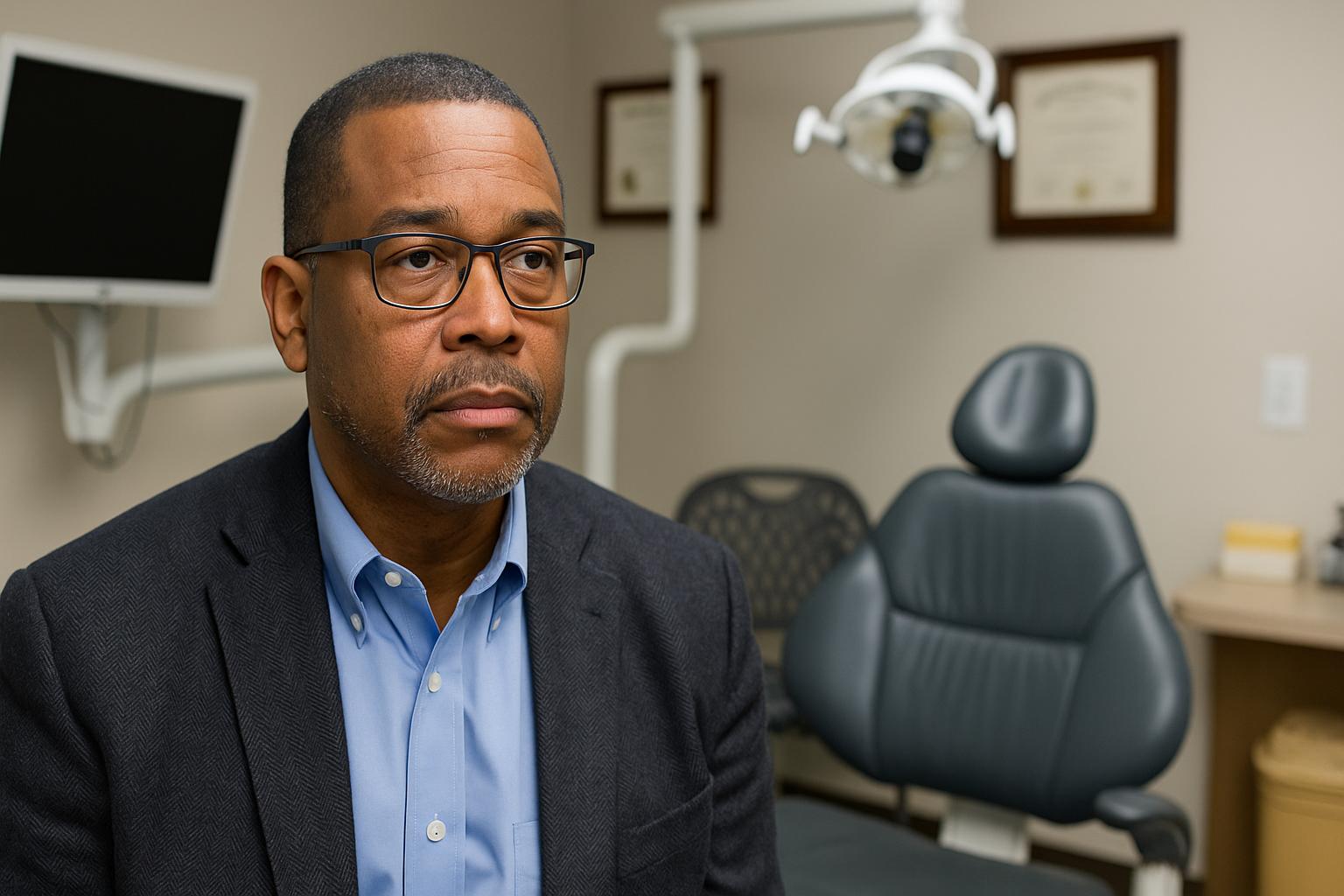
For many residents working low-wage jobs in D.C.—a city with one of the nation’s highest living costs—the shift could force impossible choices. “We shouldn’t have people deciding between getting health insurance or keeping their jobs,” said Dr. Albert Coombs, a Washington-based dentist who has become a prominent advocate for Medicaid reform.
Dr. Coombs, who operates a dental practice where roughly 80 percent of patients rely on Medicaid, has turned his focus from oral health to policy advocacy. “This affects the population that we need the most,” he said. “These are teacher’s aides, hospital workers, Metro Access drivers, and construction workers—the people who keep our city running.”
The dentist’s advocacy began years ago with an effort to expand the number of local dentists accepting Medicaid patients. A 2017 report from the D.C. Oral Health Surveillance System found that fewer than one-third of dentists in the city accepted Medicaid at the time, citing low reimbursement rates. Dr. Coombs believes that problem has persisted, and now, the eligibility rollback threatens to make access even harder for low-income residents.
To address the gap, city leaders are launching the Healthy DC Plan, which will automatically enroll affected residents when Medicaid eligibility ends. Councilmember Christina Henderson, who chairs the D.C. Council’s Committee on Health, said the plan has been approved by the Centers for Medicare and Medicaid Services and aims to ensure a “seamless” transition for approximately 25,000 residents.
“The goal is to make sure no one suddenly finds themselves without health coverage,” Henderson said. “There will be no out-of-pocket costs, but the plan unfortunately does not include dental or vision coverage.”
Henderson acknowledged that the exclusion of these benefits poses challenges for families who depend on comprehensive care. “We know this will be difficult for some people,” she said. “We’re working to identify temporary solutions, but much depends on whether Congress extends healthcare subsidies.”
Those potential federal subsidies are tied to ongoing negotiations in Washington amid a protracted government shutdown, leaving the future of dental coverage uncertain. If subsidies are renewed, Henderson said, there is a mechanism that could expand the Healthy DC Plan to include dental services.
Healthcare professionals warn that the consequences could ripple far beyond individual households. Without affordable dental or vision care, residents may turn to emergency rooms for basic medical needs, adding strain to the healthcare system. “People will seek traditional care through the ER because they can’t afford insurance,” Henderson explained. “That increases wait times and pushes uncompensated costs onto those already paying premiums.”
Dr. Coombs echoed the concern, noting that the health system is deeply interconnected. “No matter how much money you make, everyone is affected if the healthcare ecosystem is destabilized,” he said. “If dental and vision care collapse for one group, the entire system feels the impact.”
Both Coombs and Henderson have launched awareness efforts to inform affected residents about their options ahead of the transition. Open enrollment for the Healthy DC Plan will begin on November 1, giving individuals a limited window to secure coverage for 2026.
Despite the uncertainty, advocates hope that continued collaboration between city officials and healthcare providers can minimize disruptions. “We’re all part of the same community,” Dr. Coombs said. “Keeping it healthy means working together to ensure no one falls through the cracks.”
The Healthy DC Plan represents both a safety net and a test for the city’s commitment to equitable healthcare. As thousands brace for change, the debate underscores a broader question about the future of public health support in a city where economic inequality continues to grow.