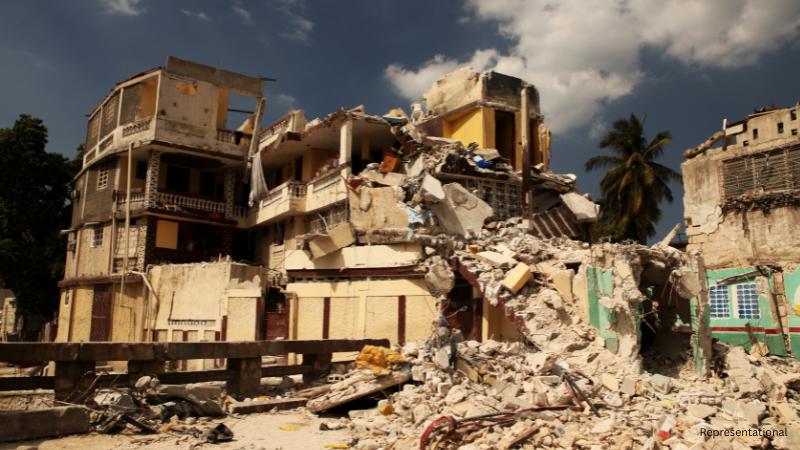
A powerful magnitude 6.0 earthquake struck eastern Afghanistan on Sunday at a shallow depth of just 8 kilometers, causing widespread devastation in several mountainous regions and triggering urgent appeals for international humanitarian assistance. The tremors were felt across a vast area, shaking buildings from Kabul to Pakistan’s capital Islamabad, more than 300 kilometers away. Early reports from officials indicate that at least 20 people have been confirmed dead, more than 100 are being treated for injuries in hospitals, and dozens of houses have collapsed into rubble. With entire villages damaged and aftershocks continuing to rattle the region, authorities fear that the death toll could rise sharply as rescue teams gain access to isolated communities.
The hardest hit areas appear to be in Kunar province, where local officials and Taliban government representatives have described a catastrophic situation. Sources on the ground reported that in just one village 21 people lost their lives while another 35 were seriously injured. Helicopters are being used to transport bodies and evacuate the wounded, but efforts are hampered by blocked roads, landslides, and flooding which have cut off access to many districts. Residents in Kunar have described the scale of destruction as unimaginable, with some officials saying the number of deaths is already “horrible” and could be in the hundreds once accurate figures are confirmed. Mobile networks have also been disrupted, making communication and coordination of rescue efforts even more difficult.
The Taliban government, which has limited resources to respond to large-scale natural disasters, has urged international humanitarian organizations to step in and provide immediate aid. Rescue operations in mountainous regions often rely heavily on aerial support because landslides triggered by earthquakes block roadways, leaving communities isolated. Witnesses from remote villages have said many families remain trapped under debris, with survivors desperately calling for help. Despite efforts from local volunteers and emergency workers, the sheer scale of the destruction requires outside assistance, particularly for medical treatment, temporary shelter, food, and water supplies.
Reports from hospitals across eastern Afghanistan describe wards overflowing with the injured, including children and elderly villagers who were unable to escape when their homes collapsed. Doctors have warned that without urgent deliveries of medical equipment and medicine, the number of deaths could increase as people succumb to untreated injuries. Meanwhile, survivors in the disaster zone are bracing for further aftershocks which have continued to shake the region and threaten already weakened structures.
The earthquake has also triggered cross-border concerns, with tremors felt across parts of Pakistan where people fled into the streets in panic. Although no major damage was reported in Pakistan, the shaking was strong enough in cities like Islamabad to alarm residents and remind the region of its vulnerability to seismic events. Afghanistan lies in a seismically active zone where earthquakes are common, and in recent years the country has suffered several deadly quakes that left thousands dead and entire communities destroyed.
This latest disaster highlights the fragility of Afghanistan’s infrastructure and the limited capacity of its government to respond to emergencies, particularly in rural and mountainous areas that are difficult to reach under normal conditions. Humanitarian organizations have already been stretched thin by years of conflict, economic hardship, and political turmoil, making a rapid response more challenging. International observers warn that unless aid is mobilized quickly, the toll of the earthquake could rise dramatically as time runs out for survivors trapped under debris.
The Taliban government has said that rescue efforts are being organized around-the-clock with whatever resources are available, but officials acknowledge that air support is the only option to reach some areas. Helicopters have been flying in and out of Kunar province to recover bodies, evacuate the wounded, and bring limited supplies to survivors. Even so, the vast distances, damaged infrastructure, and disrupted communications mean that it could be days before the full scale of the disaster is understood.
As Afghanistan struggles to cope with this crisis, there is growing concern that the international community may be slow to act due to political considerations. Yet humanitarian agencies stress that natural disasters must be treated as emergencies beyond politics, and that innocent civilians suffering in remote villages urgently need support. The earthquake has left entire families grieving, survivors searching for loved ones under rubble, and communities uncertain about what comes next. For many in Afghanistan, it is another reminder of the vulnerability of life in a nation already facing immense challenges, and the need for solidarity and swift humanitarian action from the world.