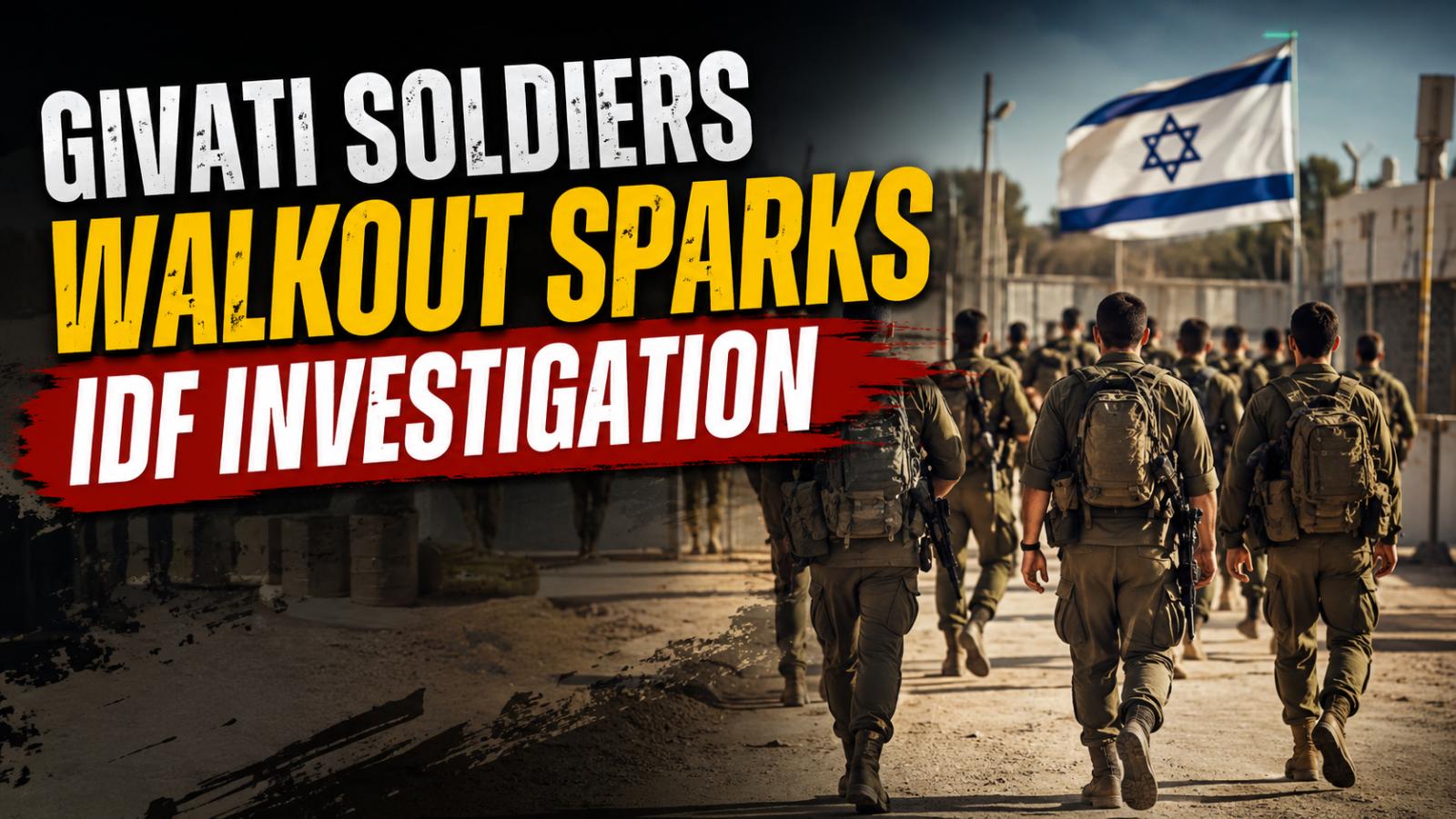
More than 100 Israeli soldiers reportedly walked out of the Sde Teiman military base following a dispute over the removal of signs and symbols linked to their battalion’s traditions. The unusual Givati soldiers walkout involved members of the Tzabar Battalion and prompted an immediate investigation by military commanders.
Videos circulating on social media appeared to show soldiers leaving the southern Israeli base while chanting offensive slogans against their commanding officers. Some reportedly left their weapons and military equipment behind before collecting their personal belongings and going home.
The Israel Defense Forces described the episode as a serious disciplinary matter. The military said commanders were investigating the circumstances and handling each soldier according to his involvement in the incident. Reports later indicated that most of the soldiers had returned to the base.
Tzabar Battalion Row Over Unit Signs
The confrontation began after commanders ordered the removal of signs, drawings and other symbols displayed in areas used by the Tzabar Battalion. Soldiers argued that the items represented the unit’s history and had been passed from one recruitment group to another.
Some soldiers said the signs accompanied the battalion during fighting in Gaza and Lebanon, giving them emotional and symbolic importance. Footage shared online reportedly showed a commander personally removing some of the material after troops objected to the decision.
Military officials offered a different explanation. According to the IDF Spokesperson’s Unit, the removed material was connected to irregular behaviour within a “veteran-junior” tradition. The military said practices that humiliate or mistreat newer recruits are inconsistent with IDF values and the standards expected from soldiers.
IDF Probe Into the Base Exit
Commanders reportedly ordered the absent soldiers to return to the Sde Teiman base or face disciplinary action. Most eventually returned, although reports said at least one group remained away while the military reviewed the roles played by individual soldiers.
The IDF has not publicly classified the incident as a mutiny. Using that term without a formal military finding would exaggerate what is currently known. The confirmed issue is an unauthorised mass departure from a military facility following a dispute with commanders.
The investigation is expected to examine who organised the walkout, whether soldiers disobeyed direct orders and whether senior troops influenced younger members of the battalion. Commanders may also review the decision-making and communication that preceded the confrontation.
Army Discipline and Battalion Traditions
Military units often develop symbols and customs that strengthen identity, loyalty and morale. However, commanders remain responsible for stopping traditions that cross into intimidation, humiliation or misconduct.
That tension appears central to the Tzabar row. Soldiers viewed the signs as part of their shared combat history, while commanders linked at least some of the material to unacceptable veteran-junior practices.
The Givati Brigade is one of the IDF’s infantry brigades under Israel’s Southern Command. Its structure includes three battalions, including the Tzabar Battalion.
Investigation Could Lead to Punishment
The incident presents a leadership challenge for the IDF because it combines a dispute over unit identity with a clear breakdown in military discipline. Leaving a base without authorisation, abandoning assigned equipment and publicly confronting officers could result in disciplinary measures.
The final response will depend on the investigation and each soldier’s actions. The IDF said the conduct did not meet military expectations and would be addressed through the chain of command.