The attack, which follows India’s precision Operation Sindoor targeting terror bases across Pakistan and Pakistan-Occupied Kashmir, marks one of the most intense escalations in recent years between the two nuclear-armed neighbours. Eyewitnesses in Jammu captured cellphone footage of illuminated skies, showcasing the rapid interception of incoming missiles and drones by India’s activated Air Defence Systems. The dramatic visuals confirmed successful interceptions, as eight missiles aimed at key military zones RS Pura, Arnia, Samba, and Hiranagar were all neutralised mid-air.
These border towns, long known for their strategic relevance due to proximity to the Line of Control (LoC) and critical military infrastructure, bore the brunt of heavy shelling. Local sources confirmed that these areas were targeted due to their housing of major Indian defence establishments. Simultaneously, a Pakistani F-16 fighter jet, having taken off from the Sargodha air base, was detected and neutralised by Indian forces. Utilising surface-to-air missile defence systems, the Indian military was able to intercept and bring down the aircraft, marking a substantial operational success amid ongoing escalations.
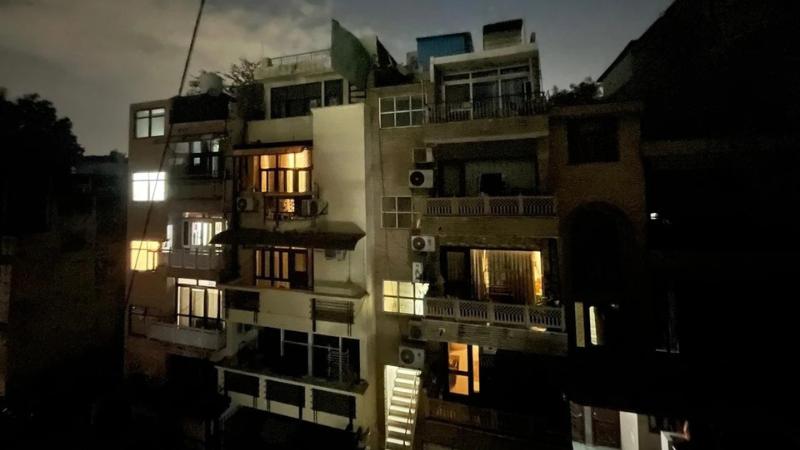
As news of the attack spread, parts of Punjab, including Pathankot, also came under heavy artillery fire. Located just 30 kilometres from the International Border, Pathankot is of immense strategic importance, acting as a gateway to Jammu. The shelling caused immediate concerns in defence circles, prompting the activation of additional air defence protocols. In response to the unfolding emergency, blackout protocols were implemented across multiple states to prevent any visual assistance to incoming attacks. Jammu and Kashmir, along with parts of Punjab including Chandigarh, Ferozepur, Mohali, and Gurdaspur were plunged into darkness. The blackout extended to several border towns in Rajasthan as well, a state that shares a significant frontier with Pakistan.
The impact of these actions was felt beyond the military and civilian spheres. The Indian Premier League (IPL) cricket match underway in Dharamshala was abruptly cancelled as a precautionary measure. Stadium lights were switched off in line with blackout directives, and spectators were safely evacuated.
This latest exchange of hostilities follows Pakistan’s earlier attempt to launch coordinated attacks on 15 Indian cities, including prominent military hubs like Srinagar, Ludhiana, Amritsar, and Chandigarh. However, thanks to robust intelligence and readiness of India’s air defence systems, these attacks were effectively foiled with no casualties reported. Indian forces subsequently responded by targeting and disabling several key Pakistani Air Defence installations, including sites in Lahore.
According to sources, the Indian government continues to maintain that its military operations are precise, limited, and non-escalatory in nature. They underline that the objective remains to dismantle cross-border terrorism networks and retaliate in kind when provoked, all while avoiding unnecessary escalation. In an official statement, the government reiterated the commitment of the Indian Armed Forces to non-escalation, asserting that this stance will remain provided that Pakistani military actions do not breach Indian sovereignty or provoke further conflict.
As of now, the situation remains tense but under control. Civilian movement in border towns has been restricted, and emergency measures are in place to ensure safety and order. Communication networks, though temporarily down in parts of Jammu, are being restored gradually to help citizens stay connected amid the ongoing crisis. This confrontation signals a new phase of strain between the two neighbours, raising international concerns over the potential for escalation. While both nations claim to desire peace, the events of the past 24 hours underline the fragile balance that exists along one of the world's most militarised borders. Global observers and defence analysts are closely monitoring the situation as developments unfold. The Indian government is expected to brief the nation shortly on the outcomes of the military engagements and the steps ahead.