In a striking admission, Pakistan Prime Minister Shehbaz Sharif confirmed that India’s BrahMos missile strikes, carried out under Operation Sindoor, hit several targets across Pakistan before Islamabad’s military could respond. The attacks, executed on the intervening night of May 9 and 10, were India’s retaliation to the April 22 Pahalgam terror attack, which claimed the lives of 26 civilians.
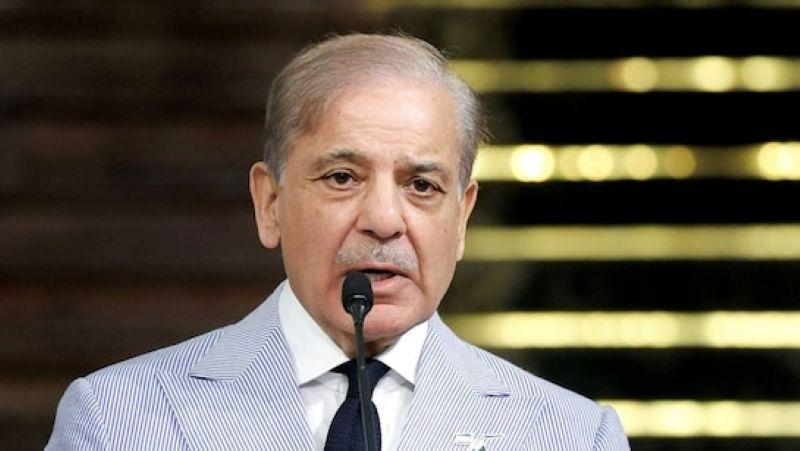
Sharif, speaking during a visit to Azerbaijan, said Pakistan had planned to launch a counter-strike at 4:30 AM after Fajr prayers, but Indian forces preempted it by launching ballistic missiles earlier in the night. “Our armed forces were prepared to act at 4:30 in the morning after Fajr prayers to teach a lesson. But before that hour even arrived, India once again launched a missile attack using BrahMos,” he stated, confirming that major provinces and even the Rawalpindi airport were among the targets.
This isn’t the first time Sharif has publicly acknowledged the damage caused by Operation Sindoor. Earlier this month, during a ceremony in Islamabad, he shared details of a late-night secure call from General Asim Munir, Pakistan’s Army Chief, alerting him of the Indian strikes. “One has landed at the Nur Khan Airbase and some at other areas,” Sharif had stated.
Indian government sources confirmed that the strikes were surgical and focused, eliminating close to 100 terrorists linked to groups like Jaish-e-Mohammed, Lashkar-e-Taiba, and Hizbul Mujahideen. Nine terror facilities were targeted four in Pakistan and five in Pakistan-Occupied Kashmir (PoK). These included known hotspots such as Bahawalpur, Muridke, Sarjal, and Mehmoona Joya in Pakistan and Sawai Nala, Syedna Bilal, Gulpur, Barnala, and Abbas in PoK.
In response, Pakistan launched drone attacks on Indian civilian zones. India quickly retaliated by striking deeper inside Pakistan, hitting radar installations, command centers, and ammunition depots across locations including Chaklala, Rafiqui, Rahim Yar Khan, Sialkot, and Sukkur.
By May 10, both nations reached a formal understanding to halt all hostilities land, sea, and air. However, Pakistan reportedly violated the agreement within hours. Despite the breach, Indian military officials stated that both countries have agreed to continue observing a ceasefire indefinitely.
Earlier this week, Shehbaz Sharif claimed Pakistan was open to resuming dialogue with India on major bilateral issues like Kashmir, water-sharing, and trade. India, however, rejected the offer, restating its firm position that talks cannot proceed while cross-border terrorism persists. The External Affairs Ministry reiterated that any discussion on Jammu and Kashmir would only begin after Pakistan vacates the region it occupies illegally and hands over known terrorists already named by India.
The developments highlight the escalating tensions in South Asia and India's increasingly assertive posture in countering terror threats. Operation Sindoor, as confirmed by both Indian and Pakistani leadership, marks one of the most significant military actions in recent years between the two countries.