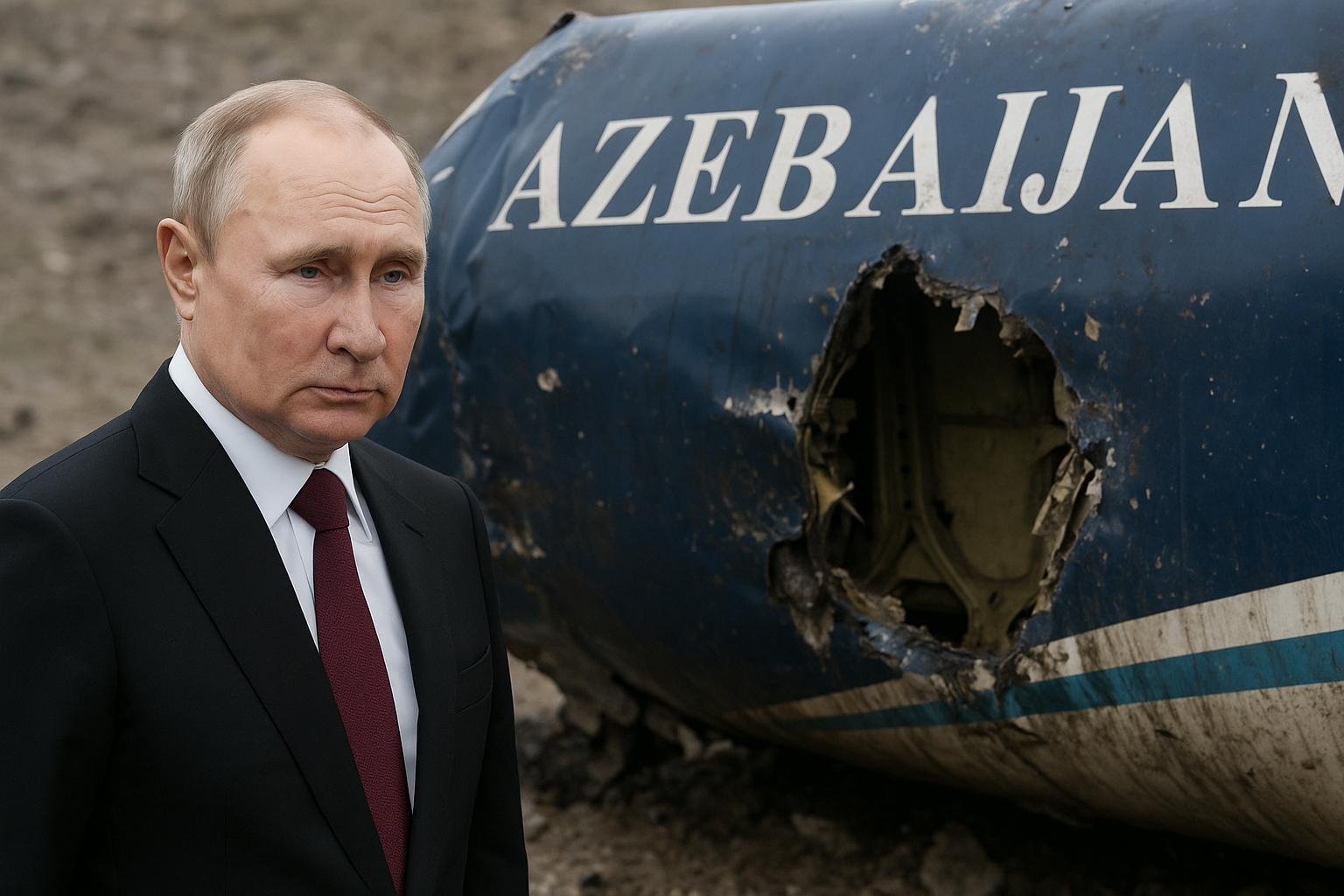
The ill-fated flight had taken off from Baku, the capital city of Azerbaijan, bound for Grozny in Chechnya. The aircraft disappeared from radar screens while flying over the Caspian Sea near Russian airspace before being discovered crashed near the Kazakh city of Aktau. Initially, Russian authorities attributed the tragedy to poor weather conditions, technical malfunction, or even a bird strike. However, growing pressure from Azerbaijan and evidence recovered from the crash site indicated otherwise, forcing a reassessment of the incident.
During the meeting, President Putin stated that the country’s air defense systems were active in the area at the time, attempting to intercept what Russian radar had identified as incoming Ukrainian drones. The defense system, which included the Pantsir-S anti-air rockets, reportedly malfunctioned during the operation. Two missiles launched from the system self-destructed near the Azerbaijan Airlines flight, releasing fragments that struck the aircraft. Putin explained that the plane was not directly hit by a warhead but was severely damaged by missile debris that caused catastrophic failure midair.
Putin’s admission came after months of diplomatic strain between Moscow and Baku. Following the crash, Azerbaijan’s government demanded full accountability from Russia. Investigators in Azerbaijan discovered fragments of a Russian Pantsir-S missile among the wreckage, which pointed toward an external strike. This finding contradicted earlier Russian reports and led to escalating tensions between the two countries.
In response to Moscow’s initial denial, Azerbaijan’s government took a series of retaliatory measures, including the closure of a Russian-funded research center in Baku and restrictions on Russian officials entering the country. The diplomatic freeze also included a review of several bilateral projects and an official protest lodged through international aviation and safety organizations.
Putin’s recent statement represents an attempt to restore some level of trust with Azerbaijan, a country that shares both economic ties and regional security interests with Russia. He described the event as a tragic mistake caused by the automatic activation of air defense systems during heightened military alert. According to him, the missiles likely exploded at a distance of about ten meters from the aircraft, causing critical damage that led to its disintegration and crash into the Caspian Sea.
President Aliyev acknowledged Putin’s admission but emphasized that Azerbaijan expects full cooperation in completing the investigation and compensating the victims’ families. The Azerbaijani leader stated that his government’s priority remains justice for those who perished and accountability from those responsible. The families of the victims, who have waited nearly a year for clarity, welcomed the admission but continue to seek formal restitution and an apology.
Experts in aviation safety have said that the crash underscores the growing risks of civilian aircraft operating near zones of military activity. With ongoing regional conflicts and heightened air defense readiness, the possibility of misidentification remains a serious threat. Analysts suggest that this incident may push international regulators to strengthen protocols for civilian flights near conflict regions, especially in areas bordering Russia, Ukraine, and the Caucasus.
As the investigation continues, the acknowledgment by Russia may pave the way for joint efforts to prevent such incidents in the future. Putin expressed his condolences to the victims’ families and assured Azerbaijan of full transparency in reviewing the chain of events leading to the crash. However, questions remain about why the air defense system misfired and whether sufficient safeguards existed to prevent civilian casualties during active defense operations.
The Azerbaijan Airlines crash on December 25 stands as one of the deadliest aviation disasters in the region’s recent history. Beyond the technical failures and diplomatic tensions, it has become a tragic reminder of how quickly military actions can spiral into humanitarian disasters. Both nations now face the task of rebuilding confidence, ensuring accountability, and reaffirming commitments to the safety of civilian aviation across shared airspaces.