India-Canada Trade Talks Gain Momentum In May 2026
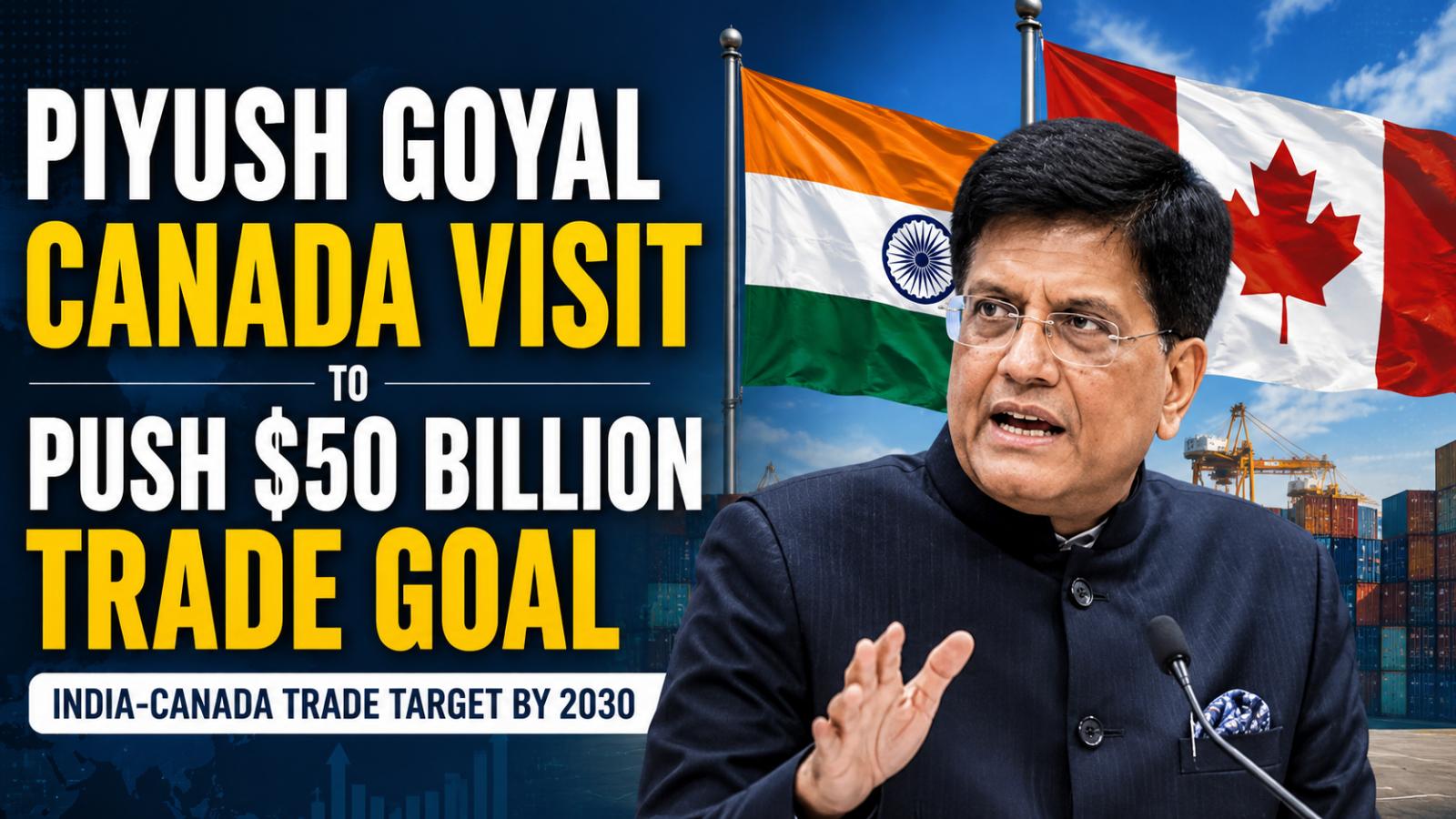
Union Commerce and Industry Minister Piyush Goyal is set to visit Canada from May 25 to May 27, 2026, as India and Canada work to rebuild economic confidence and push bilateral trade toward a $50 billion target by 2030.
The visit comes at an important time because both countries are trying to move beyond recent diplomatic strain and focus on business, investment, energy, and technology cooperation. Goyal will lead a large Indian business delegation, with official and media reports indicating around 150 industry leaders from sectors such as energy, metals and mining, aerospace, telecom, pharmaceuticals, agriculture, tourism, textiles, automotive, capital goods, and other high-growth industries.
During the visit, meetings are expected in Ottawa and Toronto, where Indian officials and business leaders will engage with Canadian ministers, CEOs, industry groups, startup leaders, and pension fund representatives. India and Canada recorded bilateral trade of nearly $8 billion in FY2025-26, including Indian exports worth $4.67 billion and imports from Canada valued at $3.28 billion.
That gap between current trade and the 2030 target shows the opportunity is large, but it also makes one thing clear: both countries need faster negotiations, fewer trade barriers, and stronger business confidence to reach the goal.
CEPA Talks, Energy And NRI Business Links In Focus
A major focus of Goyal’s Canada visit will be the ongoing Comprehensive Economic Partnership Agreement talks, also known as CEPA. He is expected to meet Canada’s International Trade Minister Maninder Sidhu to review progress and explore ways to expand India-Canada trade and investment.
The visit follows the second round of CEPA talks held in New Delhi from May 4 to May 7, 2026, and builds on the renewed momentum created after Canadian Prime Minister Mark Carney’s March 2, 2026 visit to India.
Both sides are looking at cooperation in clean energy, conventional energy, civil nuclear cooperation, critical minerals, agriculture, artificial intelligence, pharmaceuticals, tourism, education, aerospace, defence-related high-tech sectors, and innovation ecosystems. Energy is likely to be one of the strongest areas because India’s demand continues to rise while Canada has major natural resource strengths.
The large Indian-origin community in Canada, including Indo-Canadians, NRIs, and students, also gives both countries a strong people-to-people and business bridge.
However, the $50 billion trade target will not be achieved through speeches alone. India and Canada will need practical sector-wise agreements, smoother market access, investor-friendly policies, and faster CEPA progress. If this visit delivers concrete follow-up, it could become a major step in resetting India-Canada economic ties in 2026.