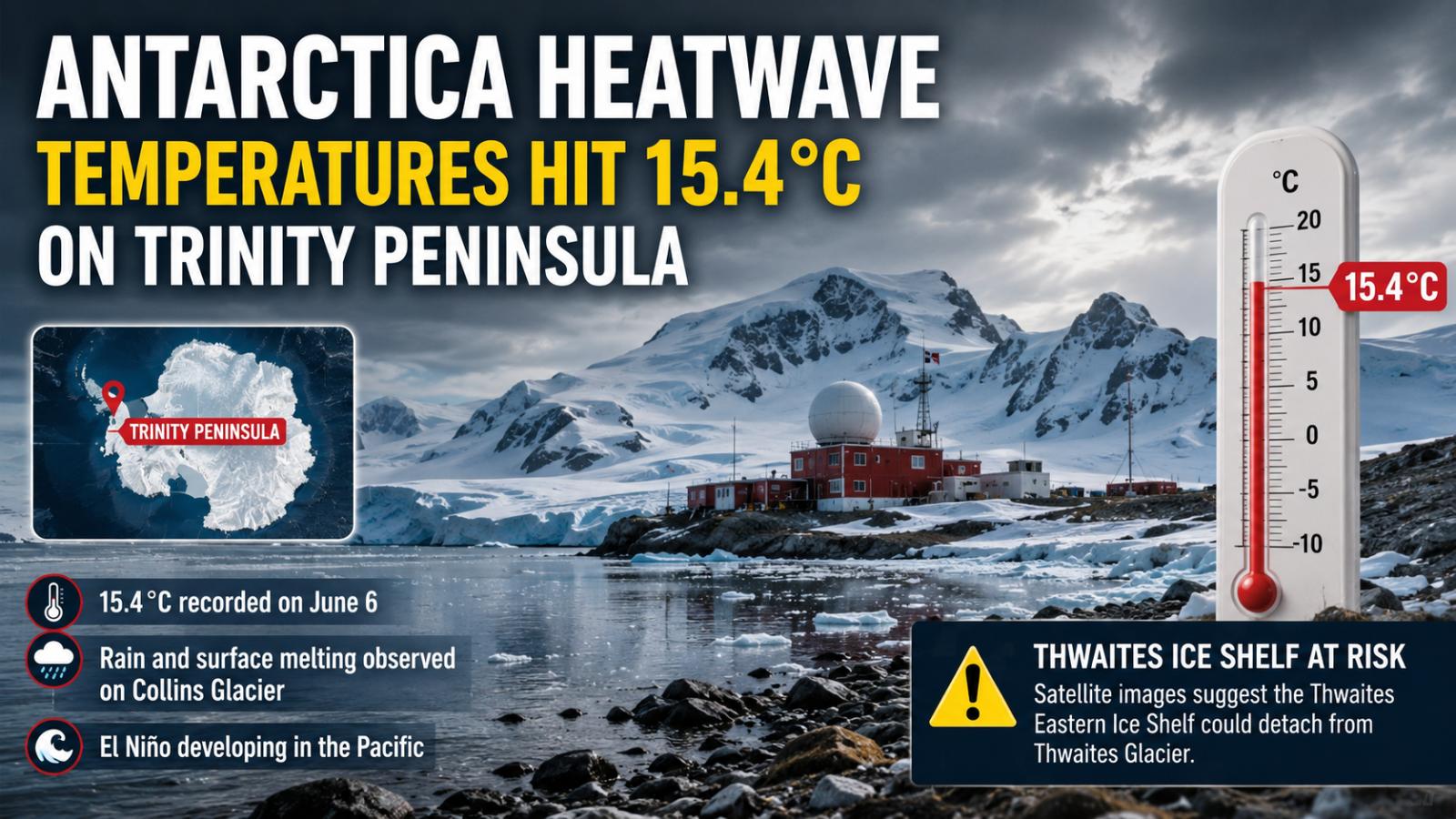
Researchers recorded a temperature of 15.4°C on Antarctica’s Trinity Peninsula on June 6, although the supplied material does not identify the year. The Trinity Peninsula heat anomaly was reported at nearly 20°C above the seasonal norm, with rain and surface melting observed on Collins Glacier.
Trinity Peninsula Heat Anomaly Brings Rain to Collins Glacier
Raúl Cordero, a climate professor at the University of Groningen, described the reading as a major anomaly. Chilean glaciologist Luis Muñoz said he and a colleague encountered rain after climbing Collins Glacier, where about 20 centimeters of snow and widespread ground ice would normally be expected.
According to Muñoz, the precipitation was warm enough to melt surface ice, highlighting how unusual warmth can rapidly change conditions on exposed Antarctic terrain.
Pacific Signals Raise El Niño Concerns
The supplied account connects the episode with a developing El Niño pattern. NASA satellite observations detected large Kelvin waves moving across the Pacific, a signal used to monitor changes in ocean conditions.
NASA scientist Nadya Vinogradova Shiffer said the Sentinel-6 Michael Freilich satellite can track those waves, strengthen forecasts of weather extremes and help coastal communities prepare for hazards.
The World Meteorological Organization warned that El Niño was highly likely to emerge. NOAA later said, around June 12, that El Niño had developed in the tropical Pacific and could reach moderate or strong intensity. The year of that announcement was not included in the supplied material.
Thwaites Ice Shelf Adds to Antarctic Concern
Separately, satellite images cited in the source material suggest the Thwaites Eastern Ice Shelf could detach from Thwaites Glacier. The West Antarctic glacier is about 120 kilometers wide and is often called the “Doomsday Glacier.”
A March 2026 study projected annual ice losses of 180 billion to 200 billion tons by 2067. Together, the observations underscore why scientists closely track short-term Antarctic heat anomalies alongside longer-term changes in major glaciers and ice shelves.