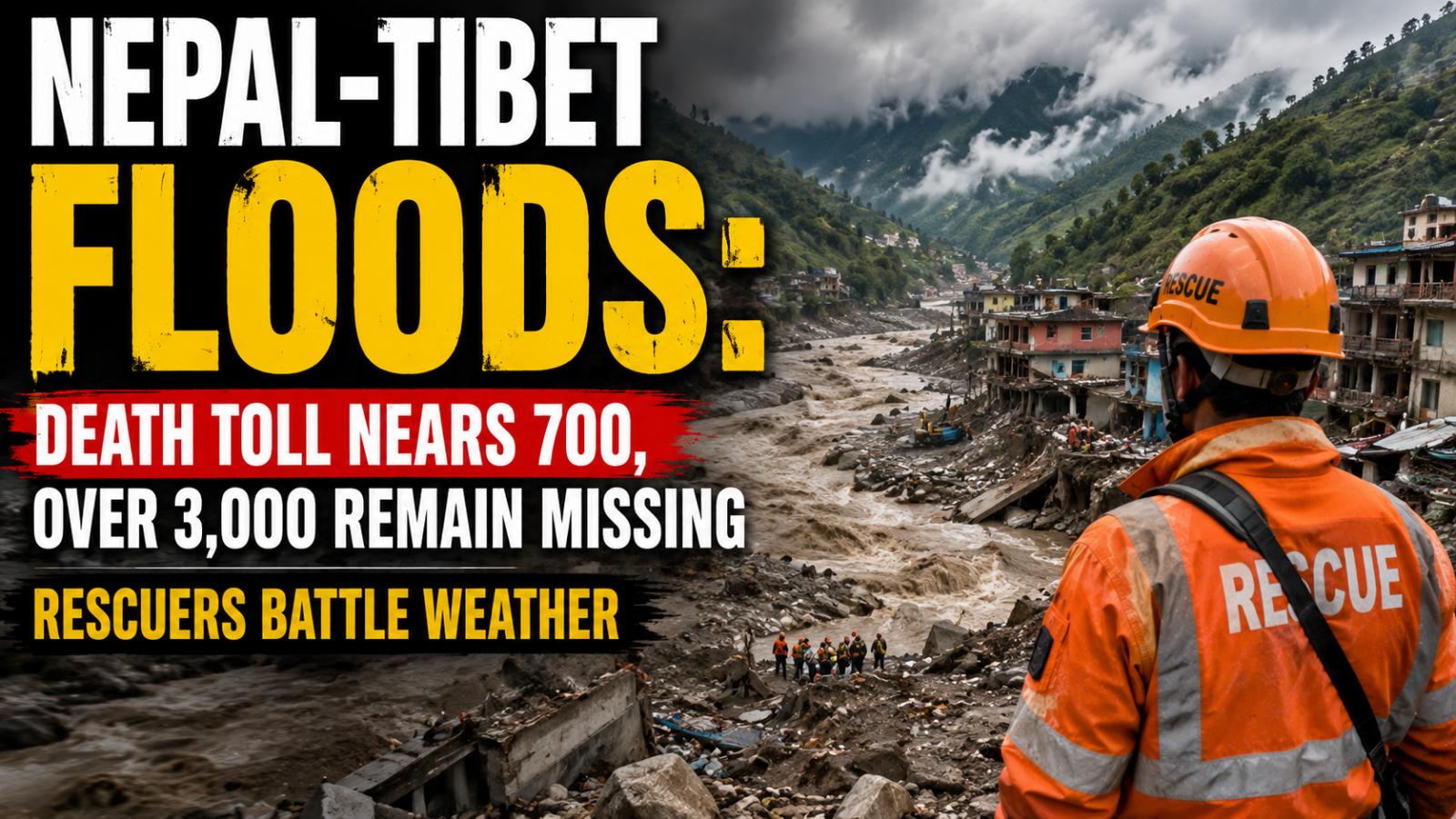
The death toll from devastating flash floods across Nepal and parts of Tibet has risen to nearly 700, while more than 3,000 people remain missing as rescue teams struggle against poor weather, damaged roads and difficult Himalayan terrain.
Four days after the disaster, the combined death toll stood at 691. Nepal reported 675 deaths and 2,498 people missing, while authorities in Tibet confirmed 16 deaths and 546 people unaccounted for.
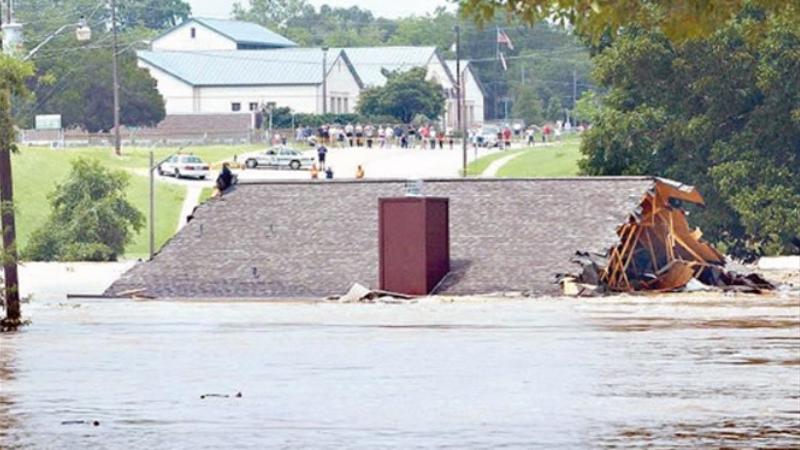
The floods have caused widespread destruction across mountain communities, damaging homes, roads, bridges and critical infrastructure. Several areas remain difficult to reach because of landslides, mud deposits and washed-out transport routes.
Poor Weather Slows Nepal Flood Rescue Operations
Rescue efforts have repeatedly been affected by unstable weather conditions, forcing helicopter operations to stop temporarily in some of the hardest-hit areas.
In Nepal’s Nuwakot district, aircraft were able to resume flights after weather conditions improved, delivering food, medicines and other emergency supplies to isolated communities. Helicopters were also being used to evacuate stranded residents from areas that could not be reached by road.
Ground teams continued searching through damaged settlements and debris, but steep terrain and blocked routes have made operations extremely challenging.
Nepalese authorities said more than 3,700 people had been rescued since the flooding began, though the large number of missing people has kept pressure on emergency teams.
More Than 100 Workers Feared Trapped in Hydropower Tunnels
One of the biggest concerns is the situation around major hydropower facilities in the flood-hit region.
Officials fear that more than 100 workers could still be trapped inside tunnels connected to the Trishuli 3A and Trishuli 3B hydropower projects.
Rescue teams have been trying to reach the tunnel areas, but debris, flooding and unstable ground have complicated access. The possibility that workers remain trapped underground has added urgency to the search operation.
Authorities are attempting to assess conditions inside the tunnels while ensuring rescue personnel are not exposed to further landslides or sudden water surges.
Thousands Still Missing Across Nepal and Tibet
The scale of the missing-person crisis remains one of the most serious aspects of the disaster.
Nepal has listed 2,498 people as missing, while 546 people remain unaccounted for in Tibet. With communication networks disrupted in some remote areas, officials have warned that casualty and missing-person figures could continue to change as rescue teams reach previously inaccessible communities.
Families have been waiting for information while authorities work to identify victims and locate survivors.
The disaster has affected several densely populated river valleys as well as isolated mountain settlements, making it difficult to establish the full extent of the damage quickly.
Rescue Teams Race Against Time
Emergency teams are continuing round-the-clock operations as concerns grow over survivors who may still be stranded without food, clean water or medical assistance.
Helicopters, rescue personnel and emergency equipment have been deployed to affected areas, while supplies are being transported to communities cut off from major roads.
The priority remains locating missing residents, reaching trapped workers and restoring access to isolated villages.
With hundreds already confirmed dead and more than 3,000 people still missing, the Nepal-Tibet floods have become one of the region’s most severe disasters in recent years. Authorities are continuing search-and-rescue operations while monitoring weather conditions that could create additional risks in already devastated areas.