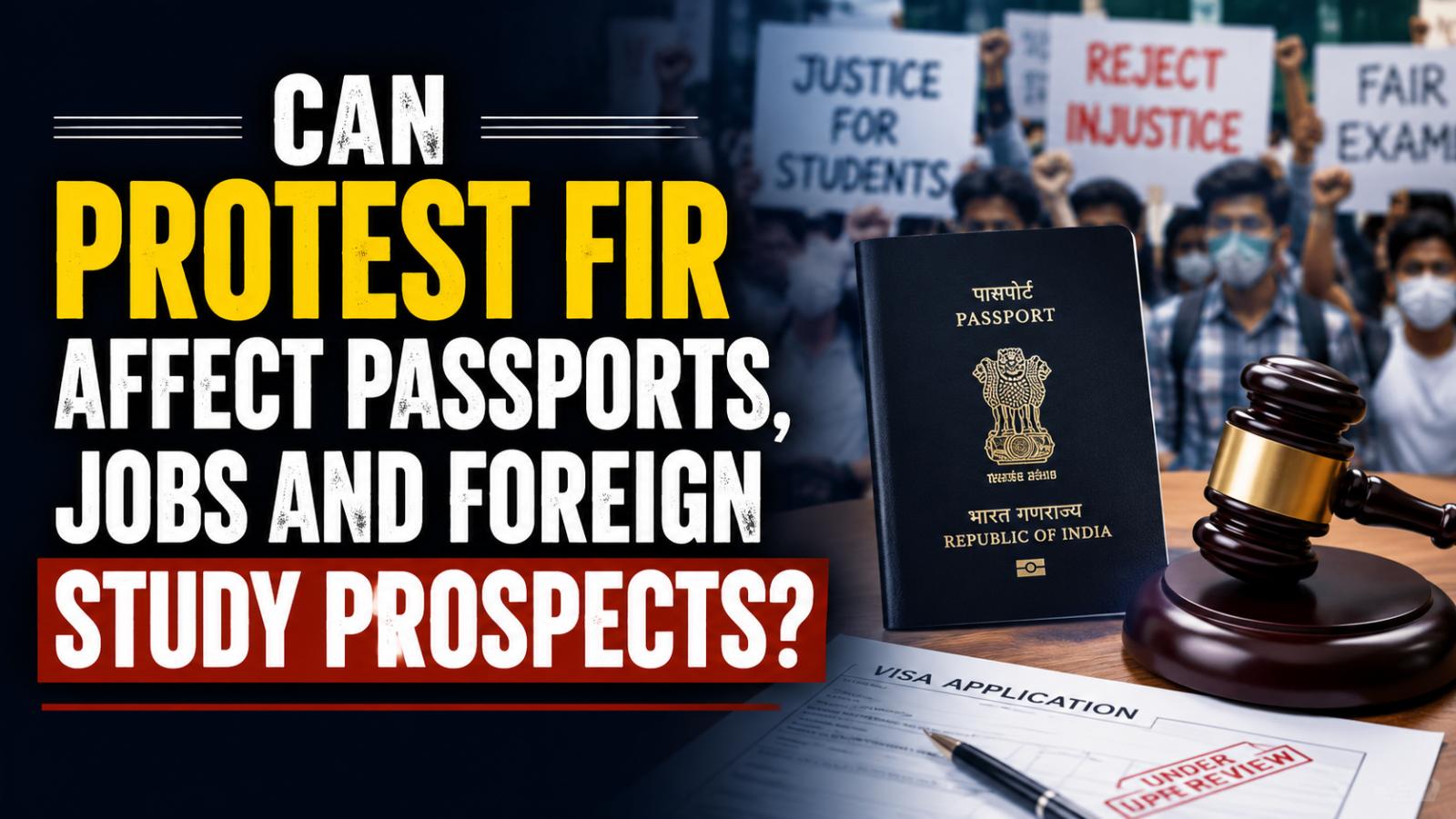
Students participating in peaceful protests may assume that an FIR is only a temporary legal problem. However, legal experts warn that even without a conviction, an FIR can create practical difficulties during passport verification, visa applications, employment background checks and admissions to foreign universities.
The issue gained attention after several students protesting at Jantar Mantar in New Delhi covered their faces with masks and glasses. Many said they were not trying to hide unlawful activity. Instead, they feared being identified through AI-powered facial recognition cameras and linked to police records that could affect their careers, passports or plans to study abroad.
The protests were linked to concerns over alleged irregularities in the NEET-UG examination. Students said they were exercising their democratic right to demand accountability and reforms in the education system. Police maintained that surveillance systems were intended to identify people with criminal records and prevent violence, while protesters and activists raised concerns about privacy and mass monitoring.
Protest FIR passport rules
Indian courts have repeatedly clarified that the registration of an FIR alone is not sufficient grounds to deny a passport. Under Section 6(2)(f) of the Passports Act, a passport may be refused when criminal proceedings are pending before a court. Courts have generally held that an FIR or police investigation by itself does not amount to pending court proceedings. This stage usually begins after a charge sheet is filed and the court takes cognisance of the case.
However, the practical process can still become complicated. During police verification, an FIR may be flagged, leading to requests for additional documents or a court-issued No Objection Certificate. This can delay passport issuance or renewal even when the applicant has not been convicted.
Applicants may also be required to disclose previous arrests, FIRs or pending proceedings on passport, visa and employment forms. In some cases, the disclosure requirement may continue even after the FIR is closed or the person is acquitted. Failing to disclose a case when specifically asked can create a separate issue and may be treated as misrepresentation.
Student visa background checks
Foreign universities and immigration authorities in countries such as the United States, Canada, the United Kingdom and Australia may ask applicants to disclose arrests, pending charges or previous criminal proceedings. A peaceful protest-related FIR may not automatically lead to visa rejection, but it can trigger additional scrutiny.
Universities may pause an admission decision or ask for court records, legal explanations or proof that the case has been closed or stayed. Minor protest-related cases may sometimes be explained successfully, especially when there is no allegation of violence. Charges involving violence, drugs or serious offences create much greater barriers.
Employment can also be affected. Government departments, contractors, consulting firms and organisations working on public projects often conduct detailed background checks. Private employers may also review criminal records, particularly for security-sensitive, regulated or senior positions. An FIR is not proof of guilt, but even a brief detention or pending case may lead to questions, delays or extra verification.
Legal experts stress that an FIR is not the same as a conviction and should not automatically destroy a student’s future. Courts have limited the power of passport authorities to act on an FIR alone. Still, police records, disclosure forms, background checks and administrative delays remain real.
First-time protesters should understand their legal rights, confirm whether a demonstration has official permission, inform family or friends before attending and seek legal support if detained. Peaceful protest remains a democratic right, but ignoring the possible legal, educational and professional consequences can create avoidable problems later.