A restaurant due diligence checklist USA helps NRI buyers verify whether an existing business is worth its asking price. Financial records, taxes, leases, permits, equipment, liabilities and contracts should be examined before a purchase agreement becomes final.
Buying an operating restaurant can save time compared with starting from scratch, but advertised revenue or a busy dining room does not prove that the business is financially sound. NRI buyers should independently verify what they are purchasing before committing capital.
Verify Restaurant Financial Records
The U.S. Small Business Administration recommends investigating an existing business from a financial perspective and reviewing its cash flow, inventory, financial statements and tax returns before purchase.
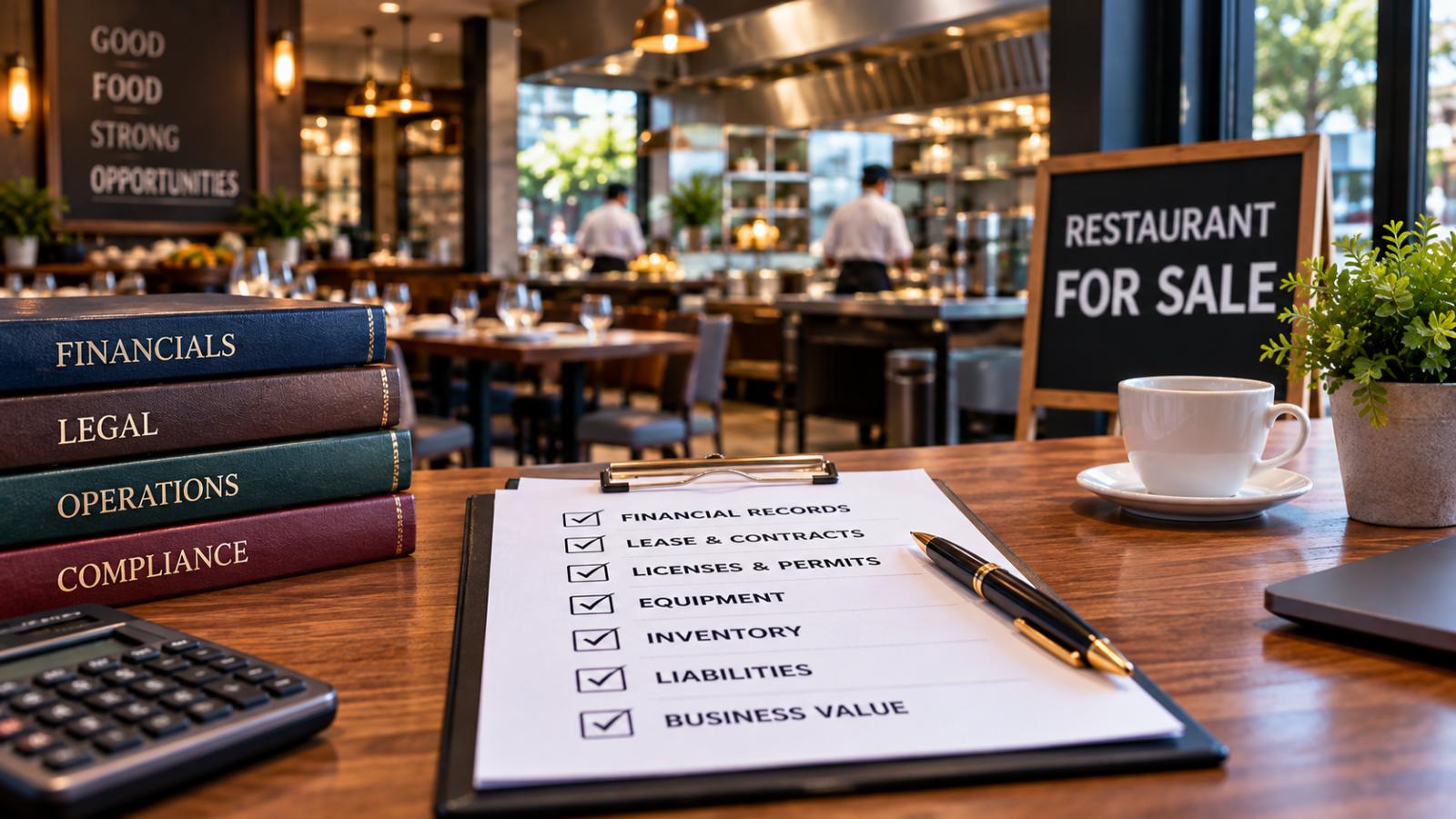
Restaurant buyers should compare tax returns, profit-and-loss statements, bank deposits, POS reports, payroll and supplier expenses. Large differences between claimed sales and documented revenue deserve further investigation.
Check the Lease, Contracts and Liabilities
A restaurant's location may be valuable only if the buyer can continue operating there. Review the lease term, renewal options, rent increases, additional charges and assignment conditions.
Existing supplier, equipment, franchise and other contracts should also be examined. The SBA specifically identifies contracts and leases among the documents buyers and their advisers should evaluate.
Verify Licenses, Permits and Zoning
Do not assume existing approvals automatically continue after ownership changes. The SBA advises buyers to determine which federal, state and local licenses and permits are required and whether they must obtain them from the seller or apply separately. Zoning requirements should also be checked.
For restaurants, buyers should also review applicable health-department records and operational approvals with the relevant local authority.
Inspect Equipment, Inventory and Business Value
Kitchen equipment, refrigeration, furniture and inventory should be physically inspected and compared with what the sale agreement includes. Buyers should distinguish tangible assets from intangible value such as the restaurant name, reputation or intellectual property.
The SBA recommends conducting a business valuation rather than accepting the seller's asking price without analysis.
Complete Due Diligence Before Signing
The purchase agreement should clearly identify the assets, inventory and other rights being acquired. The SBA recommends professional assistance from an attorney and accountant when investigating and documenting an existing-business purchase.
For an NRI buyer, careful due diligence can reveal whether a restaurant represents an established opportunity or an acquisition carrying financial, contractual or regulatory problems that were not obvious from the listing.