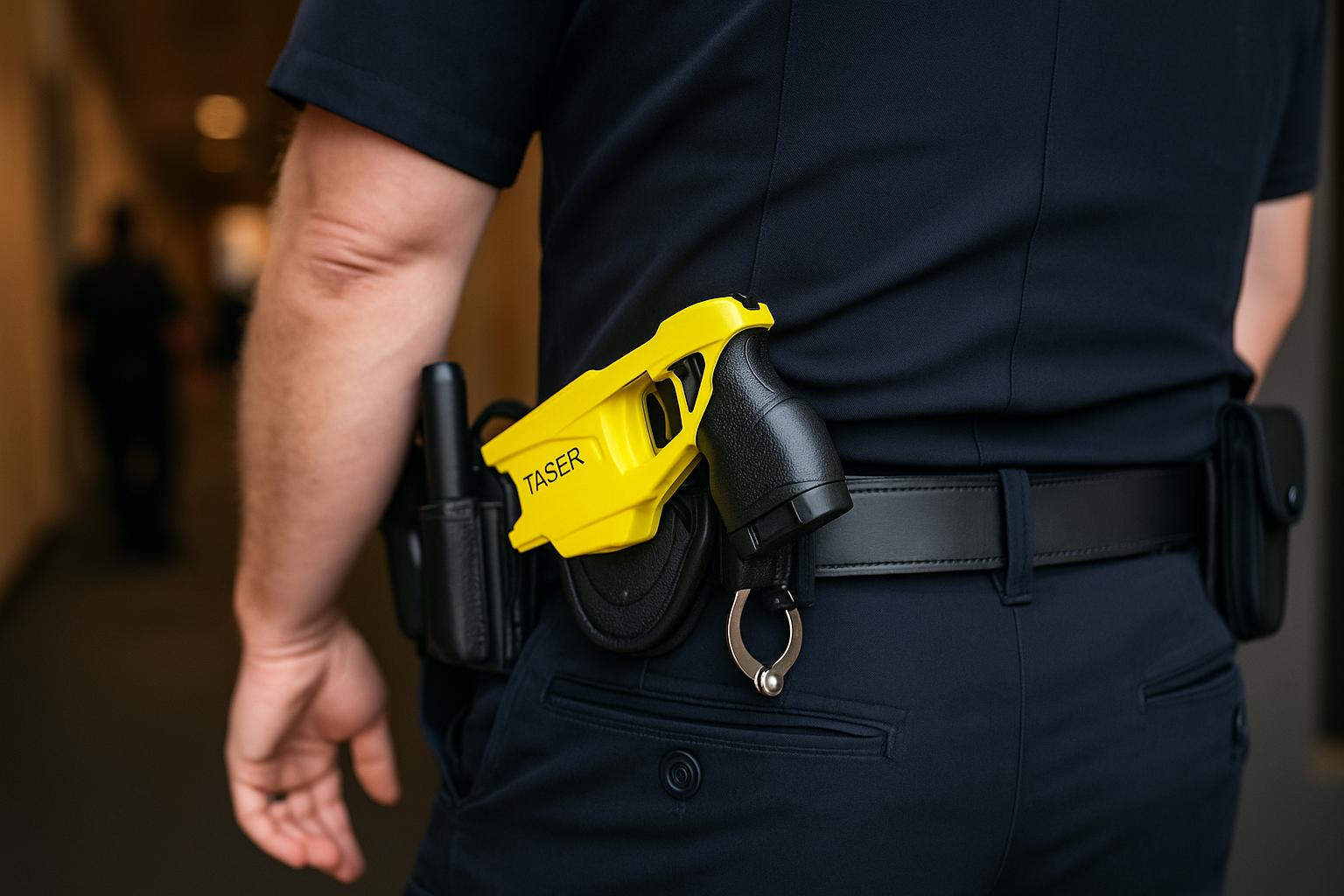
SANTA CLARA COUNTY, Calif. — Deputies with the Santa Clara County Sheriff’s Office say their pilot Taser program has helped reduce violence inside local jails, even as civilian watchdogs question whether the department is providing full transparency about its use of the devices.
A recent report from Sheriff Bob Jonsen’s office shows that Tasers were deployed only nine times out of 252 total incidents in which correctional officers used force or weapons during confrontations with inmates. According to the department, the low number of firings demonstrates measured judgment and successful de-escalation efforts within jail facilities.
Of the nine cases, seven occurred at the Main Jail and two at the Elmwood Correctional Facility. Deputies displayed or brandished Tasers 60 additional times during the same period, suggesting that the presence of the devices often prevented situations from escalating further.
Sheriff’s officials presented these findings during a meeting of the Community Correction and Law Enforcement Monitoring Committee, describing the early results of the Taser pilot program as encouraging. Undersheriff Dalia Rodriguez told committee members that the devices helped de-escalate 56% of incidents in which they were used and contributed to a 4% decline in injuries related to inmate altercations compared to the previous year.
“It definitely has been very helpful in maintaining the number of assaults occurring in the facility — and at the very least, stopping the assaults before they continue,” Rodriguez said. “As we move on with the program, the hope is we can reduce the number of assaults, particularly with the inmate versus inmate population.”
The pilot program, approved by the Board of Supervisors six months ago, was launched amid controversy. Civil rights advocates expressed concerns about potential misuse or fatal outcomes, citing national cases where Taser deployments have resulted in serious harm. The Board authorized a two-year evaluation period to determine whether Tasers should be permanently added to the department’s standard arsenal.
However, the latest oversight review has renewed concerns about accountability. Representatives from the OIR Group, the independent firm tasked with monitoring jail operations, reported that their access to body-worn camera footage from incidents involving Tasers was incomplete. The group found that not all interviews with inmates who were subjected to Taser use were properly recorded, tagged, or preserved as part of case files.
“Unfortunately, when we asked to review video recordings of interviews, we learned that not all recordings had been tagged to the incidents and saved as part of the overall case files,” the OIR Group noted in its review. As a result, oversight monitors were able to review only one such interview, which they described as lacking thoroughness and detail.
When pressed during the committee meeting, sheriff’s officials were unable to explain why the recordings were missing or why oversight monitors had limited access to footage. The lack of clarity raised frustration among committee members, particularly those who had supported the pilot program on the condition that it would include full transparency.
Walter Wilson, CEO of the Silicon Valley Minority Business Consortium and a member of the civilian oversight board, voiced sharp criticism of the sheriff’s handling of the situation. “Sheriff Jonsen, you promised full transparency when the Board of Supervisors approved this two-year pilot project,” Wilson said. “The sheriff promised this would be available to the public … I would really appreciate the sheriff keeping his word.”
In response to the oversight findings, the sheriff’s office reportedly issued new internal directives aimed at improving documentation and ensuring body-camera recordings are properly linked to Taser-related incidents. The department maintains that it remains committed to the transparency standards outlined at the start of the pilot.
Despite the dispute, the Sheriff’s Office continues to emphasize that Tasers have contributed to improved safety for both staff and inmates. The department’s data shows that overall incidents of violence have stabilized and that the use of less-lethal tools may be preventing more serious injuries.
The debate over the Taser program’s effectiveness and oversight is likely to intensify as the two-year pilot continues. Sheriff officials say they plan to conduct further evaluations and share detailed data before the Board of Supervisors decides whether to expand the program across the custody bureau.
For now, the sheriff’s office maintains that Tasers are a valuable tool for de-escalation, while oversight groups insist that accountability and transparency must remain central to any decision about the future of their use inside Santa Clara County’s jails.