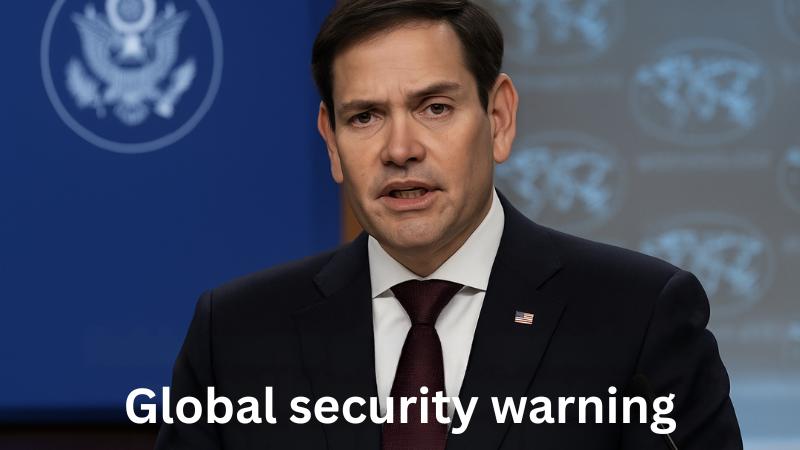
United States Secretary of State Marco Rubio stated on Wednesday that radical Islamic movements represent a growing and consequential threat not only to the United States but to global security as a whole. Describing these organisations as revolutionary in nature, Rubio said their objectives extend far beyond holding limited territory, and instead involve expanding their influence across regions and cultures. He noted that the ideological framework guiding these groups envisions a broad reach that challenges international stability and Western interests.
Rubio explained that such movements are not content with isolated control in parts of Iraq, Syria, or other conflict zones, and that historical patterns demonstrate their long-term ambition to enlarge their presence. He emphasized that this expansionist mindset has created substantial concerns for governments worldwide, particularly within the West, which he said is consistently identified by extremist leaders as their principal adversary. According to Rubio, these groups frame the West, and especially the United States, as the central obstacle to their envisioned global order.
In his remarks, Rubio argued that radical Islamist groups have openly expressed their intentions toward Western nations, including the United States and Europe, and maintain a willingness to use terrorism and violence to achieve their aims. He pointed to Iran as an example of a nation-state actor capable of using assassinations, targeted killings, and other aggressive tactics in support of such extremist ideologies. Rubio said that this posture has implications not only for democratic governments but also for allied nations in the Middle East.
He added that leaders in Saudi Arabia, the United Arab Emirates, and Bahrain face hostility from radical Islamic factions because of their partnerships with the United States. Rubio said these alliances are viewed by extremists as unacceptable cooperation with what they consider foreign adversaries. He also referenced ongoing tensions involving Israel, which he described as another consistent target of extremist rhetoric and actions.
Rubio further stated that a significant number of domestic terrorist incidents in the United States have been influenced by radical Islamic viewpoints. He cited the 2016 Pulse nightclub shooting in Orlando, Florida, as one example of how extremist ideology has motivated violence on American soil. His comments underscored broader concerns about radicalisation within the country and the continuing need for heightened security measures.
In addition to analysing global threats, Rubio announced new US actions intended to respond to violence against Christian communities in Nigeria and other regions. He said the United States will impose visa restrictions on individuals involved in violations of religious freedom, whether through direction, funding, support, or direct participation. The policy, according to Rubio, applies to both government officials and non-state actors who persecute individuals because of their religious beliefs.
Rubio shared the policy update in a statement, saying that the United States is determined to take meaningful steps to address atrocities committed against religious minorities. He indicated that these visa restrictions represent part of a broader effort to uphold international human rights standards and to pressure governments and individuals who tolerate or perpetuate such abuses. The decision signals a firm diplomatic stance and reflects ongoing US commitment to defending religious freedom worldwide.