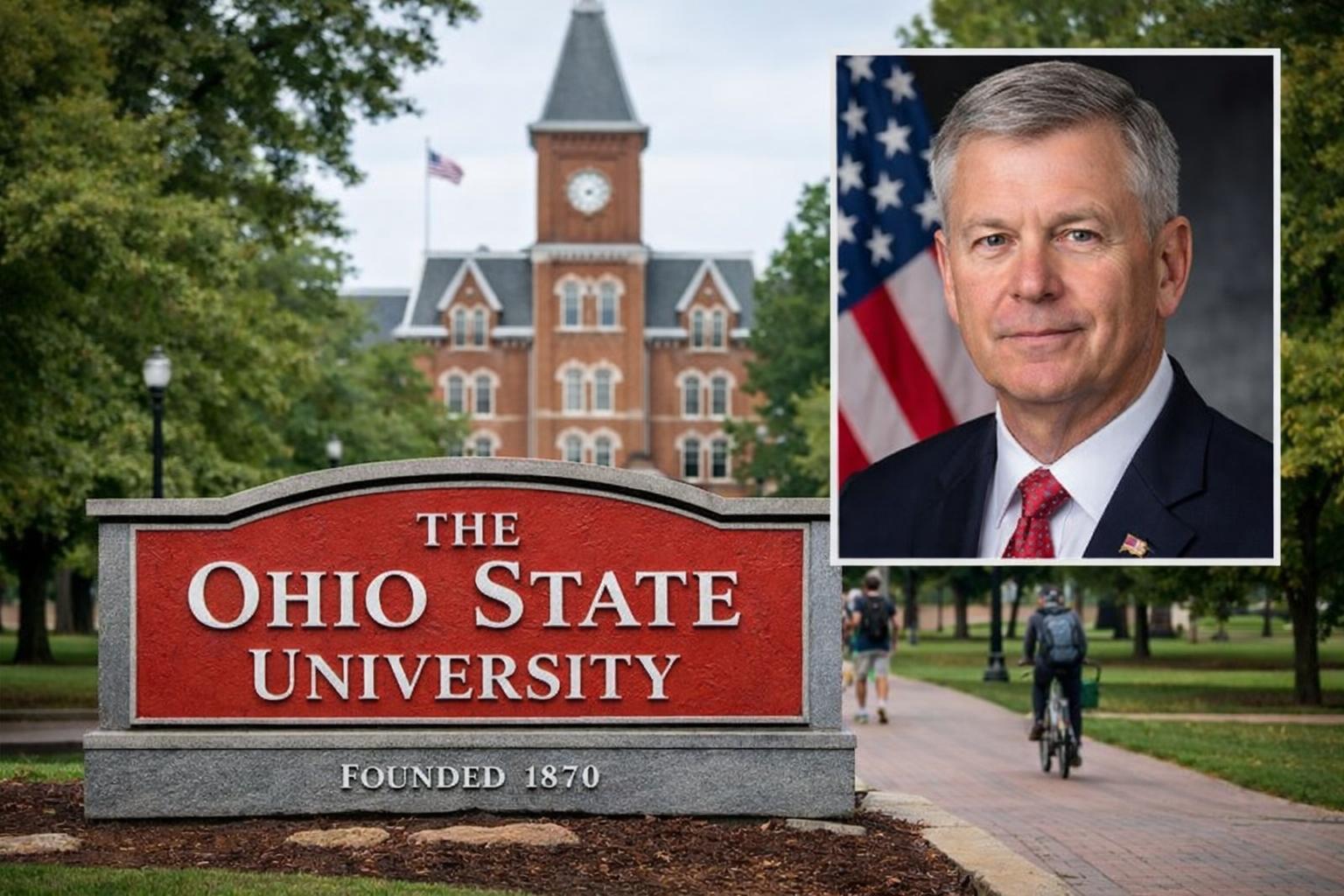
University officials confirmed that Carter acknowledged having an inappropriate relationship with a person who had sought public resources to support a personal business venture. The board of trustees accepted his resignation a day after it was submitted, leaving the university without a confirmed leader and prompting questions about the institution’s next steps.
A university spokesperson said an investigation is underway into the concerns surrounding Carter’s conduct. The relationship is believed to involve Krisanthe Vlachos, a podcaster whose connection to Carter became public through a program sponsored by JobsOhio. Officials have not yet announced who will lead the university during the transition period, though a plan outlining temporary leadership and the search process is expected soon.
Carter assumed office in January 2024 after previously serving within the University of Nebraska system and becoming the first Ohio State president without a doctoral degree. His departure follows that of former president Kristina Johnson, who resigned in November 2022 with her exit taking effect in May 2023. During that transition, Wexner Medical Center executive vice president Peter Mohler served as acting president for several months.
The latest vacancy has intensified discussions among faculty, administrators and policymakers about the direction of Ohio State’s leadership search. Some observers have suggested the university could consider candidates from within its own ranks rather than conducting a broad national search. Names mentioned publicly include senior administrators such as Provost Ravi V. Bellamkonda and Wexner Medical Center chief executive John Warner, as well as Gordon Gee, a two-time former university president who currently holds a consulting role.
Others have emphasized the importance of greater participation from the campus community during the selection process. Faculty members say broader input from students and staff could help ensure stronger institutional support for the next leader, especially after two presidential resignations in a short span.
The incoming president will inherit a complex environment that includes legal disputes, campus protests and ongoing debates over governance and academic priorities. University officials have stated that Carter’s resignation is unrelated to several of those issues, including controversies tied to donor relationships, legal cases involving a former physician, and disputes surrounding recently established academic initiatives.
As Ohio State prepares to identify its fourth full-time president since 2020, university leaders say stability and trust will be central priorities. Administrators are expected to outline the next phase of the leadership transition in the coming days while the board of trustees begins shaping the search for a permanent successor.