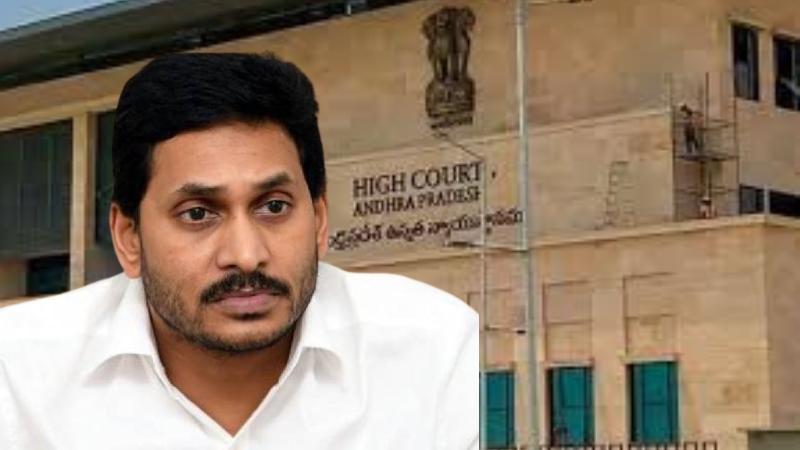
The Andhra Pradesh High Court raised serious concerns regarding the recent ‘2029 Destruction’ campaign launched by the Yuvajana Sramika Rythu Congress Party (YCP). The court questioned the intentions behind the provocative social media posts and flexis displayed by the party, which featured alarming statements about "destruction in 2029." The judiciary's concerns pointed to the ambiguous and concerning nature of the message, specifically questioning whom the YCP was aiming to harm — the citizens or the state itself. The court’s remarks come after examining a petition involving YCP social media in charge Sajjala Bhargav Reddy.
The High Court expressed its dismay at the audacity of the YCP leaders in openly proclaiming destruction, especially in a political climate where such campaigns could have significant consequences. These flexis and posts, which boldly reference potential chaos and turmoil in 2029, have raised alarm among citizens and the political community alike. Furthermore, the court criticized the police for not taking adequate action in addressing these provocative social media activities when they first surfaced. In its comments, the court suggested that stricter enforcement could have prevented the rise of such inflammatory rhetoric.
The controversial campaign’s timing also aligns with the tense political situation surrounding the capital city of Amaravati. YCP's president, former Chief Minister Y.S. Jagan Mohan Reddy, has long been an opponent of Amaravati as the state’s capital, even skipping its foundation stone-laying ceremony in 2015. After assuming office in 2019, he proposed a three-capital model for Andhra Pradesh but struggled to implement it due to legal hurdles and financial limitations.
Recently, the Parliament passed the Andhra Pradesh Reorganisation (Amendment) Bill, 2026, making Amaravati the permanent capital of the state, a move that could have agitated the YCP leadership. This change, which was formally assented to by the President of India, signals that Amaravati will remain the state capital from June 2, 2024, onwards, possibly fueling the YCP's campaign rhetoric of ‘destruction’ aimed at the city’s future. Political analysts speculate that the YCP's ‘Destruction in 2029’ campaign could be a direct response to these political shifts, indicating heightened tensions within the state's governance and development policies. As the political landscape in Andhra Pradesh evolves, the debate surrounding Amaravati and the YCP's approach to governance will likely continue to shape public discourse and electoral strategies in the lead-up to the 2024 elections.