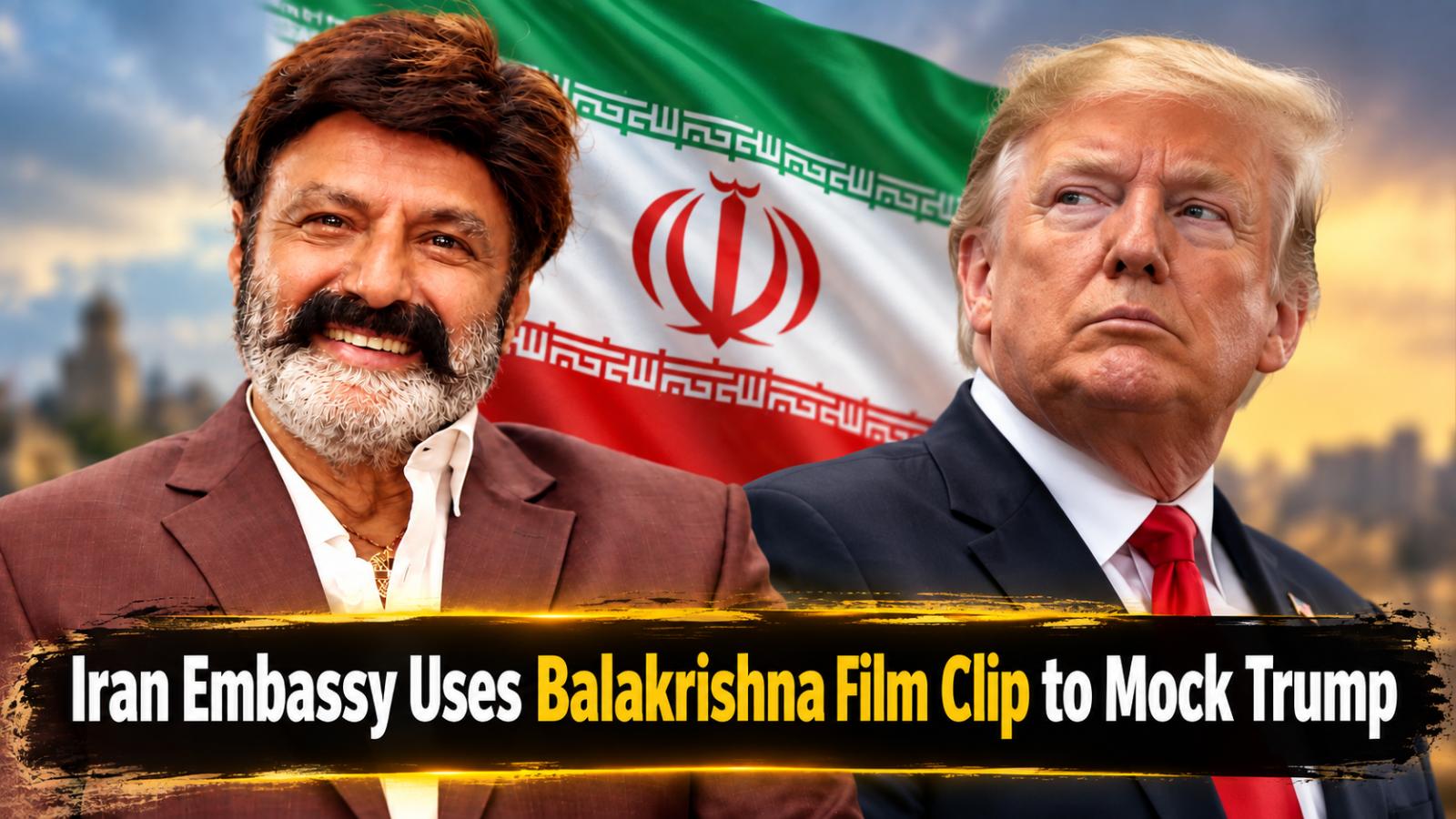
Nandamuri Balakrishna has appeared in an unexpected corner of the U.S.–Iran debate. Iran’s embassy in Zimbabwe shared a 58-second action clip from his Telugu film Bhagavanth Kesari on X, using the scene to respond to U.S. President Donald Trump’s remarks about Iran. The September 23 post has drawn attention from Telugu film fans as well as people following the exchange between the two countries.
The embassy’s post followed Trump’s September 22 address to the United Nations General Assembly. In his speech, Trump raised the possibility of “annihilating” the Islamic Republic while discussing his options for dealing with Iran. The embassy answered with a message saying Iran was not defenceless and attached Balakrishna’s film scene as a dramatic visual response. The movie clip is a social media post, not footage of the conflict or a statement about any specific military action.
The sequence shows Balakrishna’s character facing a group of armed attackers. Seated on a chair, he shields himself from gunfire with what appears to be a manhole cover before sending large cylinders towards his opponents. It is the kind of exaggerated action moment associated with a commercial film, and the embassy used it to make a point through humour and spectacle.
The post also produced an unintended cinema debate. Its caption referred to “Bollywood,” although Bhagavanth Kesari is a Telugu-language film from the Tollywood industry. Indian users pointed out the mix-up as the clip circulated online. Directed by Anil Ravipudi, the 2023 film stars Balakrishna in the title role.
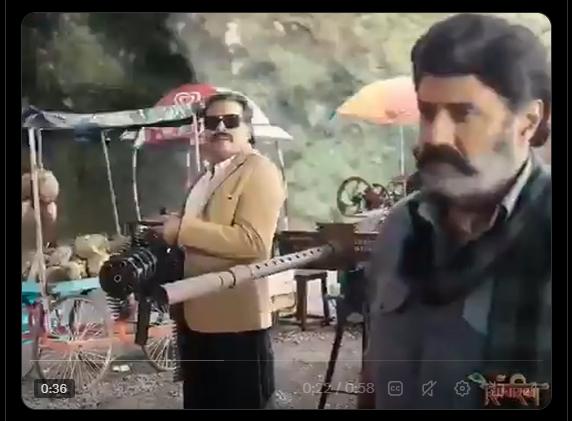
The surprise lies in the setting: a scene from a Telugu entertainer was used by an Iranian diplomatic account during an international political argument. That contrast has brought Balakrishna’s action sequence to viewers far beyond the film’s usual audience and given fans another reason to share it.
The embassy’s comparison should be read as online rhetoric. Its post does not show that Trump has watched Bhagavanth Kesari, nor does the film scene provide information about Iran’s defences. What it does show is how quickly a recognisable cinema moment can become part of a global social media exchange.