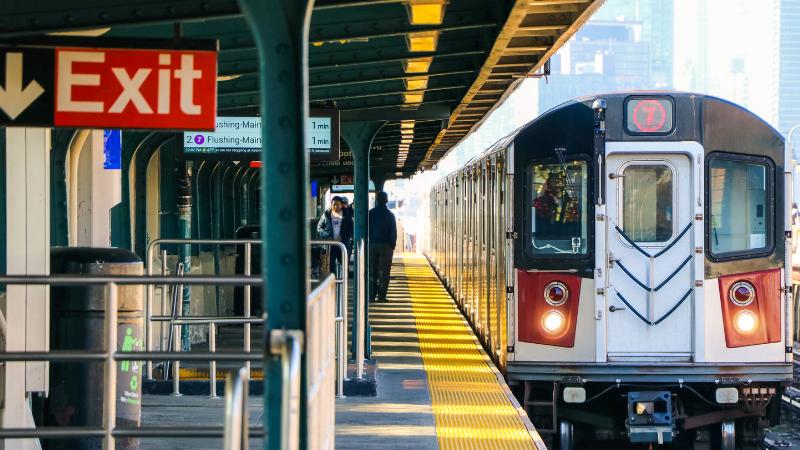
The Washington Metro is cautiously reintroducing its automatic train operation system after a 15-year pause, but unresolved technical issues continue to complicate a full rollout. Green and Yellow line trains have resumed automated operations without major incidents, yet a troubling pattern of station overruns on the Red Line has Metro officials proceeding with caution.
Automatic train operation, known as ATO, was a standard feature of the Metrorail system for more than 30 years before being suspended following a fatal crash in 2009 caused by a faulty track sensor. The resulting investigation led to the shutdown of automated services system-wide. Now, with a new effort underway to modernize and improve Metro's efficiency, ATO is making a cautious return.
In December, the Red Line became the first route to resume ATO. However, its performance raised red flags. Since the reintroduction, the line experienced 217 station overruns—incidents where trains failed to stop accurately at their designated points. These missteps prompted serious concerns from transit safety officials, who concluded the current system was not reliable enough to fulfill ATO’s core purpose: precise, automated station stops.
In contrast, the return of ATO on the Green and Yellow lines in May has shown promising, albeit modest, improvements. Over the first 10 days, only 25 station overruns were reported across both lines, a significant reduction compared to the Red Line’s early performance. Metro officials partially attribute this improvement to a decrease in human interference. In earlier rollouts, some operators had pressed a ‘station stop cancel’ button, which disabled automated stopping and contributed to overruns.
Despite these signs of progress, engineers remain wary. The core technology powering the ATO system was developed in the 1960s, and its limitations are becoming increasingly apparent as it is revived in today’s complex transit environment. The system relies on rail car coil markers to determine train position, but this method is susceptible to electromagnetic interference, which can cause trains to misjudge their location and miss station stops.
A software update currently in development aims to address these issues by improving the train’s ability to detect and respond to coil marker signals. However, some recent performance shifts, such as a sudden reduction in overruns at Judiciary Square on the Red Line, have occurred without any system changes, baffling Metro engineers. These unexplained fluctuations point to deeper challenges in understanding how the aging technology behaves under real-world conditions.
Paul Smith, director of systems engineering, acknowledged the difficulties during a recent meeting. He explained that while some fixes are underway, many technical problems lack clear explanations. Intermittent electronic interference and inconsistent data make it difficult to pinpoint causes or ensure lasting improvements.
Officials estimate that it could take between three to six months to complete the necessary software updates and conduct additional testing before the system can be considered for full deployment. Until then, only the Green and Yellow lines will continue with automated operation, while other lines remain under manual control.
The stakes are high. A successful rollout of ATO could enhance the reliability, efficiency, and safety of the Metro system, easing operator workload and improving rider experience. However, with station accuracy still in question and some issues disappearing without explanation, transit authorities remain cautious. They aim to ensure the system works not only in theory but in the daily complexity of a live metro network.
As Washington commuters continue to rely on Metro, the return of automation brings both hope and uncertainty. For now, the balance between innovation and safety is guiding every decision.
Automatic train operation, known as ATO, was a standard feature of the Metrorail system for more than 30 years before being suspended following a fatal crash in 2009 caused by a faulty track sensor. The resulting investigation led to the shutdown of automated services system-wide. Now, with a new effort underway to modernize and improve Metro's efficiency, ATO is making a cautious return.
In December, the Red Line became the first route to resume ATO. However, its performance raised red flags. Since the reintroduction, the line experienced 217 station overruns—incidents where trains failed to stop accurately at their designated points. These missteps prompted serious concerns from transit safety officials, who concluded the current system was not reliable enough to fulfill ATO’s core purpose: precise, automated station stops.
In contrast, the return of ATO on the Green and Yellow lines in May has shown promising, albeit modest, improvements. Over the first 10 days, only 25 station overruns were reported across both lines, a significant reduction compared to the Red Line’s early performance. Metro officials partially attribute this improvement to a decrease in human interference. In earlier rollouts, some operators had pressed a ‘station stop cancel’ button, which disabled automated stopping and contributed to overruns.
Despite these signs of progress, engineers remain wary. The core technology powering the ATO system was developed in the 1960s, and its limitations are becoming increasingly apparent as it is revived in today’s complex transit environment. The system relies on rail car coil markers to determine train position, but this method is susceptible to electromagnetic interference, which can cause trains to misjudge their location and miss station stops.
A software update currently in development aims to address these issues by improving the train’s ability to detect and respond to coil marker signals. However, some recent performance shifts, such as a sudden reduction in overruns at Judiciary Square on the Red Line, have occurred without any system changes, baffling Metro engineers. These unexplained fluctuations point to deeper challenges in understanding how the aging technology behaves under real-world conditions.
Paul Smith, director of systems engineering, acknowledged the difficulties during a recent meeting. He explained that while some fixes are underway, many technical problems lack clear explanations. Intermittent electronic interference and inconsistent data make it difficult to pinpoint causes or ensure lasting improvements.
Officials estimate that it could take between three to six months to complete the necessary software updates and conduct additional testing before the system can be considered for full deployment. Until then, only the Green and Yellow lines will continue with automated operation, while other lines remain under manual control.
The stakes are high. A successful rollout of ATO could enhance the reliability, efficiency, and safety of the Metro system, easing operator workload and improving rider experience. However, with station accuracy still in question and some issues disappearing without explanation, transit authorities remain cautious. They aim to ensure the system works not only in theory but in the daily complexity of a live metro network.
As Washington commuters continue to rely on Metro, the return of automation brings both hope and uncertainty. For now, the balance between innovation and safety is guiding every decision.