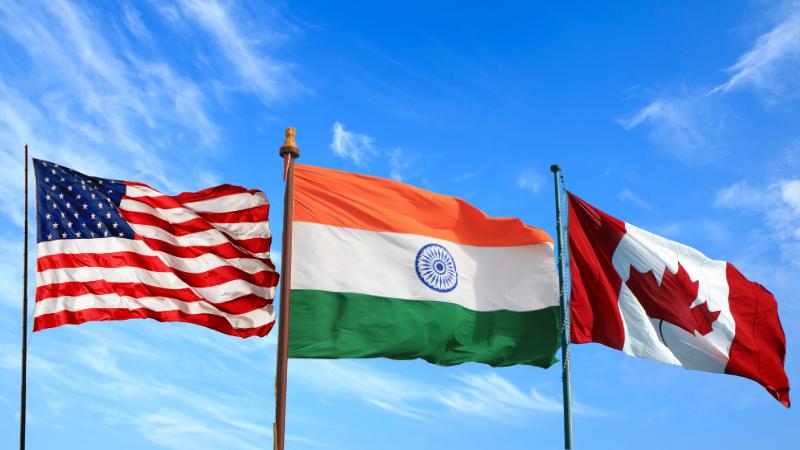
It is unusual for a world leader to decline an invitation from the President of the United States, especially when such an invite comes at a crucial diplomatic juncture. Yet, Prime Minister Narendra Modi’s decision to politely turn down Donald Trump’s invite was a strategic move, reflecting a deepening rift in trust between India and the United States. The timing was particularly notable as India began warming up to Canada, marking a clear shift in diplomatic priorities and signaling a readiness to move past the hostility that defined the Trudeau era.
The India-Canada diplomatic freeze that began in 2023 appears to be thawing under the leadership of Canadian Prime Minister Mark Carney. Carney, who has distanced himself from the influential pro-Khalistan lobby since taking office, extended a formal invitation to Modi to attend the G7 Summit, despite pushback from certain domestic factions. Their first bilateral meeting was marked by a strong signal of reconciliation as both nations agreed to reinstate their high commissioners and reopen trade talks. Diplomatic representation had remained suspended since 2024 due to the fallout from the killing of Khalistani separatist Hardeep Singh Nijjar, a case that derailed bilateral ties when then-Prime Minister Justin Trudeau publicly accused India of involvement in the assassination.
During the meeting, Carney avoided making any direct reference to the Nijjar incident. When questioned by the media, he noted only that a judicial process was underway, declining to offer further comment. Meanwhile, Canada’s intelligence agency acknowledged for the first time that Khalistani extremists were actively operating from Canadian soil, planning acts of violence primarily targeting India. The acknowledgment served as a quiet concession and a step toward rebuilding trust.
This diplomatic reset comes at a critical time for India, which remains Canada’s top source of foreign labor and international students. With a more cooperative tone from Ottawa, India gains breathing room to recalibrate its foreign relations amid growing uncertainties in its partnership with the United States.
In stark contrast to this positive momentum with Canada, India's relations with Washington have taken a complicated turn during Trump’s second term. What was once hailed as a strong rapport between Modi and Trump has started to show visible cracks. Tensions began to rise when Trump repeatedly accused India of being a “big abuser” of tariffs. Hours before a scheduled bilateral meeting with Modi, Trump announced reciprocal tariffs on Indian goods, souring the optics and undermining trust.
India’s symbolic trade concessions, such as reducing duties on bourbon whiskey and motorbikes, did little to influence Trump's stance. He later announced a 26% import duty on Indian products, which has been paused but not rolled back. Trade negotiations remain stalled, with Washington pressuring New Delhi to finalize a broader agreement.
Adding further strain, Trump’s repeated efforts to link India with Pakistan in the context of regional security have deeply frustrated New Delhi. After the Pahalgam terror attack in May, Trump suggested he played a role in brokering a ceasefire between the two neighbors, a claim he repeated over a dozen times. India firmly rejected these assertions, maintaining that the ceasefire was a result of direct negotiations with Pakistan and not mediated by the US. During a recent phone call with Trump, Modi reportedly clarified that no discussion on trade leverage or mediation took place during Operation Sindoor.
Matters escalated when Trump hosted Pakistan’s army chief General Asim Munir at the White House. The meeting came shortly after Modi’s phone call and just ahead of Trump’s scheduled lunch with Munir, creating a situation where both leaders could have shared the same diplomatic stage. Modi’s decision to decline Trump’s invite, officially citing a prior engagement in Croatia, was a calculated step to avoid being diplomatically equated with Pakistan and to sidestep any narrative that could serve a Trump-driven PR campaign.
The optics of the Trump-Munir meeting were particularly troubling for India, especially amid speculations that Pakistan may offer support to Iran during its ongoing conflict with Israel. Criticism has emerged from within the US as well, with former Pentagon officials warning that such a meeting represents a misguided strategy that overlooks Pakistan’s historical double-dealing. The statement by US Central Command chief General Michael Kurilla, who praised Pakistan as a “phenomenal partner in counter-terrorism,” only fueled Indian concerns over Washington's shifting stance.
As India faces increasing diplomatic unpredictability from the US, the recent warming of ties with Canada comes as a timely boost. It offers New Delhi a chance to reassert its global standing through more balanced partnerships while continuing to manage regional security challenges on its own terms. The contrasting approaches taken by Canada and the US in dealing with India highlight the complexities of global diplomacy in a multipolar world.
Ultimately, Modi’s rejection of Trump’s invitation was more than a scheduling conflict. It was a strategic move grounded in the desire to maintain sovereign dignity and avoid being dragged into an unpredictable diplomatic theatre. As India reopens doors with old allies like Canada and navigates choppy waters with traditional partners like the US, it underscores the need for foreign policy decisions that are both principled and pragmatic in an increasingly volatile geopolitical environment.