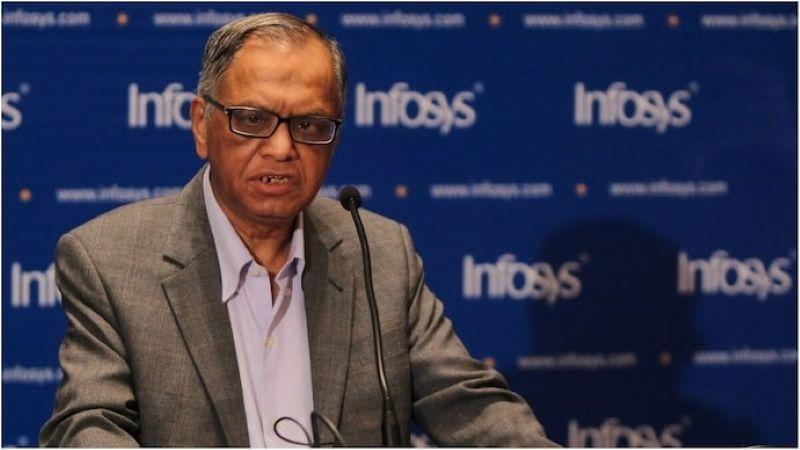
Infosys, one of India’s top IT companies, is making headlines again this time for promoting work-life balance by discouraging employees from working beyond 9.15 hours a day. The company’s HR team now monitors logged hours and sends automated emails to employees who exceed this limit regularly, reminding them to take breaks and avoid overworking. This policy applies to all staff, whether they work on-site or remotely, and marks a strong shift in corporate culture especially when contrasted with comments made last year by Infosys co-founder Narayana Murthy.
In 2024, Murthy called on young Indians to commit to at least 70 hours of work per week to raise national productivity, dismissing the need for work-life balance. He linked national development to personal sacrifice and hard work, arguing that India cannot catch up to developed countries without longer working hours. However, many criticized the idea, especially from the tech industry, where long hours, high pressure, and minimal downtime are already known to impact mental and physical health.
Fast-forward to 2025, and Infosys now appears to be taking the opposite route. Following the launch of its hybrid work policy in late 2023 requiring 10 days of in-office work per month the company is now actively urging its 3.23 lakh employees to stop working beyond reasonable hours. The move comes in response to rising health risks in the IT sector, including early cardiac issues, stress-related illnesses, and screen fatigue. Infosys’s leadership believes overwork can harm productivity, increase insurance claims, and reduce employee retention. The HR alerts serve not only as reminders to disconnect but also as a clear cultural message: success shouldn’t come at the cost of personal health.
This apparent contradiction between Murthy’s high-effort philosophy and Infosys’s current employee-first approach has sparked debate across corporate India. The key takeaway? While hard work remains important, sustainable productivity may now depend on how companies balance ambition with employee well-being.