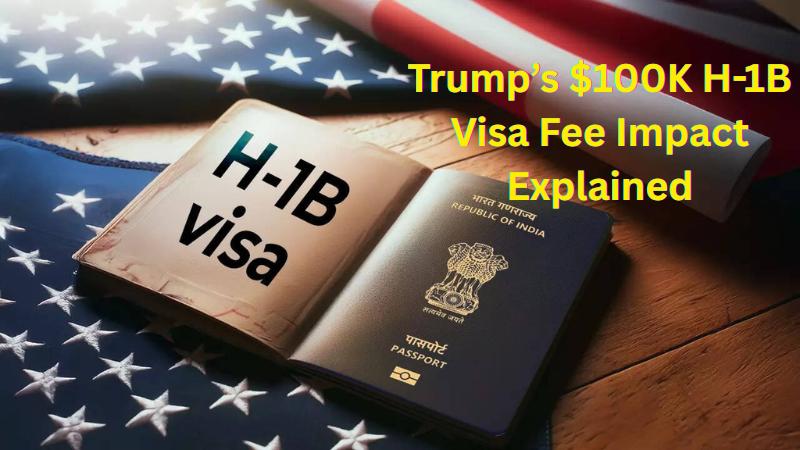
US President Donald Trump’s abrupt decision to impose a $100,000 fee on new H-1B visa applications has triggered heated debates across global markets. While the move is designed to discourage foreign workers from entering the United States, economists warn that its long-term impact could weigh more heavily on the US economy than on India, the country supplying the majority of H-1B talent.
H-1B visas are critical for American firms that rely on foreign engineers, coders, and medical professionals. Analysts point out that major companies such as Amazon, Microsoft, Meta, Google, and Apple employ thousands of skilled immigrants, many from India. The new fee makes it harder for smaller businesses, healthcare facilities, and education institutions to afford sponsorship, creating a recruitment gap. Economists like Atakan Bakiskan of Berenberg warn that restricting talent inflow could slow productivity and innovation, with projections for US economic growth already downgraded from 2% to 1.5%. Critics argue that this policy reflects an anti-growth stance, one that could worsen brain drain and slow down advancements in artificial intelligence and other emerging technologies.
India, which accounts for more than 70% of H-1B recipients, will feel an initial shock, especially in IT outsourcing and onshore project delivery. However, experts believe Indian companies are better prepared this time. Outsourcing giants like Infosys and TCS have built stronger local workforces in the US and can shift project delivery offshore when necessary. According to NASSCOM, while some US projects may face delays or repricing, Indian firms can absorb the added costs and even pass them on to American clients. Staffing experts predict a growing reliance on remote contracting, offshore delivery, and gig workers as employers hesitate to pay the steep visa sponsorship costs.
While India’s IT industry may adjust through flexible staffing and digital delivery models, the US risks losing critical human capital. The policy may strengthen India’s outsourcing ecosystem but could slow down America’s innovation edge, making the move a bigger economic threat at home than abroad.