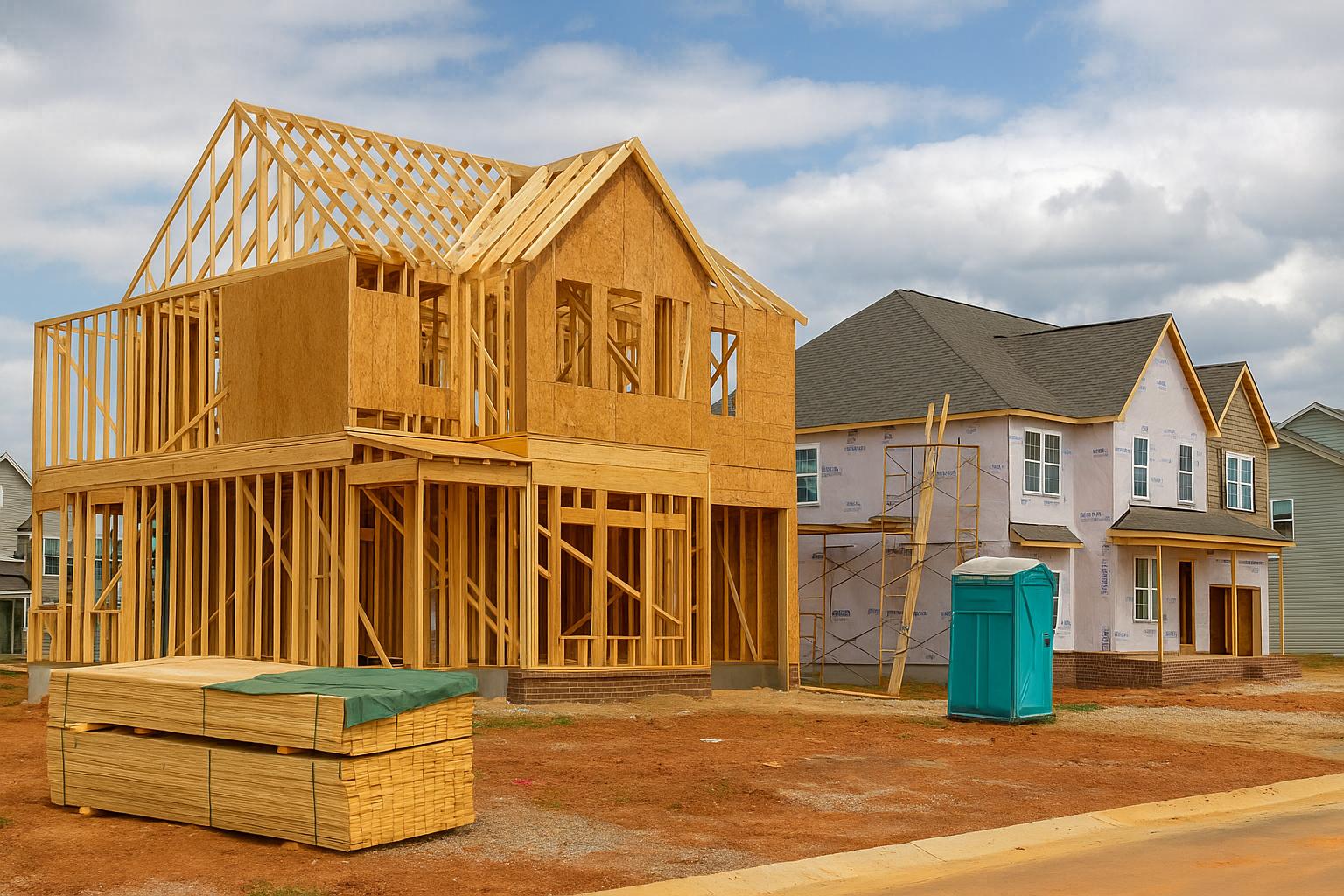
The San Jose metropolitan area has topped a national ranking — but for reasons that signal growing trouble for California’s housing market. According to a recent HomeAbroad report analyzing U.S. Census Bureau data, the San Jose-Sunnyvale-Santa Clara region recorded the steepest drop in residential construction permits among the country’s 100 largest metro areas, with a staggering 68% decline over five years.
In July 2020, the region issued 1,949 building permits. By July 2025, that number had fallen to just 623. The data underscores an escalating slowdown in one of the nation’s most expensive real estate markets, where high costs, city fees, and economic uncertainty have discouraged new development despite record housing demand.
Kansas City ranked second with a decline from 2,014 to 701 permits, while Austin-Round Rock followed at third, dropping from 3,979 to 2,917. Nashville and Los Angeles completed the top five, also showing substantial declines in housing starts.
Silicon Valley developers and housing advocates say the downward trend reflects a broader crisis. Erik Hayden, founder of Urban Catalyst, explained that the Bay Area’s exorbitant construction expenses and municipal fees are key factors driving the decline. “It’s one of the most expensive places in the world to build,” he said, noting that fees can range between $50,000 and $120,000 per unit. “When cities claim they’re giving breaks, it doesn’t mean much if they’re charging 10 times what other regions do.”
Hayden added that his own firm has struggled to complete projects despite acquiring multiple properties in San Jose. Out of eight purchases, only two have reached completion due to financing challenges and rising interest rates. He argued that city policies, originally intended to fund affordable housing through developer fees, have backfired by making most projects financially unviable.
“Cities went, ‘These developers are making all the money… we’ll solve the housing crisis by making them pay for it,’” Hayden said. “But that only means fewer homes get built, and both market and affordable housing suffer.”
The report also found that the San Jose metro area led the nation in declining permits for multifamily housing. Projects involving five or more units dropped by 74%, from 1,697 permits in 2020 to just 449 in 2025. Los Angeles ranked second with a 68% fall, illustrating that even large metropolitan areas are struggling to maintain housing growth.
San Jose officials acknowledge the challenges. Marika Krause, spokesperson for the city’s Planning, Building, and Code Enforcement Department, said the city has tried to ease the burden on developers through incentive programs. These include reductions in park fees, inclusionary housing fees, and construction taxes for multifamily developments. However, Krause admitted that macroeconomic forces like inflation, labor shortages, and high interest rates have compounded local obstacles.
“It’s created a perfect storm that makes it tough for investors to make projects pencil out,” she said. “This isn’t unique to San Jose — it’s affecting the entire region. We’re committed to doing everything possible to make it easier to build here.”
Despite these measures, regional housing advocates argue that incentives alone are insufficient. The state’s housing goals for 2031 require San Jose to build 62,200 homes, Sunnyvale to add 11,966, and Santa Clara to construct 11,632 — targets that remain far out of reach.
Alex Shoor, executive director of Catalyze SV, a local nonprofit promoting sustainable urban development, said local governments must go beyond fee reductions to spur real progress. “Every year we delay, the housing shortage deepens,” Shoor said. “The market conditions are tough, but that only makes it more urgent for cities to remove barriers and encourage more projects.”
As California continues to grapple with affordability and supply challenges, the San Jose region’s sharp decline in construction permits highlights a broader housing dilemma — one that even the country’s most innovative region is struggling to solve.